Having last month utility-scale solar in Sweden, Finnish investor Korkia is eyeing up a portfolio of renewables investments that stretches from Canada to Romania via partnerships with local developers capable of embracing the Lego-like replicability and scalability of solar PV.
Speaking to PV Tech Premium, Mikko Kantero, executive vice president of renewable energy at Korkia, discussed the company’s future investments in northern markets, its selection criteria for new markets and what the business has learned from PV’s mature markets to date.
Try Premium for just $1
- Full premium access for the first month at only $1
- Converts to an annual rate after 30 days unless cancelled
- Cancel anytime during the trial period
Premium Benefits
- Expert industry analysis and interviews
- Digital access to PV Tech Power journal
- Exclusive event discounts
Or get the full Premium subscription right away
Or continue reading this article for free
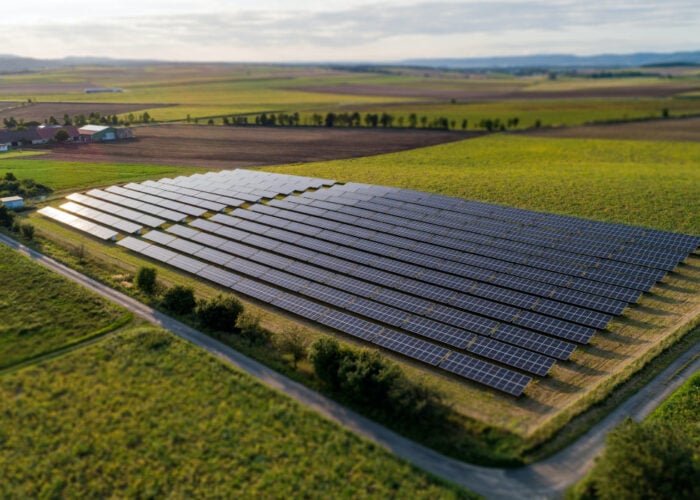
Last month Korkia formed a JV with Recap Energy to develop more than 200MWp of ground-mounted solar PV in Sweden, a country with a more established wind power industry, but has in the past few years increased its solar output and intends to treble it by 2024.
“It comes to the fundaments of our strategy analysis of the market,” says Kantero. “Simply more [electrical] capacity is needed, and it’s needed pretty fast. There are not really that many ways that you can actually build a lot of new capacity.”
While economies are accelerating their transition away from fossil fuels, there’s a growing sense of urgency amongst many and an acute awareness that this transition must accelerate. Korkia’s approach bears similarities to that acceleration, having made a strategic decision at the start of last year to only invest in renewable development. The company now has the “mission to fully and only focus on the development part of the value chain and be an accelerator investor there,” adds Kantero.
As a result, Korkia is having internal discussions about which markets it enters next, with lesser-known PV markets such as Canada and Finland among those on the agenda. Other emerging markets such as Poland, Hungary, Greece, Romania and Colombia are high on the priority list, while more markets including Italy and Portugal are also being targeted.
“Based on the negotiations we have with different developers at the moment and markets we are looking within a year from now, we are not excluding any country out. However, of course, you cannot do everything at once, right?” Kantero says.
Korkia’s renewables pipeline currently sits at around 4.6GW, of which the majority – 80% – is solar PV, the rest being wind. But battery storage also interests the fund and Kantero says either colocated or standalone energy storage investments could too be on the horizon.
Nevertheless, in the interest of being selective, Korkia has used its early forays into renewables to target more mature markets and technology classes, hence the move into solar PV.
“For us the natural way was to start looking around for good development teams that we can back-up, that we can invest in, on the markets we kind of already knew. So Nordics, UK, Spain, Portugal, Chile. These were obvious markets to start with,” Kantero says.
Once that strategy was set, Korkia started exploring other markets it could enter, searching for those with a “positive development ongoing in terms of the local market drivers”. The business examined markets “from the bottom up”, following the developers and those buying assets simultaneously to determine the level of activity and demand.
Despite Korkia’s experience in more mature markets like Spain or Chile, Kantero does not see much difference between those and investing in solar PV in Sweden, Canada or Finland.
“What I like about what we’re doing now is the repeatability of solar project or a wind project development, it’s very similar regardless of where you are,” says Kantero. “Conceptually, you typically need to have the same elements, you need to go through the same steps.” The knowledge accumulated in any country can then be used in another locationto boost and help the developers there, Kantero says, adding: “This is like building Lego blocks, you can very quickly learn and then repeat those learnings and scale it.”
It then becomes a case of identifying the right to developers to support, with Kantero stating that Korkia first look at those who are “truly rooted” in their respective markets and, as a result, have a comprehensive understanding of the processes and quirks that can arise during the development cycle. “We want to find local teams who can kind of show and demonstrate that they are there, they know the game, they are already active and they are doing something and then we can come and help to boost the growth and do more volume and quality together,” he says.
Coming back to the selection of countries from the northern hemisphere with less solar irradiation, Kantero said: “I think there is already a lot of activity ongoing. We see that and that’s why we also wanted to be a part of it in all of these countries.”
For Kantero there is a combination of three factors: generation capacity is needed, expected returns are lower and the cost of electricity is increasing. Combined, those factors interested investors.
Even if the immediate priority may be countries closer to the south, Korkia’s Finnish roots cannot be dissociated with its belief that solar PV will still be an important factor to meet growing electricity demand, even in countries with less solar irradiance. “We believe a lot in solar in the northern hemisphere,” he says.