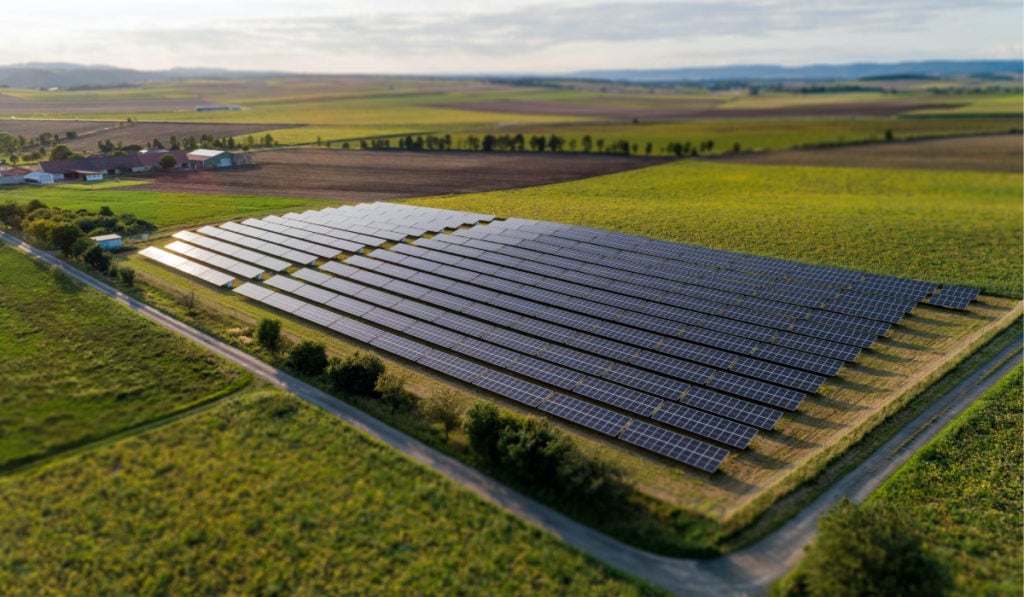
AI-focused solar design and optimisation firm PVFARM has launched RE PILOT, a platform designed to optimise utility-scale solar and co-located solar-plus-storage projects by evaluating thousands of configurations across layout, storage sizing, energy production and project economics.
The platform is aimed at developers, engineering, procurement and construction (EPC) firms and storage companies, combining system configuration, equipment selection and site conditions with solar layout, battery sizing, grid constraints and project economics in a single workflow.
Try Premium for just $1
- Full premium access for the first month at only $1
- Converts to an annual rate after 30 days unless cancelled
- Cancel anytime during the trial period
Premium Benefits
- Expert industry analysis and interviews
- Digital access to PV Tech Power journal
- Exclusive event discounts
Or get the full Premium subscription right away
Or continue reading this article for free
According to the company, RE PILOT tests layout and storage sizing and placement against energy production, project economics and grid constraints simultaneously, with the aim of identifying configurations that are most likely to perform.
Key functions include utility-scale solar and solar-plus-storage design, layout and storage sizing optimisation, energy production and economics modelling, and grid constraint and point-of-interconnection analysis.
“Teams need to evaluate energy, economics, and reliability together. Decisions around battery sizing, facility location, and grid constraints are deeply connected, yet they’re often evaluated separately in different tools and spreadsheets,” said Maksim Markevich, co-founder and chief technology officer of PVFARM.
“With RE PILOT, we’re giving developers and EPCs one workflow to answer the questions that used to take weeks: what’s the optimal solar and storage configuration, what’s the best layout, and what’s the right storage size.”
PVFARM said RE PILOT was developed following more than 150 hours of conversations with specialists across more than 60 organisations. The company also worked with more than 80 companies during beta testing alongside its RE STACK platform.
The launch comes as solar-plus-storage projects become increasingly common in utility-scale development, creating a wider set of interconnected design decisions around battery sizing, facility placement, grid constraints and project economics.
PVFARM said these decisions have traditionally required separate tools and manual iteration between different stages of project development. Writing for PV Tech Premium (subscription required), Markevich also highlighted how data loss between software platforms and gaps in business context can create inaccuracies that affect the bankability of solar projects.
RE PILOT is intended to allow project teams to compare a wider range of configurations before committing to detailed engineering. It forms part of PVFARM’s expanding suite of utility-scale renewable energy design tools, alongside RE STACK, with the platforms intended to enable teams to assess project configurations before detailed engineering.
The launch comes amid a wider push by software providers to bring more of the utility-scale solar development process into digital workflows.
RatedPower’s pvDesign, for example, automates and optimises the study, analysis, design and engineering of utility-scale PV plants, allowing developers and EPCs to compare designs and energy yields before detailed engineering.
PVcase has similarly expanded its software offering across site selection, design and interconnection, following its acquisition of Anderson Optimization in June 2023.
Software is also being used to model the increasingly complex economics of solar-plus-storage projects. In 2021, UL and Homer Energy launched a service for utility-scale renewable hybrid projects that assessed profitability and optimised systems incorporating solar, wind and battery energy storage, including variables such as energy-shifting arbitrage, capacity markets and BESS dispatch.
PV Tech Premium has also reported on the broader role of software in utility-scale PV (subscription required), including its use to optimise layouts, assess energy yield and simplify project design.