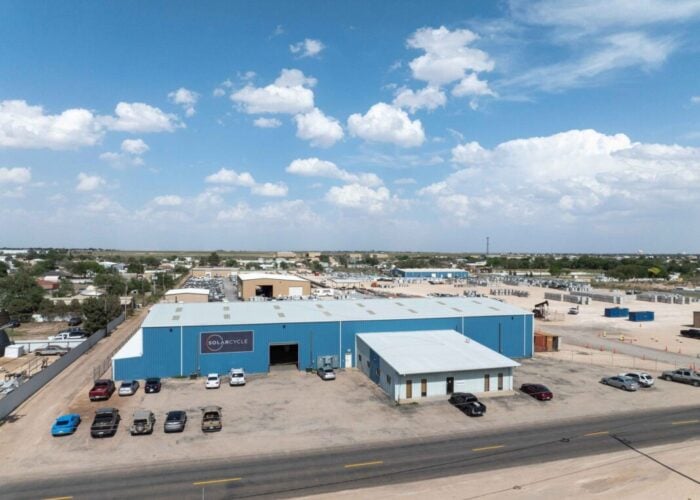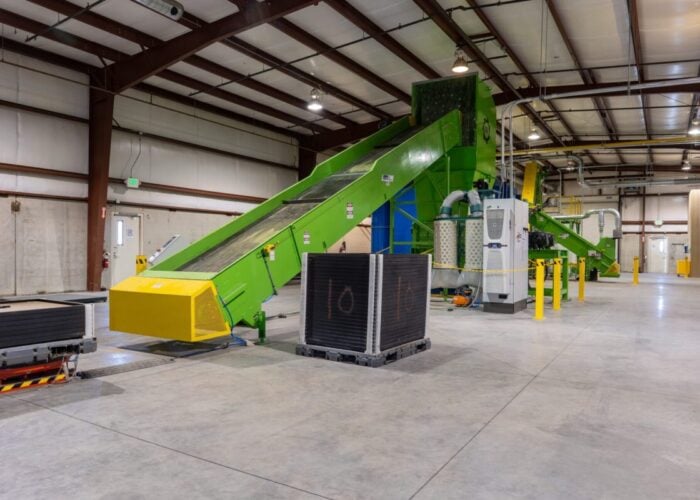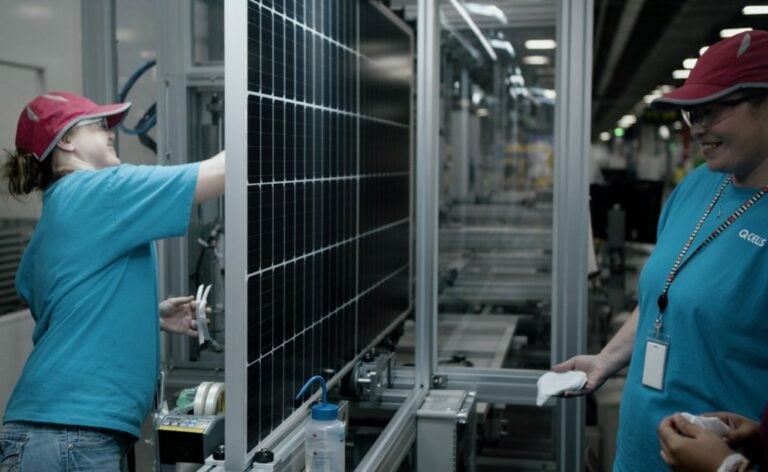
Hanwha Qcells has resumed normal production at its solar module assembly plants in the US state of Georgia after some of its products were detained by US customs.
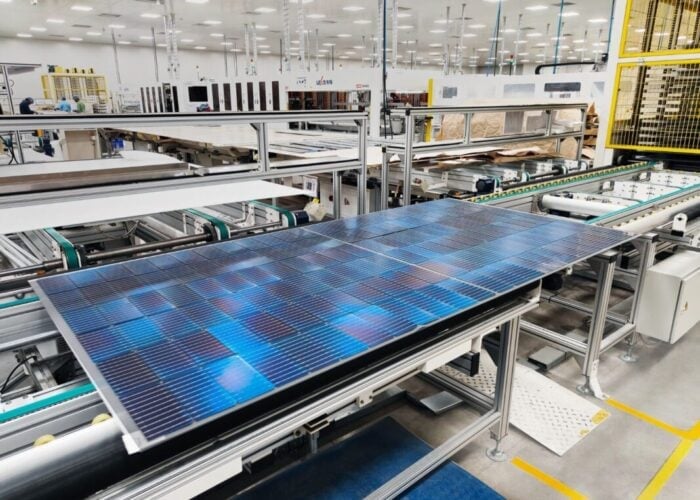
The solar manufacturer announced on Friday that it had resumed normal module production at its 5.1GW facility in Dalton, Georgia, and its 3.3GW factory in Cartersville, Georgia.
Try Premium for just $1
- Full premium access for the first month at only $1
- Converts to an annual rate after 30 days unless cancelled
- Cancel anytime during the trial period
Premium Benefits
- Expert industry analysis and interviews
- Digital access to PV Tech Power journal
- Exclusive event discounts
Or get the full Premium subscription right away
Or continue reading this article for free
Reports emerged in August that Qcells’ Korean-made solar cells had been detained by US Customs and Border Protection (CBP) under the Uyghur Forced Labor Prevention Act (UFLPA). CBP detained the cells under the suspicion that they were made using Chinese-made polysilicon which may have been exposed to forced labour practices in the Xinjiang Uyghur Autonomous Region (XUAR) in Northwest China.
The ongoing detainments and production disruption drove Qcells to furlough 1,000 employees at its Georgia facilities in November
At the time, a Qcells spokesperson told PV Tech: “We remain confident in our supply chain, which is sourced entirely outside of China, and optimistic that this situation will be resolved soon.”
Following the resumption of normal production last week, Qcells’ head of communications, Marta Stoepker, said: “We are proud to be back to work manufacturing the American-made energy the country needs right now. Like any company, hurdles have and will occur, which requires us to adapt and be nimble, but our overall goal remains the same — to build a complete American solar supply chain.”
Qcells has been pursuing ambitious plans to reach a fully US-made ingot-to-module production line, which it said will begin operations by the end of 2026. Backed by Korean owners Hanwha, the company announced plans to invest US$2.5 billion in a US supply chain back in January 2023.
The company’s CTO, Danielle Merfeld, told PV Tech Premium that the company was committed to US upstream solar manufacturing despite policy uncertainty and political headwinds against renewables. She said that “The economics and the fundamentals [are] inherently tilted in our favour in that solar is the cheapest, fastest, easiest form of electricity with the best financial returns.”
UFLPA solar detentions
When Qcells’ products were detained by CBP, Intertek CEA warned of a renewed wave of UFLPA enforcements under the Trump administration.
CBP published UFLPA statistics earlier this year, which showed that US$3.28 billion worth of products listed as “electronics” were detained between June 2022 and 2026.
Experts have long assumed that most of the products detained as “electronics” were solar PV products, and the latest data seems to confirm this. CBP’s dashboard shows that “electronics” detained with the identification code 8541 made up almost all (US$3.26 billion) of the detained products. 8541 is the code covering solar products, according to Intertek CEA’s senior policy analyst, Christian Roselund, posting on LinkedIn last week.
“And this is of US$3.94 billion detained overall. So 83% of everything that has been detained under UFLPA, by value, has been in code 8541,” Roselund wrote, adding that the UFLPA has been “overwhelmingly used to detain solar”.
According to CBP, electronics under code 8541 were mostly shipped from Malaysia, Vietnam and Thailand – countries that saw large solar PV manufacturing expansions over the period covered by the statistics, primarily to serve the US market.
The data shows that 79% (by value) of the “electronics” detained were ultimately released, which would mean they proved that their supply chains had no exposure to Xinjiang, as the UFLPA puts the burden of proof on importers to show that their supply chains are not linked to operations in the region.
“Note that the large majority of these detentions happened under the Biden Administration,” Roselund added.
The enforcement procedures under the UFLPA have been far from flawless. Last year, the US added a JA Solar manufacturing facility to its UFLPA entity list, though an investigation by the European Solar Stewardship Initiative (SSI) found that the facility ceased production in 2018.