Qcells has become the first company to achieve UL Standards & Engagement (UL) and International Electrotechnical Commission (IEC) certifications for silicon-perovskite tandem solar technology.
German technical advisory firm TÜV Rheinland certified that Qcells’ tandem technology had met the requirements for IEC and UL 61215 standards, which the company claims marks a significant step towards commercialising the technology. The standards assess the technical reliability and bankability of solar technologies, which have been the major barriers to commercialising perovskite tandem technology to date.
Try Premium for just $1
- Full premium access for the first month at only $1
- Converts to an annual rate after 30 days unless cancelled
- Cancel anytime during the trial period
Premium Benefits
- Expert industry analysis and interviews
- Digital access to PV Tech Power journal
- Exclusive event discounts
Or get the full Premium subscription right away
Or continue reading this article for free
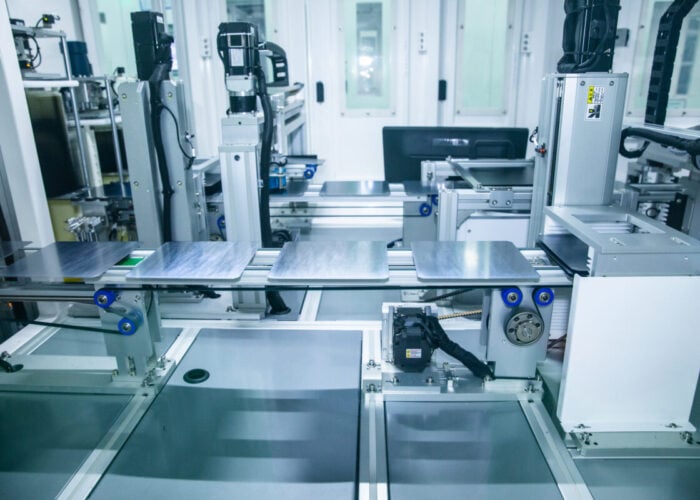
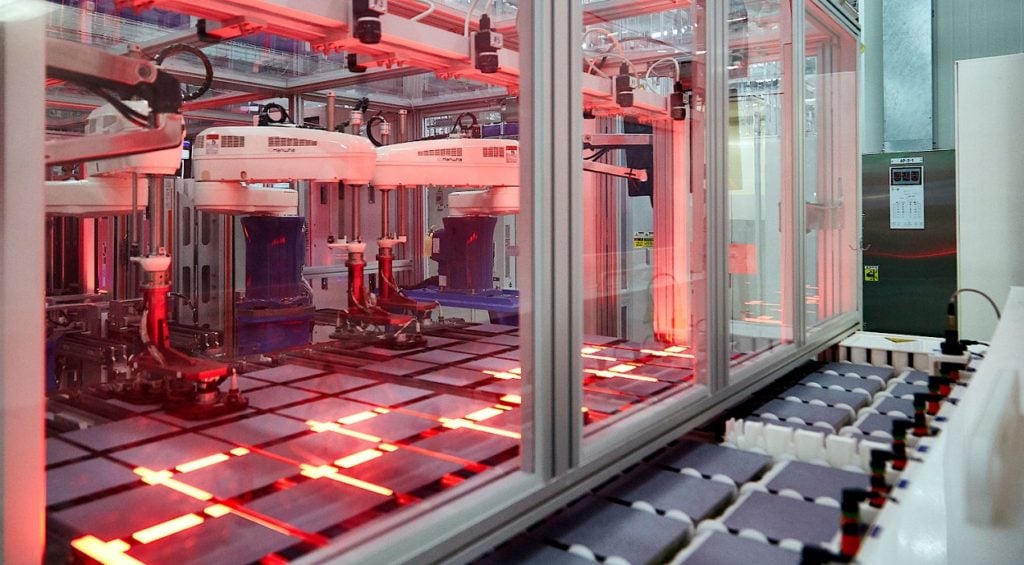
The modules and cells tested were produced at Qcells’ pilot production line in Bitterfeld-Wolfen, Germany, using “exclusively mass-production processes for cell and module fabrication,” the company said. The site is supported by funding from the German Federal Ministry for Economic Affairs and Energy (BMWE), the state of Saxony-Anhalt and the European Union, through project PEPPERONI.
“Hitting these milestones means we are getting closer to bringing a product to market that is reliable, saves money and works better,” said Fabian Fertig, head of tandem R&D at Qcells Germany.
The company added that the certifications are “proof that Qcells is getting closer to delivering a product that meets stability and standardisation measures critical to determining if a product is commercially ready.”
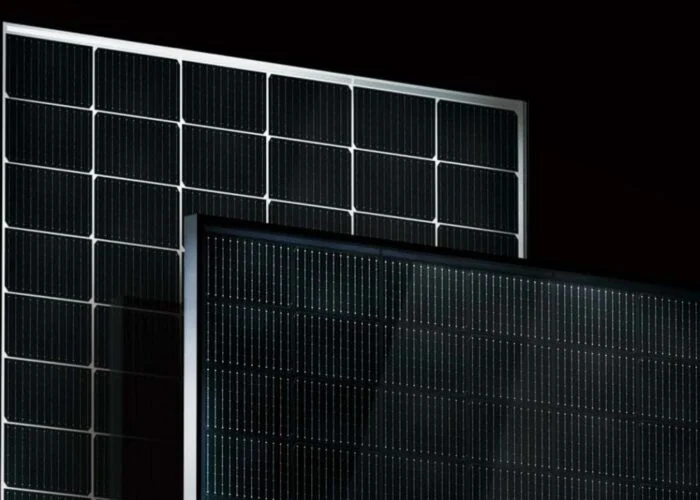
Qcells’ tandem products are based on a two-terminal configuration, with a silicon bottom layer using the company’s Q.ANTUM passivated emitter rear contact (PERC) technology, and a perovskite top layer. The modules used tandem solar cells on full-area M10 substrates.
The solar industry has been trying to commercialise perovskite tandem technology for years, though efforts have gathered pace in recent times. The material can absorb a wider range of the light spectrum than silicon, potentially allowing for significantly more efficient solar modules and greater power yield. However, it is a volatile material that degrades when exposed to light, air and water, at a rate which has made it unviable for commercial solar deployments.
Various companies as well as Qcells have made strides in commercialising tandem technology. Notably, British firm Oxford PV has made commercial strides with its heterojunction (HJT)-based silicon-perovskite tandem technology, with partnerships with Fraunhofer ISE and licensing agreements with US-based First Solar and Chinese solar manufacturing giant TrinaSolar.