Reliance New Energy Solar (RNES) has invested US$29 million in German wafer technology company NexWafe’s Series C financing round as it looks to establish wafer production facilities in India.
A wholly owned subsidiary of multinational conglomerate Reliance Industries, RNES will use its new position as a strategic investor, which allows it access to NexWafe’s technology, to establish “giga-scale wafer manufacturing facilities in India”, according to a NexWafe media release.
Try Premium for just $1
- Full premium access for the first month at only $1
- Converts to an annual rate after 30 days unless cancelled
- Cancel anytime during the trial period
Premium Benefits
- Expert industry analysis and interviews
- Digital access to PV Tech Power journal
- Exclusive event discounts
Or get the full Premium subscription right away
Or continue reading this article for free
The two companies have entered an “India Strategic Partnership Agreement” that will see RNES secure access to NexWafe’s proprietary technology, with plans to build large-scale sites in India that will employ NexWafe processes and technology. The agreement also covers joint technology development and the commercialisation of NexWafe’s “high-efficiency monocrystalline ‘green solar wafer’”.
NexWafe will use the money to accelerate product and technology development, including the commercialisation of its solar PV products on prototype lines in its headquarters in Freiburg, Germany.
It is developing and producing monocrystalline silicon wafers using its proprietary process that removes “the need for costly and energy intensive intermediate steps such as polysilicon production and ingot pulling on which traditional wafer manufacturing relies,” according to a media statement.
“NexWafe’s unique patented technology is expected to drastically cut wafer production costs, making solar photovoltaics the lowest-cost form of renewable energy available,” it added.
“Reliance is famed for its ability to create quality products at the most competitive prices, so its commitment to helping us reshape and reinvent the silicon wafer will be, we believe, game-changing for helping the world deploy high-efficiency photovoltaics at scale,” said NexWafe chairman Bart Markus.
“Our investment in NexWafe signals an important step towards accelerating India’s green energy transition and positioning India as a global leader in photovoltaic manufacturing,” said Reliance Industries chairman Mukesh Ambani, Asia’s richest man. “We believe NexWafe’s innovative ultra-thin wafer will give solar manufacturers a significant advantage over existing photovoltaic technologies.”
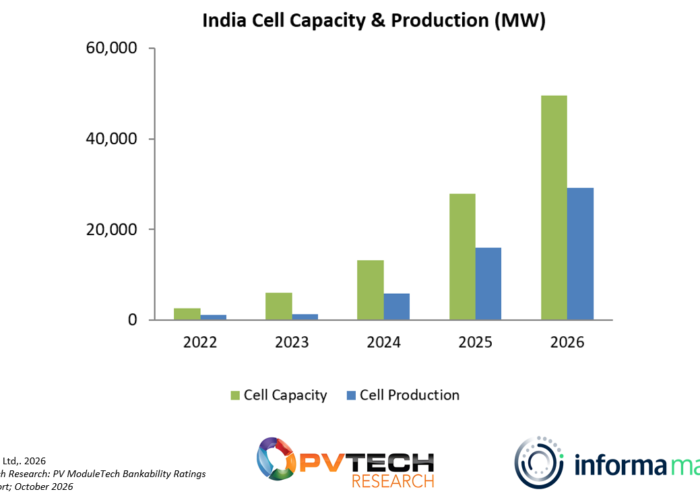
The investment comes at an important time for Indian solar, and Reliance in particular. The company has committed to producing more than 100GW of solar modules by 2030 as part of a plan worth US$10.1 billion that also includes battery storage manufacturing.
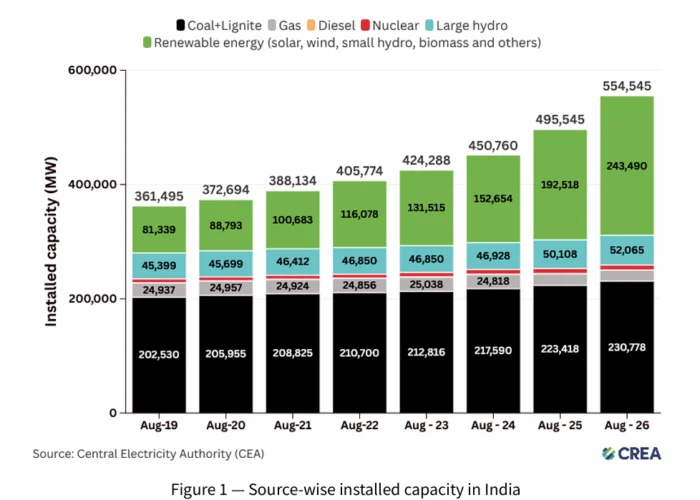
Moreover, the Indian government, despite mulling changes to its policy in light of recent supply pressures, is keen to establish a domestic manufacturing base to challenge China and alleviate the industry’s reliance on Chinese imports, which India’s renewables minister termed “unhealthy”.
The Indian government is seeking to do this through a number of methods, such as its production linked incentive (PLI) scheme, which has seen strong interest as 18 bidders submitted 54.8GW of applications. Reliance, along with Adani, are likely to be the main beneficiaries of the PLI scheme, according to consultancy JMK Research & Analytics.
The investment from RNES was part of NexWafe’s €39 million (US$45 million) Series C round, which also saw investments from InnoEnergy, Lynwood, Saudi Aramco Energy Ventures and “other incumbent and new investors”.