Favorable weather conditions in Germany contributed to renewables accounting for more than half of power generation in January and February this year.
New analysis by Germany’s Center for Solar Energy and Hydrogen Research Baden-Württemberg (ZSW) and the Federal Association of Energy and Water Management (BDEW) has revealed that renewables generated 74.5 billion kWh in the opening quarter of 2022, up by nearly 25% year-on-year.
Try Premium for just $1
- Full premium access for the first month at only $1
- Converts to an annual rate after 30 days unless cancelled
- Cancel anytime during the trial period
Premium Benefits
- Expert industry analysis and interviews
- Digital access to PV Tech Power journal
- Exclusive event discounts
Or get the full Premium subscription right away
Or continue reading this article for free
The beginning of the year was “unusually windy”, especially in February, and contributed to renewables accounting for 47% and 62% power consumption in January and February respectively, with the latter being a record month for wind energy.
During the first quarter of the year, solar PV contributed with 9.6 billion kWh, with March getting above the average numbers of solar irradiation.
In total, renewables produced 54% of total power consumption in Germany in the opening two months of this year, the analysis found.
“The high proportion of renewables in the first few months of this year should not hide the fact that the expansion of renewables is proceeding far too slowly,” said Kerstin Andreae, chair of the BDEW executive board.
Andreae said how important it is to quickly become independent from fossil fuels amid the ongoing conflict in Ukraine and measures to increase the expansion of renewables “are more urgent than ever”.
Earlier this month, in order to reduce its dependency on Russian oil, Germany set to speed up installation of solar and wind projects to reach the goal of 100% of renewable electricity by 2035, with solar PV accounting for 200GW of renewable installation by then.
“We need faster planning and approval procedures and more space for wind turbines and photovoltaic systems,” added Andreae.
Earlier this year, the solar trade association the Bundesverband Solarwirtschaft (BSW) made similar comments by calling to “torn down” additional barriers if Germany wants to meet its 200GW of solar capacity by 2030.
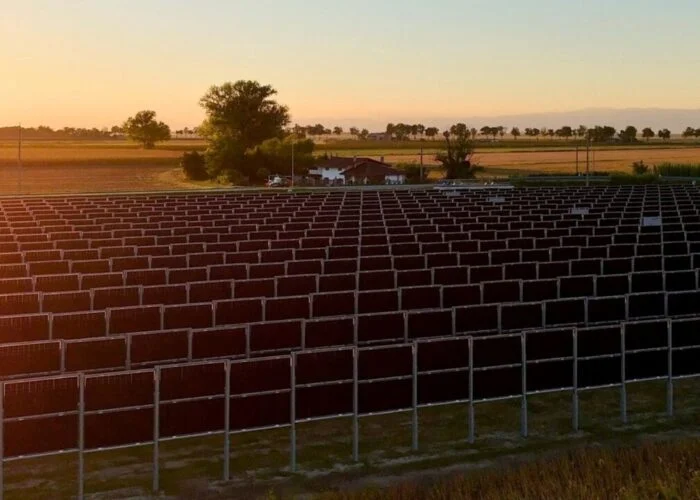
Moreover, the government has launched an initiative to support the construction of solar projects on agricultural land to ramp up agriPV projects in Germany.
Last year, Germany lead the EU in solar PV installations with 5.3GW, and ended 2021 with almost 60GW of total installed capacity. To achieve its target by 2030, Germany will need to more than treble the annual installation rate of solar PV in the country.