US President Donald Trump’s plan to repeal the exemption for bifacial panels within Section 201 trade tariffs look set to be thwarted once more.
Two filings issued yesterday (15 October 2020) detail that the Trump administration's attempts to revoke the exemption look set to be blocked by Judge Katzmann of the US Court of International Trade. In an investor note, investment bank Roth Capital said it “should expect” Judge Katzmann to rule against the government within the 15-day deadline and continue to allow the 201 bifacial exemption.
Try Premium for just $1
- Full premium access for the first month at only $1
- Converts to an annual rate after 30 days unless cancelled
- Cancel anytime during the trial period
Premium Benefits
- Expert industry analysis and interviews
- Digital access to PV Tech Power journal
- Exclusive event discounts
Or get the full Premium subscription right away
Or continue reading this article for free
A Presidential Proclamation published on 10 October saw Trump call on the US International Trade Commission to investigate whether existing measures remain satisfactory in protecting the domestic manufacture of solar products in the US.
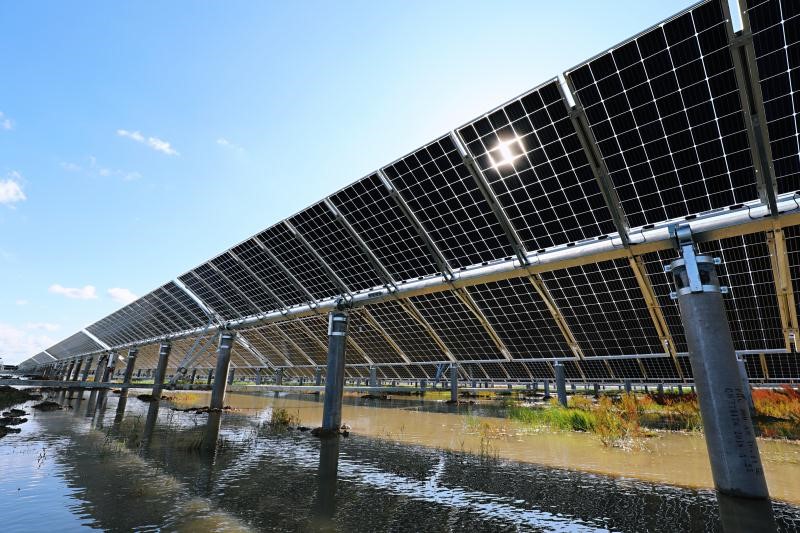
Trump said the exclusion of bifacial panels from the application of the safeguard tariffs has “impaired and is likely to continue to impair” the effectiveness of his four-year solar tariff policy “in light of the increased imports of competing products”. He added that “it is necessary to revoke that exclusion and to apply the safeguard tariff to bifacial panels”.
The proclamation provides a 15-day window for any potential judicial challenge of the decision.
It's not the first time Trump's White House has attempted to close the exemption for bifacial solar modules after the US Trade Representative elected to spare such panels from Section 201 duties in June 2019.
This was followed by a sharp U-turn just four months later, when the USTR axed the exemption. But this prompted a legal challenge from plaintiffs including Invenergy Renewables, EDF and trade group SEIA, and the US Court of International Trade slapped a preliminary junction on the order.
The issue was again raised in April this year when the USTR again said it wished to remove the exemption, stating it would do so as soon as the court’s injunction was lifted.
Section 201 tariffs were introduced by the Trump administration in 2018 to boost the fortunes of domestic manufacturers. While an official review by the US International Trade Commission into their effectiveness found mixed results, the Solar Energy Industries Association (SEIA) claims they have caused “devastating harm” to the US solar sector.
An analysis by SEIA says the trade tariffs have prevented billions of dollars in new private sector investment, cost more than 62,000 jobs and meant that 10.5GW of installations have collapsed.