Trina Solar said its Vertex n-type monocrystalline silicon module has achieved a record aperture efficiency of 24.24% for large-area n-type i-TOPCon modules.
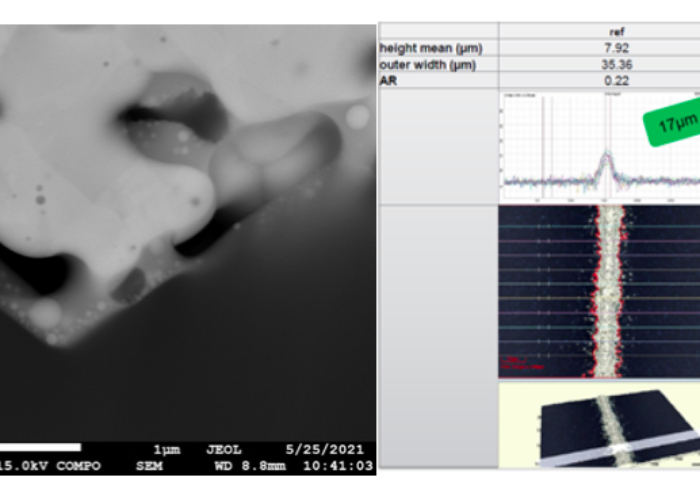
With the market's increasing demand for efficiency and quality, monocrystalline N-type cells have over recent years become a hot technology for the industrialization of high-efficiency cells, due to their high oligomeric life, low photoluminescence, good low light response and high temperature coefficient. Among conventional PERT and passivated contact TOPCon cells, the boron diffusion process has restricted the development and industrial application of N-type technology due to its complexity in preparation, high temperature and high equipment and maintenance costs.
The solar industry’s n-type transition presents a major strategic opportunity and is one JinkoSolar is aiming to grasp with both hands. PV Tech learns how.
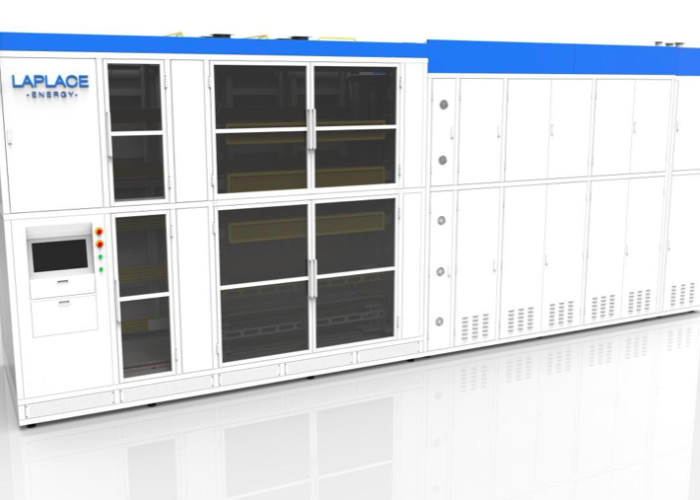
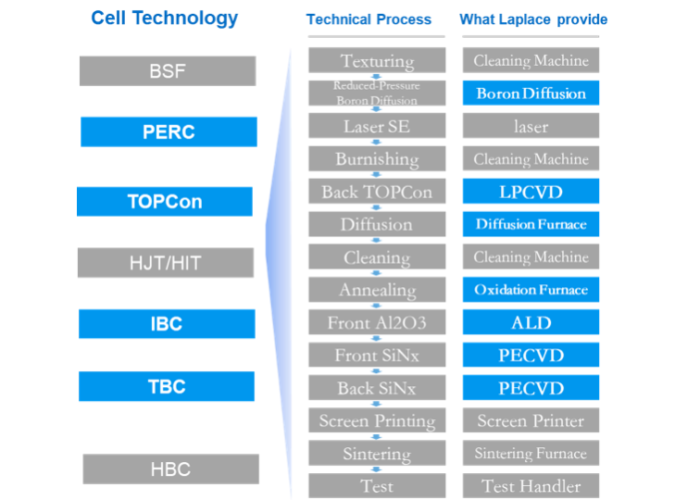
At present, current PERC and new TOPCon capacity are competing for limited photovoltaic installations. The future development rate of N-type cell technology will depend on cost and efficiency differences compared to PERC but, if N-type technology can continue to make breakthroughs in efficiency, cost reduction and yield control, its long-term market share is likely to exceed expectations. Against the backdrop of N-type technology developments, LAPLACE has launched TOPCon core equipment and solutions for the global photovoltaic industry.
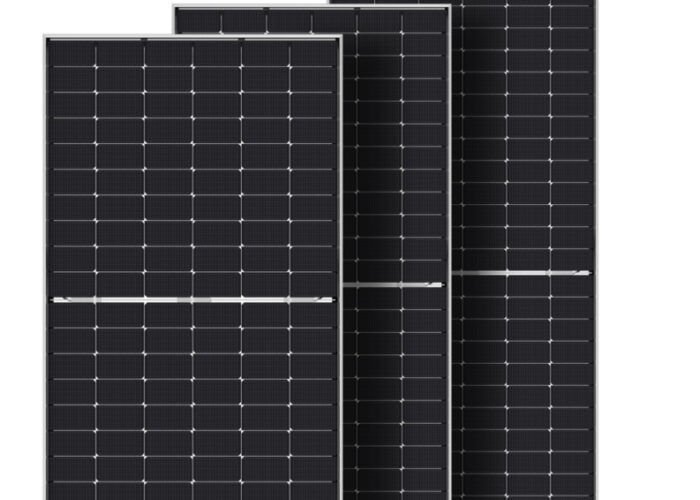
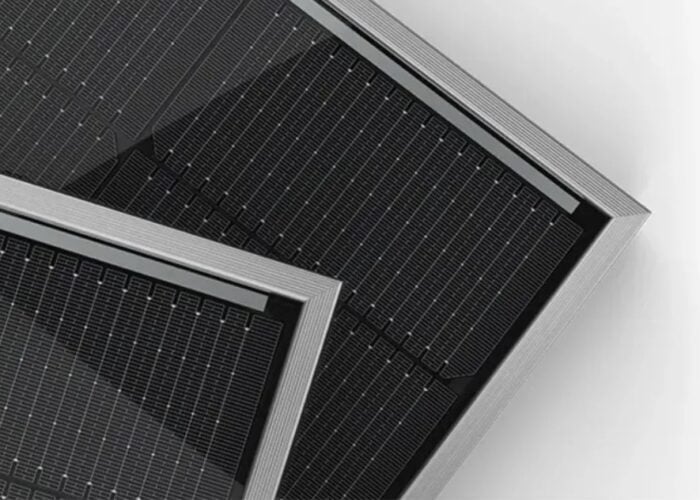
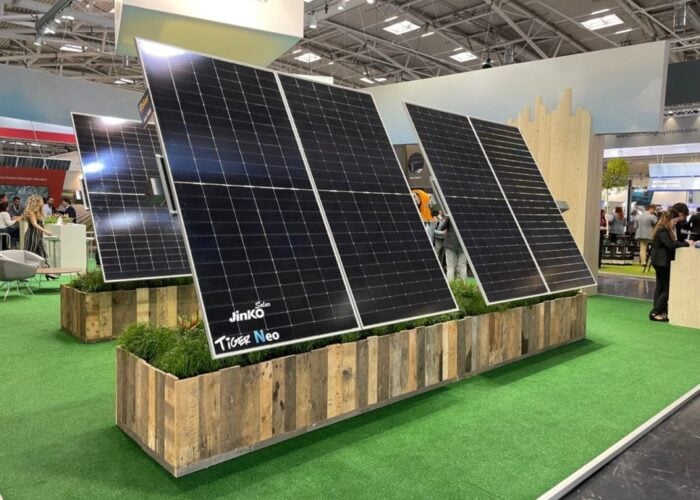
JinkoSolar’s Tiger Neo 78HL4-BDV N-type module, built on a 182mm M10 monocrystalline silicon wafer, is based on Tunnel Oxide Passivated Contact (TOPCon) technology. The TOPCon cell applies cutting-edge and high-efficiency passivation contact technology and uses an ultra-thin tunneling oxide layer.
The quest to find the ideal balance between efficiency and cost optimization is never ending in the photovoltaics industry. N-type cells, well known for their high efficiency, have started to come to the fore, with the industry placing a major bet on the technology. According to the Institute for Solar Energy Research in Hamelin (ISFH), the maximum theoretically possible efficiency for PERC, HJT and TOPCon cells is 24.5%, 27.5% and 28.7% respectively.