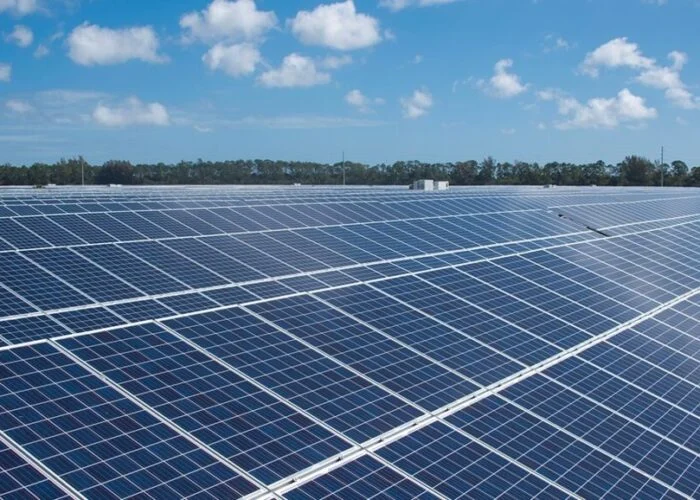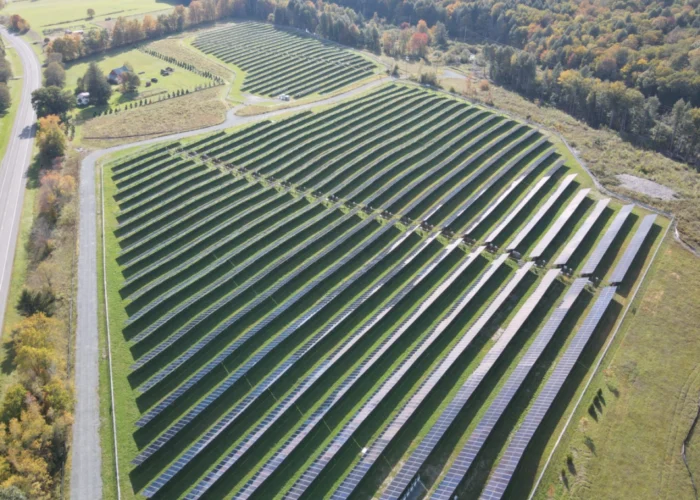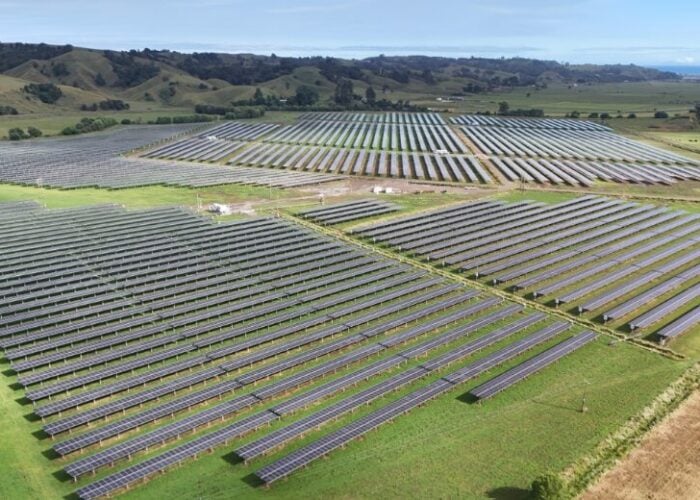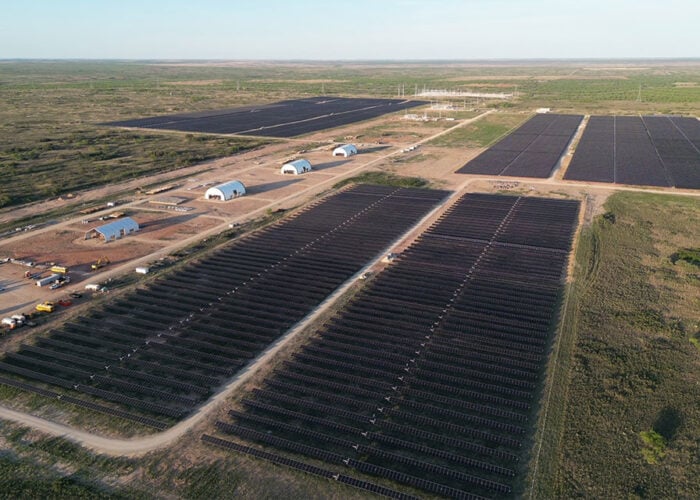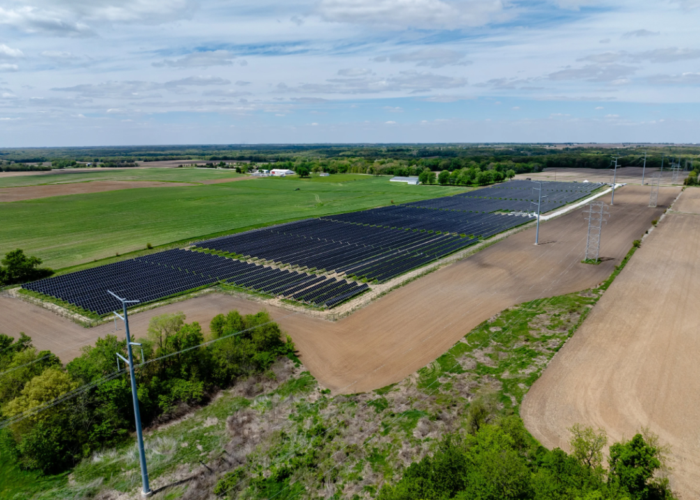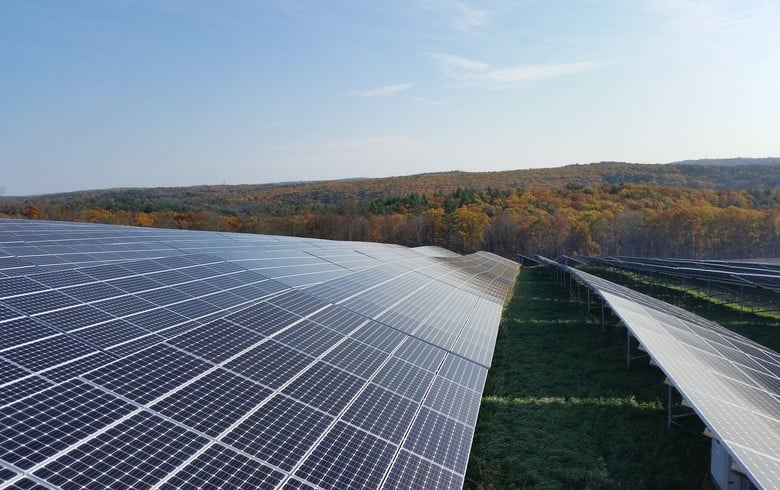
The US Solar Energy Industries Association (SEIA) has launched an interactive map showing that solar development occupies only 0.07% of US farmland.
The map was released during ongoing negotiations in Congress surrounding the Farm Bill, a US$6 billion piece of legislation that covers matters such as conservation and land management for US farmland. The SEIA map compares the land footprint of solar PV with other major land uses, such as suburban development and golf courses.
Try Premium for just $1
- Full premium access for the first month at only $1
- Converts to an annual rate after 30 days unless cancelled
- Cancel anytime during the trial period
Premium Benefits
- Expert industry analysis and interviews
- Digital access to PV Tech Power journal
- Exclusive event discounts
Or get the full Premium subscription right away
Or continue reading this article for free
According to SEIA, solar currently covers 0.04% of total US land area and 0.07% of US farmland. The trade group said there are no US states where solar occupies more than 0.5% of prime farmland.
SEIA’s analysis also found that nearly every state has more abandoned prime farmland than solar-developed prime farmland. Nationally, there are 43 acres of abandoned prime farmland for every acre of solar built on prime farmland.
The data shows that golf courses use 2.6 times more prime farmland than solar, while suburban development since 2014 has consumed roughly six times more prime farmland than solar projects.
SEIA said many solar projects support dual-use agricultural practices, including livestock grazing and pollinator habitats, allowing farming activity to continue alongside electricity generation.
The association added that solar provides farmers and landowners with a stable long-term source of income, helping some family farms remain financially viable while supplying electricity to local communities.
“America depends on our land to grow our food, build our communities, and power our lives,” said SEIA president and CEO Tim Pawlenty. “Responsible land use means balancing all those needs. This map helps provide important context by showing that solar and agriculture can thrive together. Solar development uses a very small amount of farmland compared to many other common land uses, while also delivering affordable energy, local tax revenue and reliable income for farmers and landowners.”
Unlike permanent suburban expansion, solar projects can also be decommissioned and the land restored at the end of their operating life, SEIA said.
The organisation said it has developed land-use guidance and best-practice resources to help communities, landowners, local officials and developers make informed decisions on solar and storage deployment.
The launch comes as the US solar industry faces an evolving policy landscape. Earlier this week, Anne Loomis, partner at US law firm Troutman Pepper Locke, spoke to PV Tech Premium about the challenges faced by developers as they seek to prove the “start of construction” on their projects before 4 July in order to secure tax credit support.
SEIA cited trade and domestic policy challenges as contributing factors to a year-on-year decline in solar deployment figures. In their March 2026 Solar Market Insight report, SEIA and Wood Mackenzie said the US installed 43.2GW of new solar PV capacity in 2025, a 14% decline from the previous year.
In a separate report published in June, the organisations said solar and energy storage accounted for 91% of all new power generation capacity added in the US during the first quarter of 2026, underlining the technologies’ continued dominance of new capacity additions despite policy headwinds.