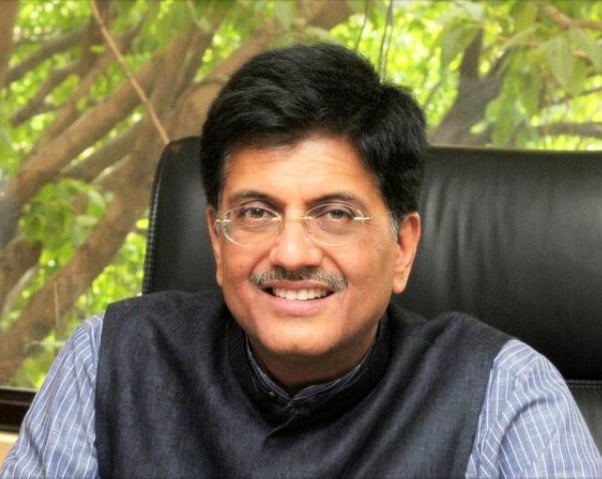
India may soon review its Renewable Purchase Obligation (RPO) mechanism to give targets more suited to the environment of each state and offer more flexibility, according to energy minister Piyush Goyal.
The RPO mandates individual states to procure a certain percentage of renewable energy into their power mix. Around 18 months ago, then joint secretary of the Ministry of New and Renewable Energy (MNRE), Tarun Kapoor, described the RPO as perhaps the most important policy driver for solar energy in India. At the time, few complained about the RPO having any restriction on state policies.
Try Premium for just $1
- Full premium access for the first month at only $1
- Converts to an annual rate after 30 days unless cancelled
- Cancel anytime during the trial period
Premium Benefits
- Expert industry analysis and interviews
- Digital access to PV Tech Power journal
- Exclusive event discounts
Or get the full Premium subscription right away
Or continue reading this article for free
However, speaking at the PPA signing ceremony for 1,050MW of wind power in India last week, Piyush Goyal said that India “at some stage” may have to review the policy of having a separate RPO for solar and other forms of energy.
He said: “We should leave it to the states to decide what is in their best interests, how they can serve their people best and who are we to or why should we anymore be looking at different mixes, somebody wants to have 100% wind so be it, somebody wants 100% solar so be it.”
For example, Goyal suggested that the state of Maharshtra may be more suited to wind energy specifically once it has more robust scheduling and forecasting.
The minister said that the RPO came about in an environment where renewables were seen as expensive and therefore they had to be “thrust” onto the system – adding: “Of course, the volumes were so small, it did not matter also, now we are looking at much larger volumes.”
Indeed, the solar and wind context has changed with both technologies bringing the lowest electricity prices in India, when considering the most recent PPA signings. The confidence of these tariffs and thermal plant addtiions has caused an environemtn with surpluses of energy rather than shortfalls and as a result “the entire future [framework] will have to be recrafted, redesigned”, Goyal said.
On a separate issue, Goyal also noted the need to bring in spinning reserves to reduce the need to back down thermal plants. Just at the beginning of the month, he launched a report on integrating renewables into the grid, which specified the assumption that coal plants would able to operate at just 55% of rated capacity in compliance with Central Electricity Regulatory Commission regulation, in order for renewables to fit into the system.
Considering even energy stroage, Goyal also said: “We can do faster ramp up and ramp down, either through hydro or through gas, may be also through storage, through batteries at some stage in the future.”