Silvaco’s device simulator Atlas analyzing hysteresis phenomena in perovskite solar cells

Facebook
Twitter
LinkedIn
Reddit
Email
Segawa Laboratory at the Research Center for Advanced Science and Technology.

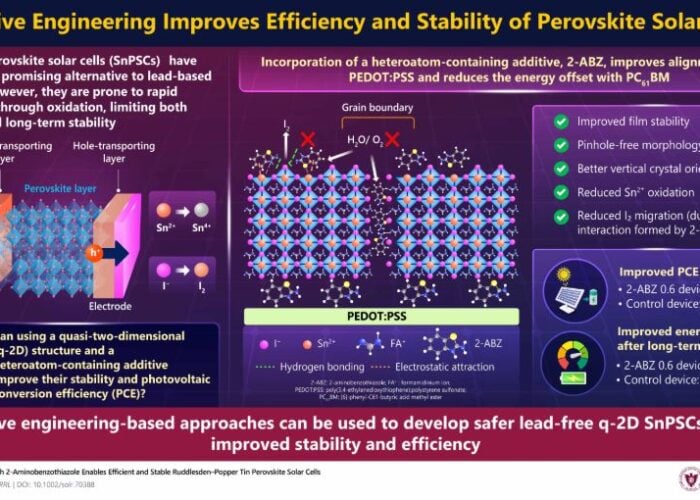
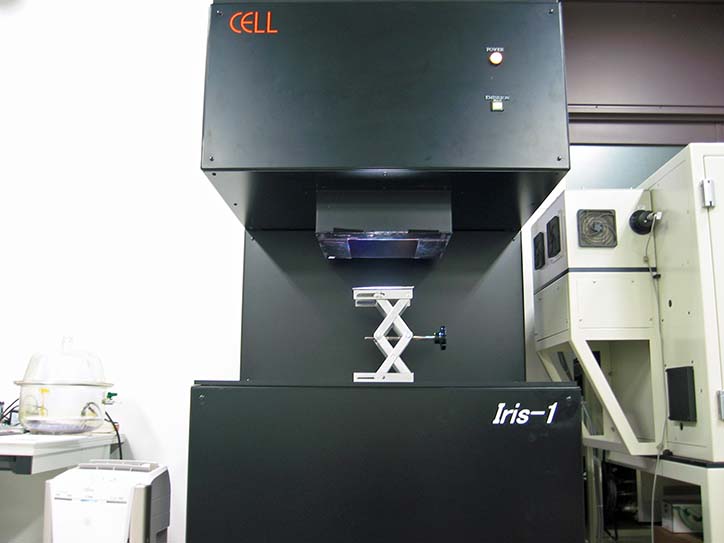
TCAD and EDA software provider Silvaco Japan Co is providing the Segawa Laboratory at the Research Center for Advanced Science and Technology, The University of Tokyo with its device simulator, Atlas for analyzing hysteresis phenomena in perovskite solar cells.

Silvaco said that Segawa Laboratory was conducting research aimed at improved performance of next generation organic solar cells, such as dye-sensitized and organic thin film solar cells, including organometal halide perovskite solar cells with CH3NH3PbI3 structures.

This article requires Premium SubscriptionBasic (FREE) Subscription

Try Premium for just $1

  • Full premium access for the first month at only $1
  • Converts to an annual rate after 30 days unless cancelled
  • Cancel anytime during the trial period

Premium Benefits

  • Expert industry analysis and interviews
  • Digital access to PV Tech Power journal
  • Exclusive event discounts

Or get the full Premium subscription right away

Or continue reading this article for free

Silvaco’s device simulator Atlas, makes it possible to understand physical phenomena inside a device and make reliable predictions about the behaviour of new device structures, and can analyse hysteresis phenomena in perovskite solar cells.

“Silvaco’s device simulator Atlas will be useful in analyzing hysteresis phenomena resulting from TiO2 interface capacitance. We expect a further acceleration of perovskite solar cell research due to such analyses,” noted Professor Satoshi Uchida of the Environment and Energy Sciences Program at the Komaba Organization for Educational Excellence.


Read Next

July 23, 2026
US perovskite solar technology company Caelux has signed two agreements with Indian solar manufacturers to produce perovskite-silicon “Hybrid Tandem” modules.
Premium
July 21, 2026
Sofab Inks has today announced that it has secured US$6 million in to expand its tin-based ETL solution for use in perovskite solar cells.
July 17, 2026
Qcells has become the first company to achieve UL Standards & Engagement (UL) and the International Electrotechnical Commission (IEC) certifications for silicon-perovskite tandem solar technology.
July 1, 2026
Researchers from HZB and Humboldt-Universität in Berlin have achieved a record 25.5% conversion efficiency in a CIGS-perovskite tandem PV cell.
June 10, 2026
Solar manufacturer Trinasolar has reached a record peak power output of 907W and a full-area efficiency of 29.2% for a perovskite/crystalline silicon tandem module.
April 21, 2026
Two US solar companies have made advances in perovskite-silicon solar module production this week, with claims that they mark a step towards making the long-discussed technology commercially viable.

Upcoming Events

Solar Media Events
October 13, 2026
San Francisco Bay Area, USA
Solar Media Events
November 3, 2026
Málaga, Spain
Solar Media Events
November 24, 2026
Warsaw, Poland
Solar Media Events
February 2, 2027
London, UK
Solar Media Events
April 20, 2027
Istanbul, Türkiye