Module manufacturer Qcells claims its perovskite/silicon tandem technology has moved a step closer to commercialisation after passing several critical stress tests.
The company said the tandem modules had successfully completed a number of durability tests specified under IEC and UL standards and that the results had been independently verified by quality assurance body, TUV Rheinland.
Try Premium for just $1
- Full premium access for the first month at only $1
- Converts to an annual rate after 30 days unless cancelled
- Cancel anytime during the trial period
Premium Benefits
- Expert industry analysis and interviews
- Digital access to PV Tech Power journal
- Exclusive event discounts
Or get the full Premium subscription right away
Or continue reading this article for free
“To Qcells’ knowledge, this is the first report of tandem modules passing these stress tests, considering tandem-specific restrictions on power measurement, so this is truly a pivotal moment for tandem solar technology,” said Danielle Merfeld, global chief technology officer at Qcells. “Qcells’ breakthrough marks a critical step towards commercial readiness.”
Excitement about the theoretical efficiency gains offered by combining perovskite and silicon-based PV technologies has long been tempered by persistent reliability and durability concerns.
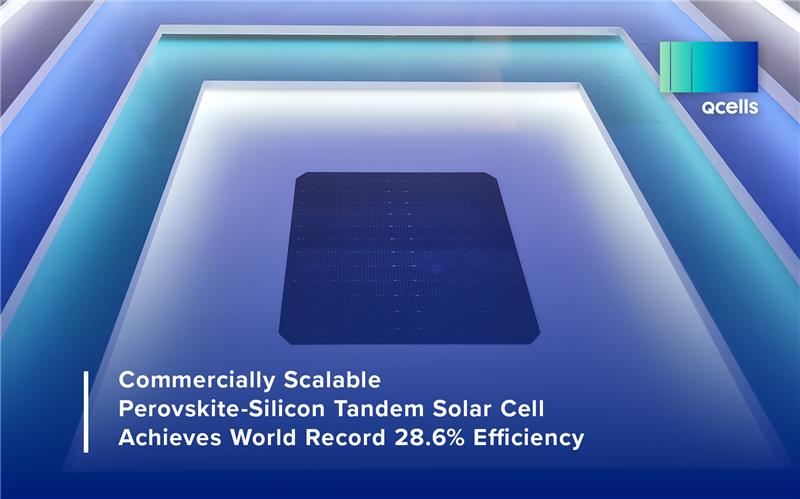
Following on from a world-record efficiency for a commercially scalable perovskite/silicon tandem cell in December 2024, Qcells said the latest “milestone” in durability advanced tandem technology towards “real-world commercial deployment”.
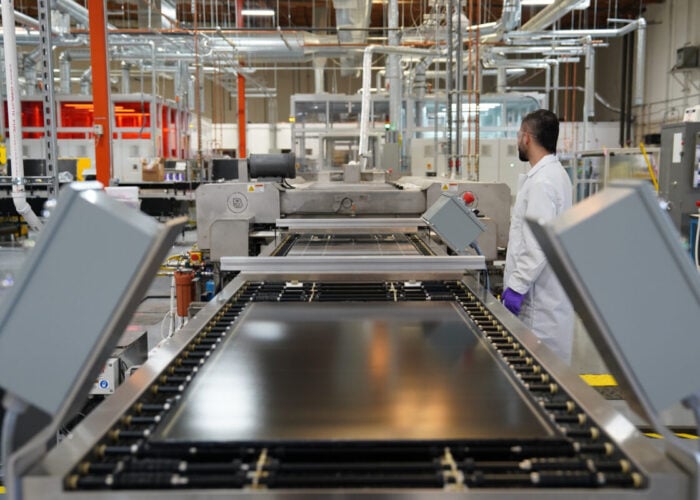
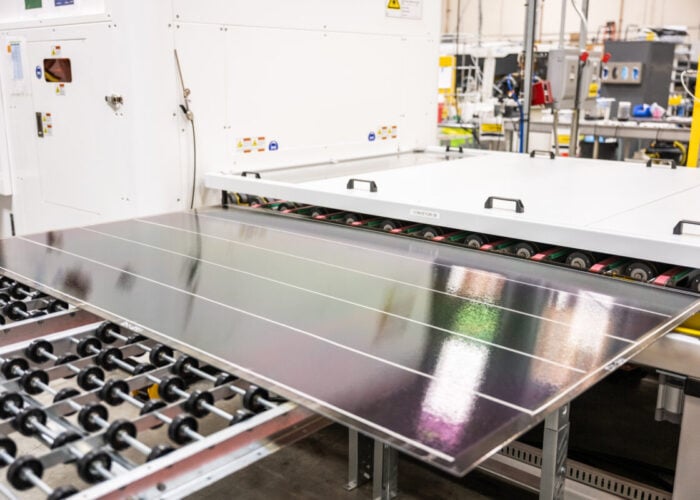
Qcells’ tandem module is a two-terminal device, featuring the company’s in-house developed perovskite technology as a top cell and its Q.ANTUM silicon technology as a bottom cell.
The company said the module had passed the most critical stress tests for solar cell reliability according to international standards IEC 61215-2:2021 and UL 61215-2:2021. These include UV preconditioning at 15kWh/m2, 200 thermal cycles, 10 humidity-freeze cycles and 1,000 hours of damp heat testing.
“The tested cells and modules are typical devices from our R&D pilot line in Germany and have been fabricated by exclusively using processes that are feasible for mass production,” said Fabian Fertig, head of tandem R&D at Qcells Germany. “This result is laying the groundwork for future commercialisation of this exciting technology.”
Issue 41 of our quarterly journal PV Tech Power explored the commercialisation of perovskite technologies in depth. To access a copy, click here (subscription required).