New Zealand’s Ministry for Regulation has published the final report of its review into the residential and small-to-medium-scale solar installation process.
The findings indicate that the system is fragmented across multiple regulatory regimes and recommend 15 changes that it estimates could deliver NZ$28 million (US$16.4 million) to NZ$50 million in net benefits over ten years.
Try Premium for just $1
- Full premium access for the first month at only $1
- Converts to an annual rate after 30 days unless cancelled
- Cancel anytime during the trial period
Premium Benefits
- Expert industry analysis and interviews
- Digital access to PV Tech Power journal
- Exclusive event discounts
Or get the full Premium subscription right away
Or continue reading this article for free
The report, titled “Improving the solar installation process” and published in July 2026, concludes that New Zealand’s regulatory framework has not kept pace with changes in solar technology and rising consumer uptake.
It describes the installation process as involving unnecessary complexity, inconsistent requirements and unpredictable timelines that, in some cases, add months to what should be a straightforward upgrade.
The Ministry used AI tools to support analysis of submissions and parts of the report’s preparation, in line with New Zealand government guidance on responsible AI use.
The review was initiated in May 2026 following concerns raised through the government’s Red Tape Tipline about approval delays and costs.
As PV Tech reported at the time, the government set out to make New Zealand the simplest developed country in which to install solar, with Regulation Minister David Seymour pointing to Victoria, Australia, as a model where standard installations require just one layer of sign-off and can be approved within 24 hours.
By contrast, New Zealand’s process can involve up to eight layers of approval and five separate site visits from four different entities.
The report identifies seven issue areas. Building consent exemptions under Schedule 1 of the Building Act 2004 are not consistently understood or applied, leading installers and councils to require consent for legally exempt systems.
Resource consent rules are inconsistent across councils, with some requiring consent for ground-mounted systems that have a limited environmental impact and no national standard in place.
Electricity distributors take widely varying amounts of time to approve connection applications, ranging from minutes at the most efficient networks to four months at the slowest.
Metering lacks transparency and competition, with consumers locked into providers and facing delays of up to three months for meter upgrades needed before systems can export electricity. Retailer processes are poorly coordinated.
The inspection model is creating delays, with all installations currently required to pass independent inspection regardless of installer accreditation. Plug-in solar units, which can be plugged into a standard power socket, are currently illegal in New Zealand despite being permitted in several other countries.
Fifteen recommendations and a comparison with Australia
The report makes 15 recommendations across those seven areas. On building consents, it calls for amendments to Schedule 1 of the Building Act to clarify when exemptions apply, which it says could be implemented within 12 months, with interim guidance available within three months.
On planning, it recommends nationally consistent rules exempting solar installations under 300kW and roof-mounted systems that fit entirely on a building’s roof from requiring resource consent, targeting implementation in late 2027, subject to resource management reform legislation passing Parliament.
On electricity distributors, it recommends that systems under 10kW be approved by the end of the next working day under a streamlined process, and that systems between 10kW and 100kW be approved within five working days, replacing current timeframes of 30 to 80 working days for that size range.
On metering, it recommends making meter data more accessible to both consumers and electricity sector participants, improving competition by giving consumers a genuine choice of metering provider, publishing consumer-friendly information about meter types and pricing, and introducing enforcement action against unnecessary meter upgrades.
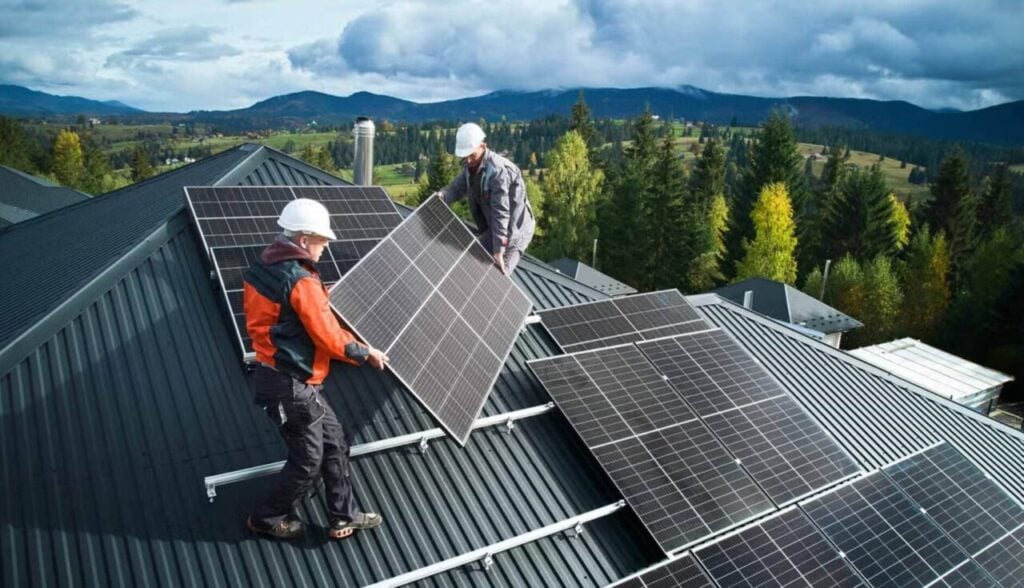
In its inspections, it recommends exempting accredited installers from independent inspections for systems up to 100kW, a change it says reflects inspection data showing that accredited installers have very low rates of non-compliance. On plug-in solar, it recommends legalising units of up to 800W, bringing New Zealand into line with several European countries and some Australian states.
The report explicitly compares New Zealand’s framework with Australia’s, describing Australia as having evolved more streamlined, consistent and efficient installation processes in response to the same challenges New Zealand is now addressing.
Only 3-4% of New Zealand households currently have solar installed compared to more than 30% in Australia, a gap the report attributes partly to regulatory friction alongside the absence of the subsidy schemes that the Ministry acknowledges have played a role in Australia’s uptake. However, the subsidy policy was outside the scope of the review.
The context for the review reflects New Zealand’s broader energy challenges. The 2024 energy crisis, driven by low hydro storage, declining gas supply and price spikes, reinforced the case for diversifying the country’s generation mix beyond its hydropower base.
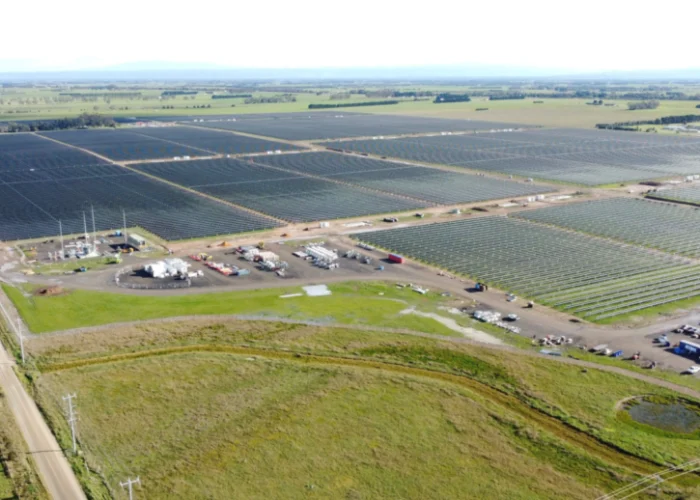
At the utility scale, New Zealand’s solar pipeline has expanded rapidly since then, with Harmony Energy and Igneo Infrastructure Partners energising the 202MWp Tauhei Solar Farm in the Waikato region in July 2026, now the country’s largest operational solar installation.
Technology is also advancing in the market, with Trina Solar securing what it described as the first commercial order for a perovskite-silicon tandem solar module in New Zealand in June 2026.
The cost-benefit analysis accompanying the final report estimates that the package of reforms could deliver NZ$28 million in net benefits over ten years under a conservative scenario where rooftop solar uptake does not increase as a result of the changes, rising to NZ$50 million if the reforms also lead to additional installations.
Those benefits arise from reduced delays, lower installation costs, more efficient regulatory processes and the legalisation of plug-in solar.
The Ministry for Regulation stated that, overall, the changes will help ensure that New Zealand is the simplest place in the developed world to install solar while maintaining safety and quality.
Several of the recommendations require the Electricity Authority to amend the Electricity Industry Participation Code 2010, and the report acknowledges that, as an independent Crown entity, the Authority will give due consideration to the recommendations rather than being directed to implement them.