India’s Ministry of New and Renewable Energy (MNRE) has issued a clarification in its guidelines for tariff-based competitive solar procurement implying that a change in duties will henceforth be covered as a ‘Change in Law’, which would give developers protection in case a safeguard, anti-dumping or any other duty is imposed.
Just after analysts had said India’s solar quality control standards lacked clarity and investment in testing labs, the Ministry of New and Renewable Energy (MNRE) has brought forward the enforcement date in an attempt to ensure that quality control benefits the industry as soon as possible.
The government of India will come down hard on those flouting the Domestic Content Requirement (DCR) rules – in WTO permitted cases – where imported solar modules are used, but declared as locally made.
The winner of India’s first major solar-plus-storage auction, which has subsequently been scrapped for retendering, has said that despite being an unfortunate development, the firm is still keen to work closely with government on this technology for the which the economics are continuously and rapidly improving.
Indian Renewable Energy Development Agency Limited (IREDA) has signed an agreement with Rewa Ultra Mega Solar Limited (RUMSL) to finance two major solar parks in the state of Madhya Pradesh with a first loan of INR2.1 billion (US$33 million).
A preliminary recommendation from India’s Directorate General of Safeguards Customs and Central Excise to impose a provisional 70% safeguard duty on solar cells imported from China and Malaysia has been branded as “ridiculous” and potentially catastrophic, by PV industry members involved in finance, project development and analysis.
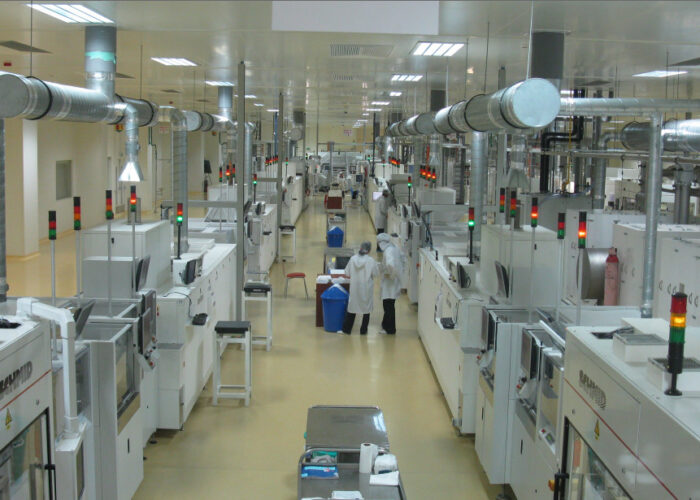
Solar Energy Corporation of India (SECI) has issued an expression of interest (EOI) for the setting up of 20GW of vertically-integrated solar PV manufacturing capacity in India over the next three years, in an unclear and poorly worded release.
Aiming to make its local solar manufacturers competitive on the global stage, the Indian government has proposed direct financial support of INR110 billion (US$1.7 billion) and a 12GW allocation of public sector tenders mandated to include locally sourced PV equipment.