Measures related to windfall revenues of power generators in Europe should target actual profits only and exempt renewables that do not make windfall profits, SolarPower Europe (SPE) has said.
Nearly 40GW of solar PV will be rolled out across Europe by the end of the year, according to SolarPower Europe (SPE), as the continent scrambles to deploy renewables and wean itself off Russian gas.
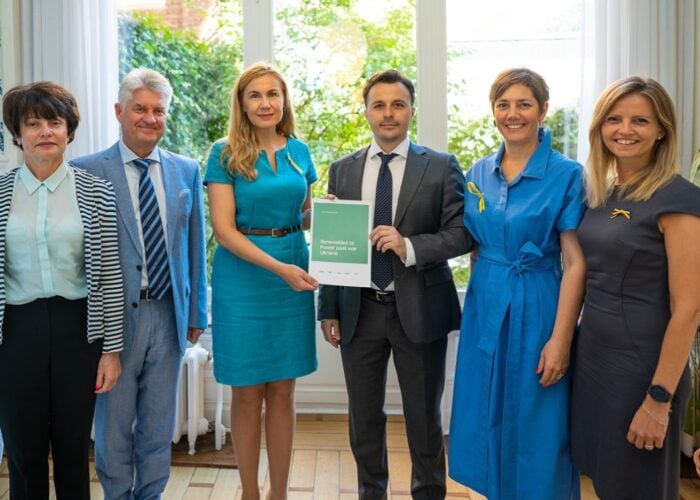
European and Ukrainian solar trade associations have called for Ukraine’s post-war recovery to be based on renewable energy, urging the country’s leaders to set a target of at least 50% of renewables in electricity production by 2030.
The European Union’s solar strategy has established a 740GWdc deployment target and a raft of supportive measures, but what does it and the REPowerEU plan mean for the industry? PV Tech Insights will answer all of your questions in our upcoming webinar.
The EU Solar Energy Strategy, published alongside the REPowerEU strategy yesterday, has targeted 400GWdc of solar PV by 2025 and almost 740GWdc by 2030, a significant jump on the bloc’s previous targets as it looks to cut its reliance on Russian fossil fuels.
Ahead of the release of the European Commission’s much-anticipated Solar Strategy, PV Tech speaks to numerous industry stakeholders to determine just what Europe’s PV sector needs to fulfil its potential.
The global solar community has called for “robust and fast policies” alongside increased international cooperation to accelerate PV deployment and the energy transition.
The European Union (EU) should set higher solar PV deployment targets and speed up the energy transition to phase out its energy dependency on Russia as soon as possible, according to five member states of the bloc.