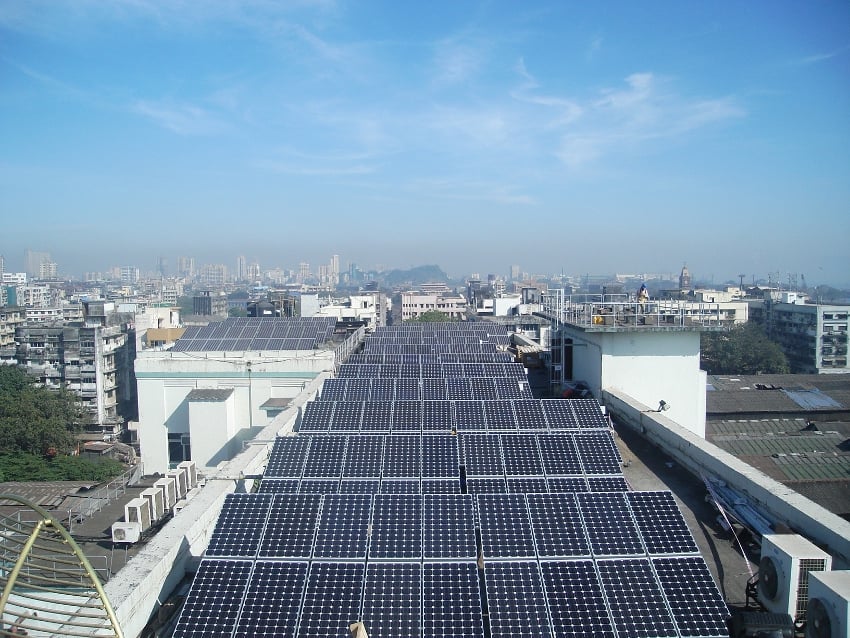
Indian Discom Tata Power Delhi Distribution Limited (Tata Power-DDL) and German government-owned entity GIZ have signed a memorandum of understanding (MoU) to work jointly on promoting rooftop solar, energy storage systems, EVs and smart grid initiatives.
The two bodies plan to research and conduct studies on these areas and organize capacity building programs jointly for channel partners, project developers, financial institutions, government departments, distribution utilities, and public sector undertakings (PSUs).
Try Premium for just $1
- Full premium access for the first month at only $1
- Converts to an annual rate after 30 days unless cancelled
- Cancel anytime during the trial period
Premium Benefits
- Expert industry analysis and interviews
- Digital access to PV Tech Power journal
- Exclusive event discounts
Or get the full Premium subscription right away
Or continue reading this article for free
Another aim is to promote standardized rooftop PV systems for the broader Indian public by the year 2022.
Praveer Sinha, CEO and managing director, Tata Power–DDL, said: “The collaboration with an institution like GIZ will provide impetus towards adoption of clean, efficient and smart technology in the utility space. We are confident that the collaboration will help us to learn and achieve a greener and sustainable solutions. usage of energy efficient technology is a unique and cost-effective solution to our consumers to optimize operational efficiency and thereby help us to provide them value added services.”
Joerg Gaebler, principal advisor, GIZ said, “We expect the collaboration with Tata Power-DDL will help us in designing and implementing tailored solutions by developing a deeper understanding of the challenges faced by distribution utilities in promoting mature clean technologies like rooftop photovoltaics.”
The governments of India and Germany are already closely aligned in energy maters and the two are collaborating on enhancing the Indian grid’s ability to absorb renewable power.