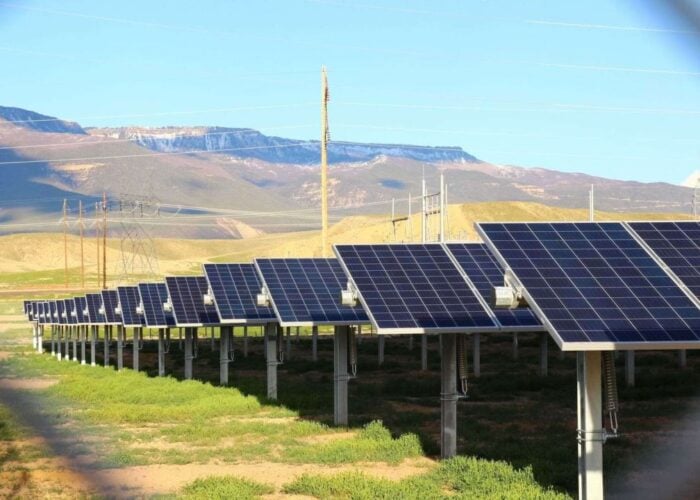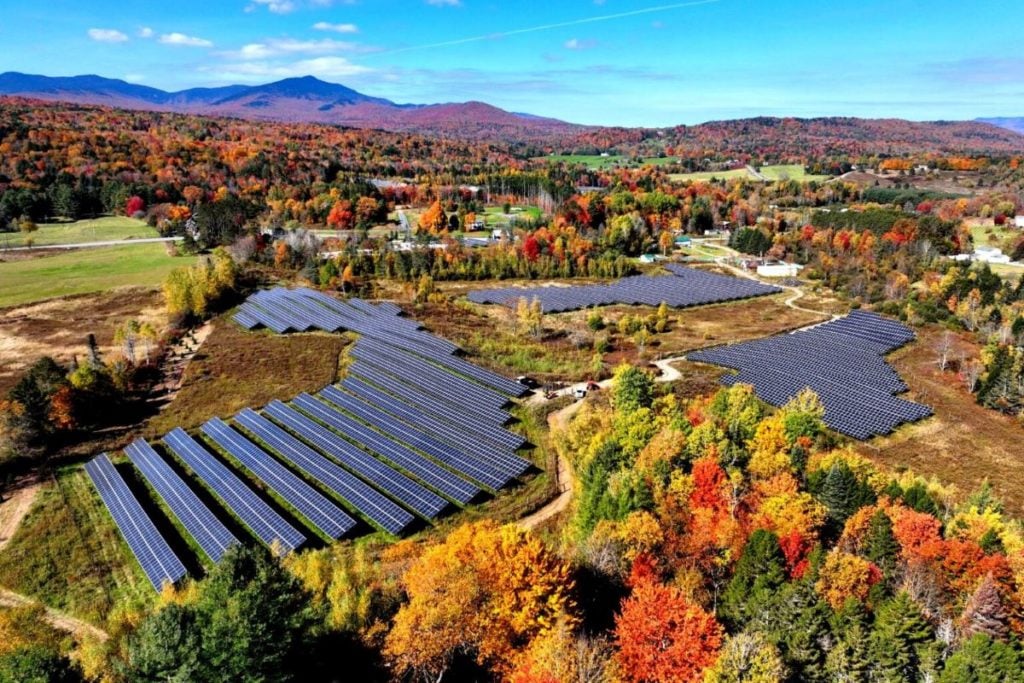
Environmental nonprofit The Nature Conservancy (TNC) and the Cumberland Forest Limited Partnership have entered into an agreement with solar developer Sun Tribe Development and utility ENGIE to build a solar and battery energy storage systems (BESS) portfolio in the Appalachians, US.
Consisting of 14 solar PV plants and three battery storage projects that will be built on 360 acres of former coal mines in the US states of Virginia, Tennessee and Kentucky.
Try Premium for just $1
- Full premium access for the first month at only $1
- Converts to an annual rate after 30 days unless cancelled
- Cancel anytime during the trial period
Premium Benefits
- Expert industry analysis and interviews
- Digital access to PV Tech Power journal
- Exclusive event discounts
Or get the full Premium subscription right away
Or continue reading this article for free
The portfolio is expected to have an installed capacity of 49MW for solar PV and an output of 320MW for the battery storage.
This represents the second round of energy projects announced under the Cumberland Forest Project. The first round included the development of eight utility-scale solar PV plants by Sun Drive and utility Dominion Energy with a combined capacity of 130MW.
One of the projects from that first round, the 10MW Wildcats Solar, is targeted to begin construction by 2026 and will be located in Wise County, Virginia. The projects from the first round are scheduled to come online by 2029.
According to TNC, the goal of these energy projects is to demonstrate that developers can cost-effectively build renewable energy projects on former mines while benefitting communities. Thus taking the approach of creating benefits to climate, conservation and communities.
“When selecting which companies to work with, we sought those who were willing to push the boundaries of clean energy development with us,” said Brad Kreps, TNC Clinch Valley director. “Developing projects on former coal mines – and in a way that engages with people in the local area so that communities can benefit – takes ingenuity, skill and determination.”
Sun Tribe’s projects are expected to be built in the states of Virginia and Tennessee, with the development of a 5MW solar PV plant and three BESS ranging from 80MW to 150MW output.
Construction of the BESS projects will enhance grid reliability in the region and reduce needs for future grid upgrades.
Located in Virginia, Sun Tribe is composed of three business units: development, engineering, procurement, and construction (EPC) and operations and maintenance (O&M). The company develops community and utility-scale solar projects throughout the Appalachians and in the mid-Atlantic US.
Engie on the other hand will develop 13 community-scale solar projects on former mines in Virginia, Tennessee, and Kentucky. These projects will range from 1 to 6MW in size.
The projects aim to take advantage of incentives from the Inflation Reduction Act (IRA).
Coal communities incentives
The IRA includes adders for renewable energy projects built on coal communities which includes both Investment Tax Credit (ITC) and Production Tax Credit (PTC) adders. At the time, PV Tech Premium looked at how the IRA could help the development of solar PV projects on brownfield sites with the Appalachian being one of the regions in the US more prone for these types of projects.
This is not the first time the environmental nonprofit has partnered with solar developers to build PV projects on former coal mines. In 2023, The Nature Conservancy partnered with independent power producer (IPP) BrightNight and automaker Rivian to develop an 800MW solar PV project on the site of a former coal mine in Kentucky.
At the time of the announcement, the project was estimated to represent a US$1 billion infrastructure investment, with construction expected to start this year.