The UAE has raised its renewable and nuclear energy target to account for 35% of its energy mix by 2030-31, according to state-run media.
Emirati Minister for Energy and Infrastructure, Suhail bin Mohammed Al Mazrouei, told the Emirates News Agency (WAM) earlier this week that meeting the targets will require additional projects, greater competition and expanded private-sector participation in power generation.
Try Premium for just $1
- Full premium access for the first month at only $1
- Converts to an annual rate after 30 days unless cancelled
- Cancel anytime during the trial period
Premium Benefits
- Expert industry analysis and interviews
- Digital access to PV Tech Power journal
- Exclusive event discounts
Or get the full Premium subscription right away
Or continue reading this article for free
Al Mazrouei said that 24-hour or “round-the-clock” solar PV and energy storage projects will be a major part of the expanded target. He cited the falling cost of both technologies and the advances in energy storage, enabling longer storage durations and expanding the usage of solar power beyond sunshine hours.
WAM reported that the minister said these developments have made solar-plus-storage a comparable offering with natural gas, nuclear power and other baseload technologies, “while offering encouraging and competitive prices”.
The target will also require expanded investment in electricity grids to reduce losses, improve efficiency and lower power prices, alongside more transmission interconnections with neighbouring countries and a growing emphasis on clean energy sources.
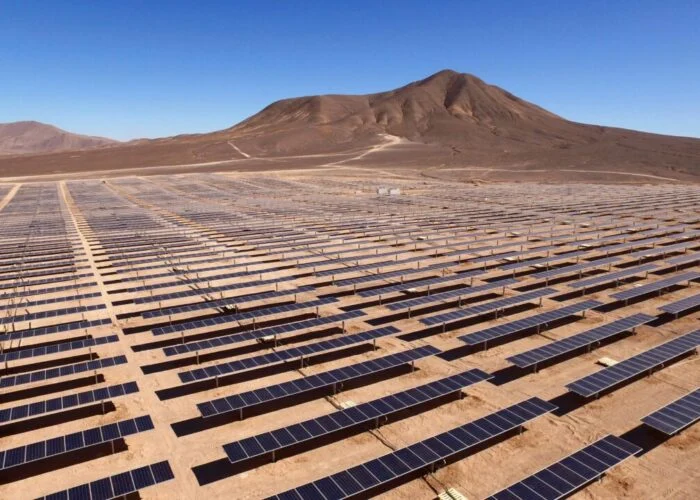
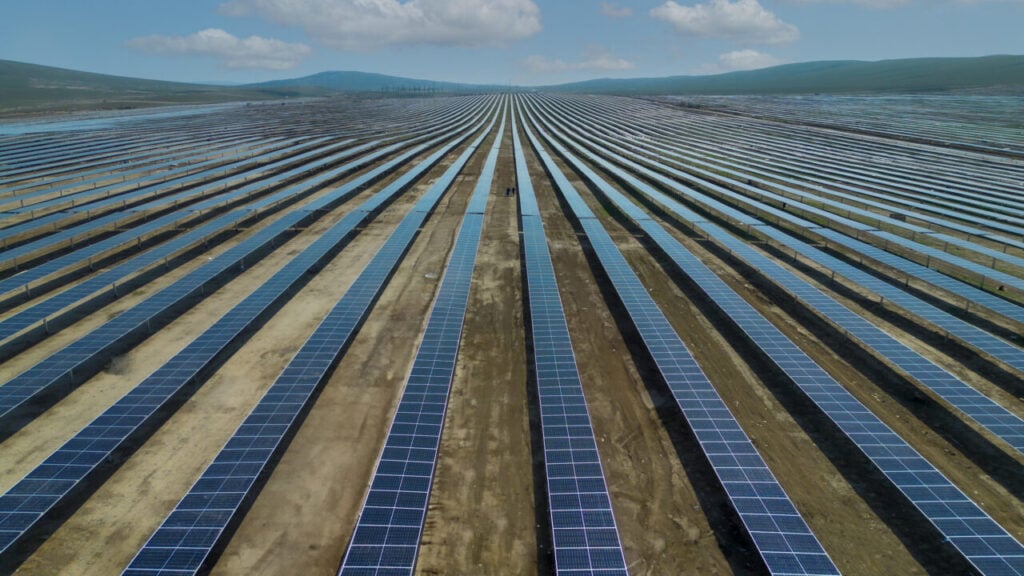
The UAE has developed a number of massive-scale solar and energy storage projects, taking advantage of its high solar irradiation, desert landscapes and large migrant workforce. In July, the state-run renewables developer Masdar reached financial close on what it called the “first gigascale 24/7 renewable energy project”. The 5.2GW, 19GWh “round the clock” solar-plus-storage system represents a total capital investment of US$6.1 billion and began construction in October 2025.
Early this year the company also reached financial close on the 1.5GW Khazna solar project in Abu Dhabi, developed in partnership with French energy major Engie.
In addition to the technology advances in energy storage and the sheer scale of projects under development in the UAE, energy analyst Wood Mackenzie has found that the Middle East region had the lowest levelised cost of energy (LCOE) for solar PV in 2025 (outside China), dropping as low as US$37/MWh.