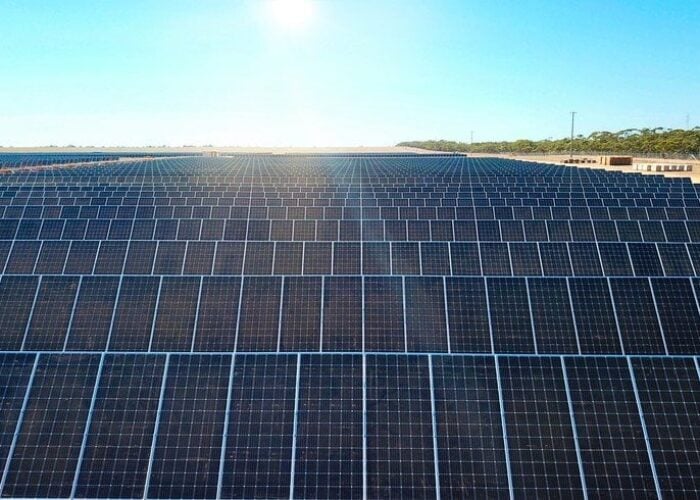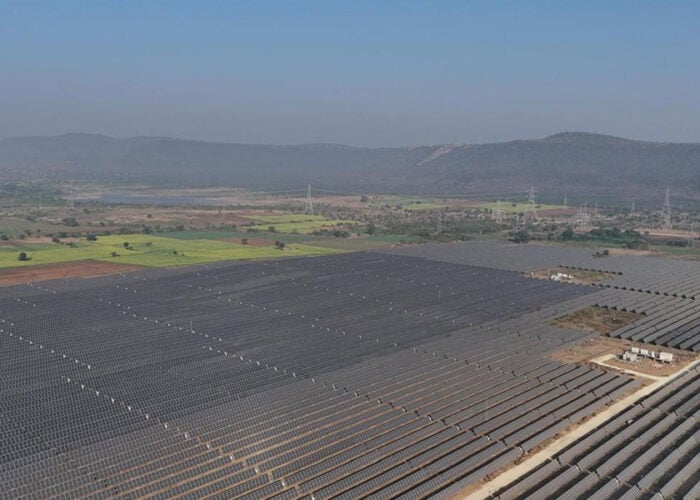
The US solar industry registered its third-best overall quarter on record with 11.7GW of new capacity installed in the third quarter of 2025.
This is one of the key takeaways from the latest US market report from trade body the Solar Energy Industries Association (SEIA) and analyst firm Wood Mackenzie, which puts solar PV installations at more than 30GW in the first nine months of 2025.
Try Premium for just $1
- Full premium access for the first month at only $1
- Converts to an annual rate after 30 days unless cancelled
- Cancel anytime during the trial period
Premium Benefits
- Expert industry analysis and interviews
- Digital access to PV Tech Power journal
- Exclusive event discounts
Or get the full Premium subscription right away
Or continue reading this article for free
Figures for the third quarter are in contrast to those of the previous quarter, when the pace of solar PV installations slowed down to 7.5GW in Q2 2025, following the passage of the One Big, Beautiful Bill Act (OBBBA).
Despite the surge in solar PV installations in Q3 2025, which represented 58% of all new electricity-generating capacity added to the US grid for the quarter, political and permitting roadblocks still persist.
According to SEIA, the July memo from the US Department of Interior (DOI) and other federal actions to impede utility-scale solar and energy storage projects in the pipeline created “significant business uncertainty”.
Due to the lack of clarity from the DOI on permitting timelines or project approvals, SEIA and Wood Mackenzie’s forecast for utility-scale solar deployment through 2030 remains unchanged from Q2 2025. This means that the deployment forecast is still 55GW lower than initially thought by the end of the decade, while for this year, installations are forecast to decrease year-on-year below 50GW.
Abigail Ross Hopper, president and CEO at SEIA, said: “Remarkable growth in Texas, Indiana, Utah and other states won by president Trump shows just how decisively the market is moving toward solar. But unless this administration reverses course, the future of clean, affordable and reliable solar and storage will be frozen by uncertainty and Americans will continue to see their energy bills go up.
“America’s manufacturing surge, our global competitiveness and billions of dollars in private investment are on the line.”
Despite the ongoing political roadblocks against solar PV and other renewables—SEIA warned last month that 73GW of solar PV projects are now at risk—most of the solar PV installed (73%) in Q3 2025 came from states won by US president Donald Trump, with eight of the top ten states in installations won by Trump during last year’s presidential election.
California, Texas and Utah install over 1GW utility-scale capacity each
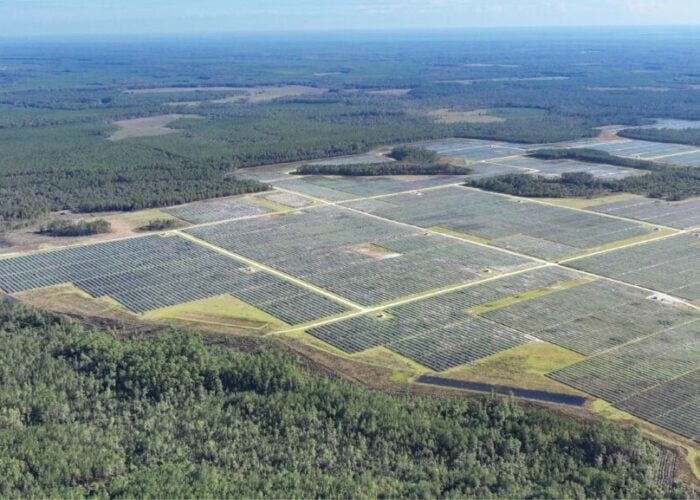
By segment market, utility-scale contributed the most in Q3 2025 with 9.7GW installed solar PV. This represents a 26% increase from the same period a year ago, and a 68% growth from the previous quarter. Three states—California, Texas and Utah—witnessed more than 1GW each of new solar PV installations.
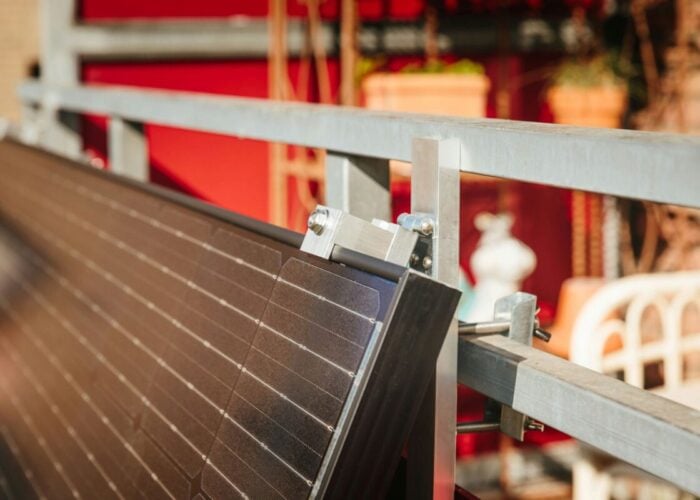
Along with utility-scale solar, the commercial segment also experienced a yearly growth in installations by 9%, although on a quarterly basis, numbers are down by 12%. In total, 554MW of new commercial capacity came online in Q3 2025 with healthy installations in California as the pipeline for “NEM 2.0 installations continues to come online,” said SEIA.
However, SEIA dded that the state’s policy-driven surge in deployments began to wane this quarter.
Residential solar installations slightly decreased by 4% both yearly and quarterly, with 1,088MW added in Q3. This is despite an industry rush to bring projects online before the end of the year so projects can still qualify for tax credits. Wood Mackenzie and SEIA suggested that the lack of growth in the residential solar segment is due to equipment constraints.
Finally, community solar declined by 21% year-on-year to 267MW, while growing 12% on a quarterly basis. Despite a negative forecast for community solar in the coming years, the market witnessed the start of commercial operations of the first community solar project in New Mexico, four years after the state established a community solar programme and expanded it last year.
Module manufacturing up 4.7GW in Q3 2025
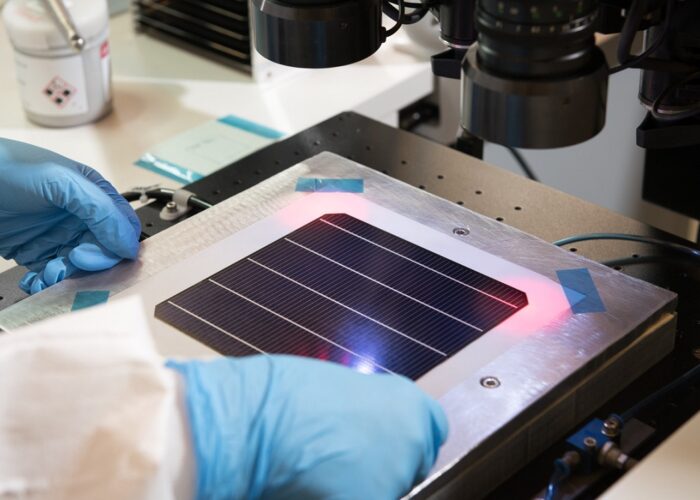
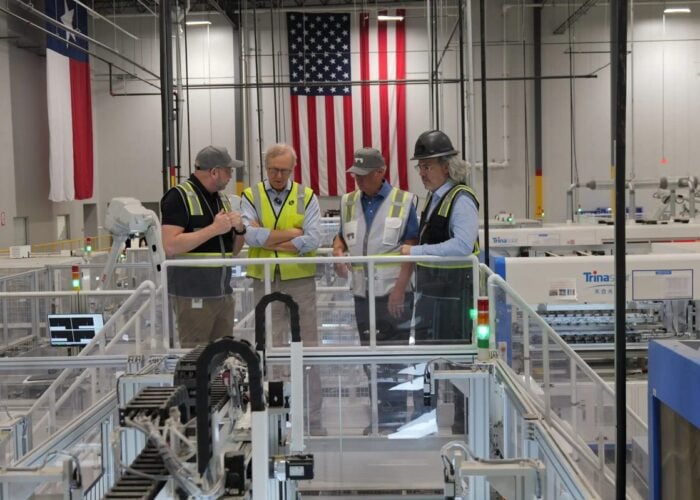
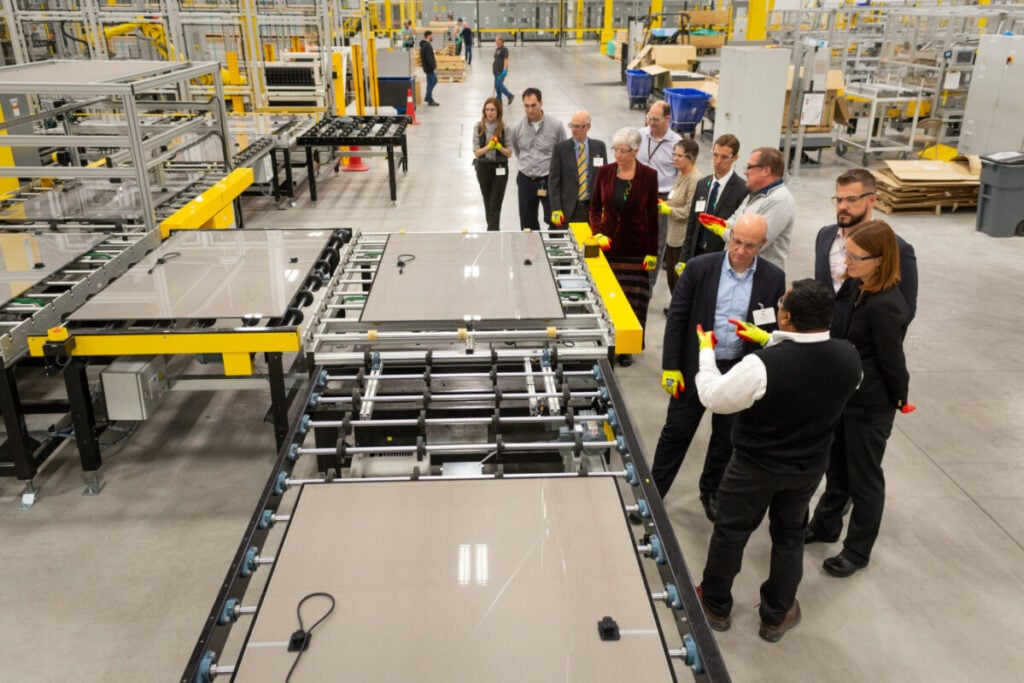
At the upstream level, two new solar PV module manufacturing plants have started operations with a combined annual nameplate capacity of 4.7GW, bringing this year’s new module manufacturing capacity to 17.7GW. One of the facilities is from cadmium telluride thin-film manufacturer First Solar, with its 3.5GW facility in Louisiana, which began production in July. Overall, by the end of September 2025, the US had 60.1GW of annual module nameplate capacity.
However, the major news for US solar PV manufacturing during Q3 was the beginning of production of wafer capacity from Corning. This means that the US is now able to manufacture the entire solar PV supply chain, from polysilicon to modules, domestically.
PV Tech did a deep dive on its significance and how this puts Corning in a key position to supply US-made wafer capacity in the coming years (subscription required).
After five editions of Large Scale Solar USA, the event becomes SolarPLUS USA to mirror where the market is heading. The 2026 edition, held in Dallas, Texas, on 24-25 March, will bring together developers, investors and utilities to discuss managing hybrid assets, multi-state pipelines, power demand increase from data centres and AI as well as the co-location of solar PV with energy storage in a complex grid. For more details and how to attend the event, visit the website here.