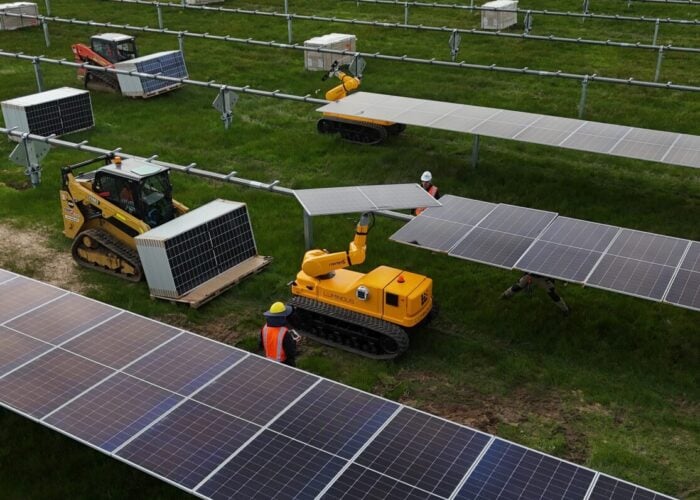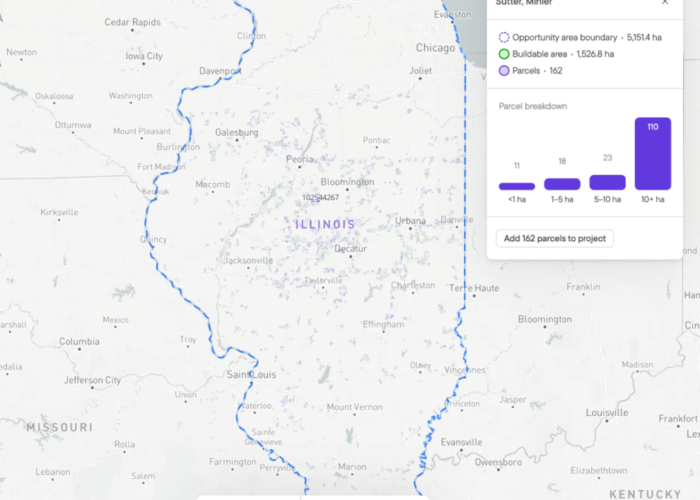
The US Department of Energy (DOE) has launched another Solar Prize funding round, making US$5 million available and including funds for software concepts for the first time.
The new round has made US$3 million available for its hardware track and US$2 million for the new software track, which aims to fund the development of software concepts that tackle associated costs, such as customer acquisition and grid integration.
Try Premium for just $1
- Full premium access for the first month at only $1
- Converts to an annual rate after 30 days unless cancelled
- Cancel anytime during the trial period
Premium Benefits
- Expert industry analysis and interviews
- Digital access to PV Tech Power journal
- Exclusive event discounts
Or get the full Premium subscription right away
Or continue reading this article for free
The round goes live on 15 June 2021 and has a deadline for applicants of 5 October 2021.
The latest round will connect and catalyse “the best of American ingenuity and create an innovation engine for America”, said acting assistant secretary for energy efficiency and renewable energy Kelly Speakes-Backman.
Hardware track applicants can be granted up to US$650,000 in cash and US$150,000 in technical support, with software track competitors able to receive US$480,000 and US$50,000, respectively.
Participants are also able to access an additional US$300,000 through a Justice, Equity, Diversity, and Inclusion (JEDI) contest to encourage a broader, more diverse group of applicants.
Round five of the competition is divided into three stages: the first phase this month welcomes pitches for innovative ideas that address a critical need in the industry; the second phase (December 2021) will see participants build a minimum viable product for testing with potential customers or establish proof of concept; and in the final phase (April 2022), competitors will refine their software products or develop early-stage prototypes.
So far, the previous four rounds of the competition have supported 80 teams with US$11 million in cash prizes and US$3.4 million in technical support.
In addition, the DOE has announced a new tool that connect innovators with support from its national labs, business incubators, and other resources in the American-Made Network to help companies advance their technologies. The tool uses artificial intelligence to lower barriers to entry for entrepreneurs by linking innovators with available resources.
The addition of a software track follows renewed importance on the so-called soft costs of solar deployment, while private companies have also looked to ramp up their software expertise.
US-based microinverter supplier Enphase Energy acquired software firm Sofdesk earlier this year to bolster its solar design software solutions, an acquisition it followed up a month later with the purchase of Noida’s solar design software unit.
Furthermore, energy and automotive giant Tesla has said it has been able to drastically reduce the overall sales cost of its residential solar units by leveraging sales tools developed for its car sales functions, enabling it to provide solar at the lowest cost in the US, the company has said.