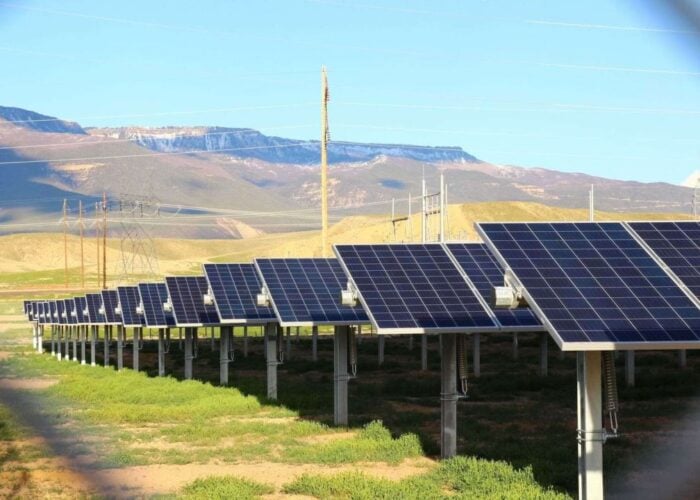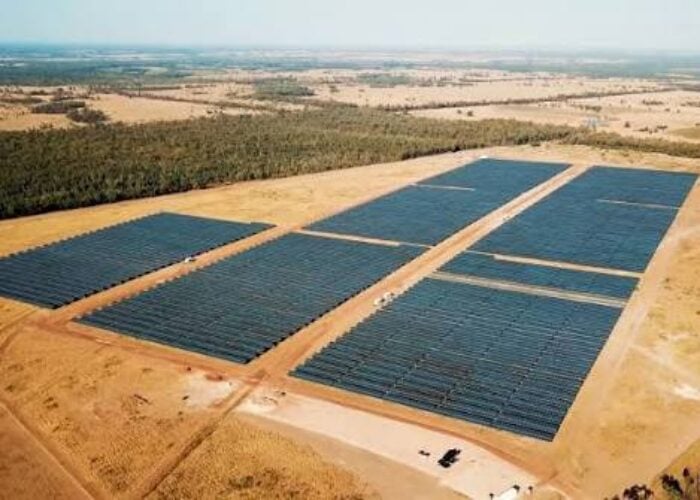
The California Independent System Operator (CAISO) Board of Governors has approved the ISO’s 2025-2026 transmission plan, which accommodates 45GW of new solar PV.
In total, 38 projects were recommended to meet growing demand over the next ten years, with half of the projects driven by forecasted load growth. This represents more than half of the US$6.7 billion estimated cost – which was reduced from the previously projected US$7 billion a month earlier – over the next decade.
Try Premium for just $1
- Full premium access for the first month at only $1
- Converts to an annual rate after 30 days unless cancelled
- Cancel anytime during the trial period
Premium Benefits
- Expert industry analysis and interviews
- Digital access to PV Tech Power journal
- Exclusive event discounts
Or get the full Premium subscription right away
Or continue reading this article for free
The approved transmission plan will allow for the addition of 45GW of new solar PV capacity in the Westlands areas in the Central Valley, Tehachapi, the Kramer area in San Bernardino County, Riverside County, as well as southern Nevada and western Arizona.
Solar PV is the technology which will see the most benefit from this approved plan, while co-located battery storage projects will also get access across the state. Standalone storage will also benefit from the approved plan for locations closer to major load centres in the LA Basin, the greater Bay Area and San Diego.
In the 2025-2026 plan, CAISO’s analysis of grid congestion also identified the need for a new 500-kilovolt line to relieve congestion along the Path 15 corridor, a major north-south transmission corridor. The recommended alternative will be refined in next year’s planning as it requires additional engineering prior to a final recommendation.
According to the ISO, this upgrade will support renewables development in southern California, in Fresno and Kings counties.
If all the additional capacity for solar PV ends up being installed over the next ten years, it would bring California to the 100GW milestone. Currently, the state has 55GW of installed solar PV as of the end of March 2026, according to data from trade body the Solar Energy Industries Association (SEIA).
The transmission plan, which is based on projections from the California Energy Commission (CEC) that expect California’s load to grow by 15GW by 2035 and 20GW by 2040. At the same time, the installed resources capacity will need to increase by over 74GW and 107GW, respectively.
Load growth driven by electrification and data centres
According to the CEC, the load growth in the coming years will be driven by building and transportation electrification, manufacturing and large loads such as data centres.
“We are constantly striving to find ways to meet system needs in the most affordable way possible,” Neil Millar, the ISO’s vice president, transmission planning and infrastructure development, said. “This year’s plan does that in a number of different ways while also making sure we have the right infrastructure in place to accommodate all of the new resources that are being added to the system.”
Moreover, 12 of the reconductoring projects included in this year’s plan will increase transmission capacity without the need to build new transmission lines.
The revised draft for CAISO’s 2025-2026 Transmission Plan can be accessed here.