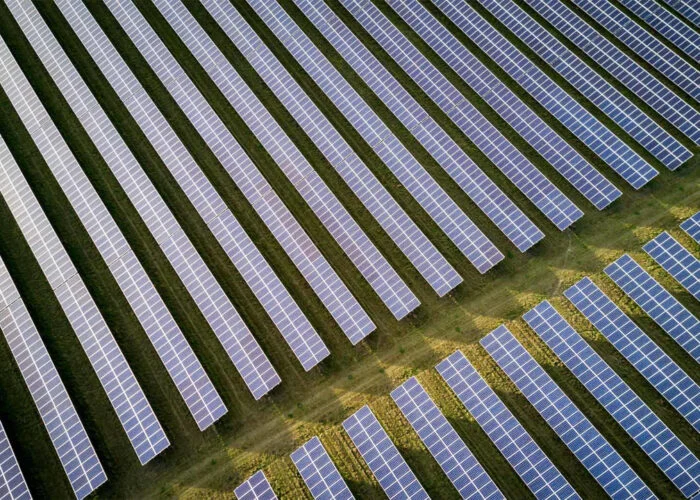
ACEN Australia has revealed an 87% year-on-year increase in generation output for the first quarter of 2026, reaching 528GWh, driven primarily by the first full quarter of operations from its 400MW Stubbo Solar project and improved performance at the 400MW New England Solar plant.
The Philippines-based renewable energy company, which operates two of Australia’s largest solar PV plants in New South Wales (NSW), attributed the growth to the completion of the 400MW Stubbo Solar in November 2025, alongside better solar conditions and reduced grid curtailment at its 400MW New England facility.
Try Premium for just $1
- Full premium access for the first month at only $1
- Converts to an annual rate after 30 days unless cancelled
- Cancel anytime during the trial period
Premium Benefits
- Expert industry analysis and interviews
- Digital access to PV Tech Power journal
- Exclusive event discounts
Or get the full Premium subscription right away
Or continue reading this article for free
According to the company’s Q1 2026 earnings report, Australian revenues grew 76% to P1.45 billion (US$25 million), though the pace lagged generation growth due to a roughly 6% decline in average wholesale prices received during the period.
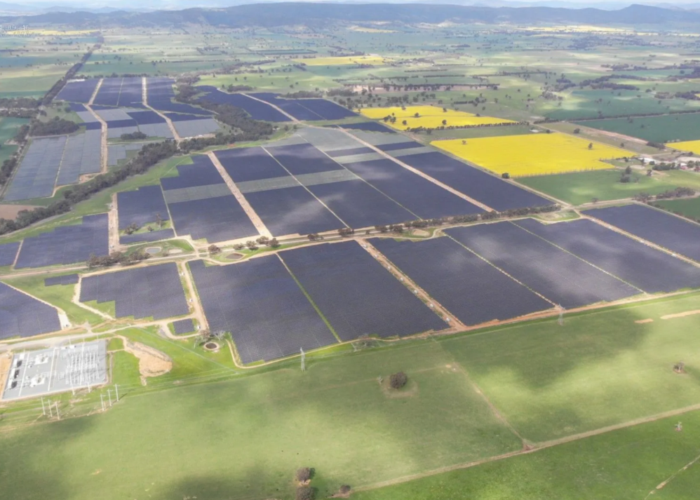
Stubbo Solar, located in the Central-West Orana Renewable Energy Zone, is expected to generate approximately 900GWh of renewable energy annually. The project was the first solar facility supported by a Long-Term Energy Service Agreement (LTESA) to reach commercial operation in Australia.
In February 2026, ACEN Australia integrated Stubbo into its AU$750 million (US$536 million) non-recourse portfolio debt facility, which also includes Stage 1 of the New England Solar project and is backed by eleven Australian and international financial institutions.
The company has also committed to recycling one million solar modules from the Stubbo project over its lifecycle, representing an advanced approach to end-of-life management for utility-scale solar installations.
Acen Australia began construction of the 400MW PV project in 2023, and the facility is now among the largest solar projects built in Australia.
Expansion underway at New England solar PV plant
New England Solar, which began operations in March 2023 with an initial 400MW capacity, is being expanded to 720MW.
ACEN Australia has started construction on a 200MW/400MWh battery energy storage system (BESS) co-located at the site, supplied by energy storage technology provider Energy Vault and featuring grid-forming inverters to provide system strength and network security services.
The battery storage system, which ACEN said is 87% complete on the construction side, began commissioning in February and is expected to be fully operational by mid-2026.
The New England project supplies energy to Japanese-owned drinks company Asahi Beverages and not-for-profit care company BaptistCare via a power purchase agreement inked in July 2024.
It also maintains long-term offtake arrangements with Zen Energy, Flow Power, industrial gas company BOC, and the University of Technology Sydney.
ACEN has approval for up to 1,400MW/2,800MWh of energy storage at the site, and the current battery storage project is the first large-scale storage facility to begin construction with support from the New South Wales government’s Emerging Energy Program.
Despite the growth in generation, ACEN noted that results reflected lower merchant prices and higher depreciation and interest expenses following Stubbo’s commercial operations.
The company’s earnings grew 59% to P994 million, at a slower rate than generation and revenues, largely due to growing depreciation and interest costs associated with the completed project.
NSW average spot prices remained subdued in Q1 2026, reflecting mild weather conditions and high baseload coal availability.
The improved performance in New England was partly attributed to reduced curtailment, which has been linked to the growing number of large-scale battery storage systmes in NSW providing a price floor during daytime hours, according to Australian Energy Market Operator (AEMO) assessments.
New England also avoided much of the network curtailment that affected solar PV plants in the southern parts of the state due to grid capacity constraints.
ACEN Australia’s contracted capacity stood at 33% in Q1 2026, down from 38% in Q1 2025, as the completion and ramp-up of Stubbo increased available output ahead of contracting. The company has stated its objective is to steadily increase contracted capacity now that Stubbo is fully operational.