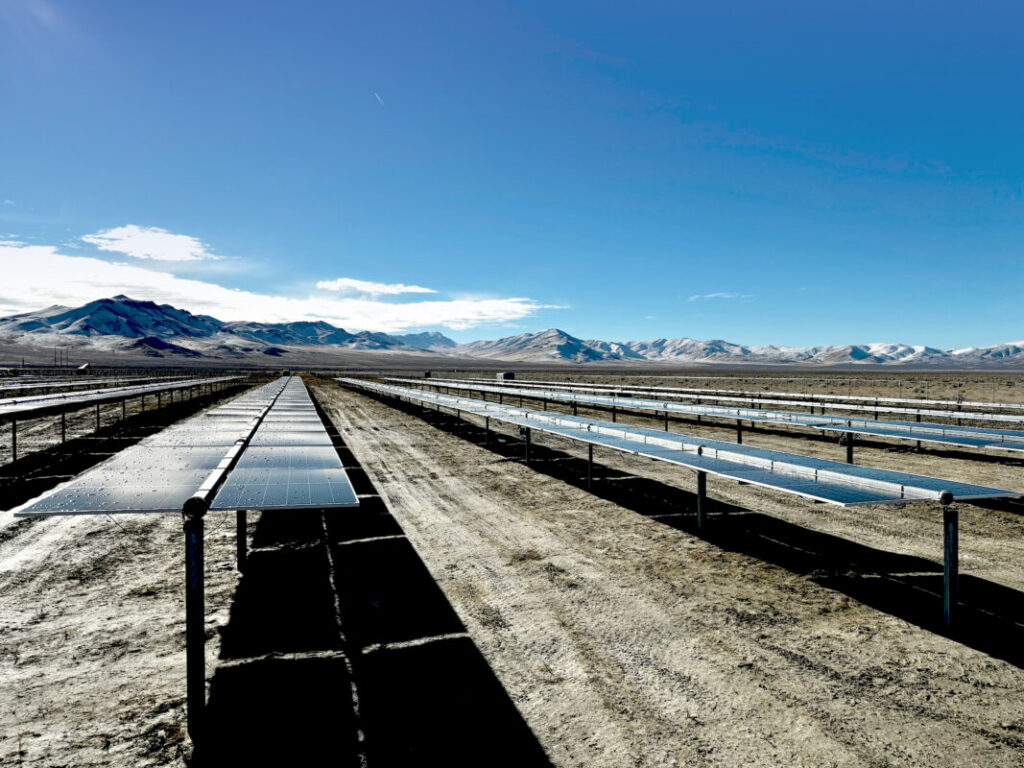
A major challenge in modern PV plant operations is converting vast and varied data streams into actionable intelligence. Morag Am-Shallem, Greg Ravikovich and Eitan Har-Shoshanim examine how artificial intelligence addresses the challenge of data overload, and how the industry should be gearing up to get the most out of it.
Photovoltaic (PV) power plants are among the most data-intensive infrastructure systems in the energy sector. Every module, inverter and weather sensor continuously generates readings, resulting in millions of data points per day for a single utility-scale site. These cover electrical parameters such as string current and voltage, mechanical tracker positions and environmental conditions such as irradiance, temperature, humidity and dust concentration. While this abundance of data has the potential to unlock operational insights, many plant operators are unable to use it effectively.
Try Premium for just $1
- Full premium access for the first month at only $1
- Converts to an annual rate after 30 days unless cancelled
- Cancel anytime during the trial period
Premium Benefits
- Expert industry analysis and interviews
- Digital access to PV Tech Power journal
- Exclusive event discounts
Or get the full Premium subscription right away
Or continue reading this article for free
The problem is not a lack of measurement but rather the challenge of translating measurement into understanding. In practice, much of the data remains underutilised, aggregated into high-level dashboards that summarise performance or availability metrics but mask granular details. Without a framework to interpret the data, operators and asset owners face what researchers often call the “data deluge” problem: an overload of information without the tools to convert it into decisions. This issue is common in many infrastructure systems but is particularly critical in solar energy, where small percentage differences in system performance or downtime translate into significant financial outcomes.
Industry benchmarks for PV sites indicate that each plant typically employs five to ten sensors per subsystem, generating high-frequency time series of parameters such as current, voltage and temperature. Power electronic components – strings, inverters, optimisers and battery storage units – produce similar streams, resulting in millions of data points per day. The sheer scale of this information quickly exceeds what can be interpreted manually or through static dashboards.
To make such data manageable, operators often rely on aggregation or downsampling techniques that compress raw measurements into five- or 15-minute intervals for display within SCADA dashboards. While this approach helps visualise general trends and improves system responsiveness, it also filters out high-frequency fluctuations and transient events that may contain early indicators of equipment degradation, connection faults or control instability. In effect, valuable detail is lost within the simplification process, leaving performance anomalies or emerging faults undetected.
AI-based analytics address this limitation by processing full-resolution datasets at scale, recognising patterns invisible to conventional monitoring and converting dense data streams into meaningful operational intelligence. AI provides a mechanism to address this imbalance. Rather than relying on pre defined rule sets or manual analysis, AI systems can recognise patterns, detect anomalies and forecast outcomes automatically. By doing so, AI transforms operational data from passive reporting into dynamic insight.
Data stream landscape in modern PV operations
Modern PV plants integrate diverse data sources across multiple technical domains. At the lowest level are field devices equipped with measurement capabilities: modules, inverters, trackers and on-site meteorological sensors. Each device generates its own data type, from electrical measurements to motor feedback and mechanical stress readings. A Supervisory Control and Data Acquisition (SCADA) system aggregates this information, ensuring basic visualisation and alarm functions at the plant level.
Beyond the local system, additional layers of data originate from cloud-based and third-party sources. Meteorological forecasts, satellite imagery and market price data enrich operational decision-making. Synthetic or model-based data – such as digital twin performance simulations – add predictive context, allowing operators to compare actual versus expected outputs. The resulting data ecosystem is vast, multidimensional and often fragmented across separate silos managed by different vendors or stakeholders. Comparison to synthetic model-based benchmarks, such as irradiance data, that was anchored at the planning stage of a given PV site and formed the basis for its financial viability for 30 years into the future, further complicates this challenge.
This fragmentation leads to practical challenges. Asset managers, O&M contractors and analysts within or external to those stakeholders may each rely on different dashboards, metrics and performance definitions. When issues arise that were not pre-defined, such as subtle inverter degradation or cross-site batch defects, operators must revert to manual data extraction and correlation, often using manual spreadsheets. The lack of integration between data systems and human workflows represents one of the largest inefficiencies in the PV industry today.
A recent systematic review of solar plant monitoring systems in ‘Energy & Buildings’ review [1] , identifies the difficulty of determining which data streams are operationally relevant as a key barrier to achieving this integration.
From data collection toward AI-driven operations
Over roughly two decades of digital evolution, PV operations have followed a recognisable technological arc. In the early phase, the industry focused on data collection – the realisation that every sensor reading held financial value drove an explosion of data logging and storage capacity. The next stage centred on dashboards: efforts to present data visually and distil thousands of variables into meaningful performance indicators. Before the rise of machine learning, engineers had to define each scenario they wished to analyse in advance, limiting flexibility. The introduction of classic machine learning techniques changed that, enabling algorithms to locate outliers or deviations automatically without an exhaustive list of predefined cases.
More recently, large language model (LLM)-based systems have begun to interpret this data at a higher cognitive level, providing contextual insights and bridging the gap between analytics and action. The emerging frontier – supervised autonomous O&M – points to AI systems that can not only interpret operational data but also open maintenance tickets or dispatch human intervention when required, functioning as an intelligent “asset-management copilot”.
Looking ahead, the integration of LLMs could act as a natural-language interface for operational intelligence. Rather than navigating dashboards, an operator could ask: ‘Which inverters are trending toward failure based on the last month’s data?’ While still experimental, these AI interfaces could function as asset management copilots, turning complex analytics into accessible insights. AI can bridge the gap by identifying which parameters contribute most to losses, uncovering hidden relationships and prioritising attention where it matters most.
Converting insights into operational actions
The practical value of AI lies in its ability to convert analytical insights into operational decisions. Machine learning (ML) and other AI approaches enable PV operators and asset owners to move from descriptive to predictive and prescriptive analytics. Early-generation systems relied on rule-based logic and threshold alarms. Modern AI, however, can interpret complex, multivariate data to detect anomalies, predict failures and recommend actions without explicit programming. It should be noted that even with AI, some thresholds are still necessary in order to tune the system to the types and severities of events the user is interested in.
Numerous research and field studies confirm the operational impact of AI in PV applications. The following areas demonstrate how AI transforms data-driven findings into measurable field actions.
Cleaning optimisation is one of the clearest examples. Soiling losses, particularly in arid or agricultural regions, can account for 3–6% of annual yield reduction. Traditional cleaning schedules are time-based or reactive. AI-based models incorporate weather forecasts, rainfall data, and loss estimations to recommend optimal cleaning times. A 2023 MDPI study [2] reported that adaptive AI cleaning strategies reduced water usage by 22% while maintaining energy yield in semi-arid environments.
Fault detection is another great example and was demonstrated in many studies. In Energies [3], researchers compared multiple algorithms for fault detection in solar plants, concluding that deep learning approaches “significantly improved anomaly detection sensitivity while reducing false positives”. Such advancements allow operators to uncover performance issues long before traditional alarms are triggered. Other studies highlighted machine learning applications in Malaysia that achieved high accuracy in fault detection across thousands of modules [4] .
Fleet operators managing multiple plants benefit particularly, as cross-site analytics can identify serial defects across equipment batches or firmware versions.
Predictive modelling builds on these capabilities. A recent study in Solar RRL [5] has shown that predictive approaches can reduce unscheduled downtime in large-scale PV portfolios. The results demonstrate the ability to generate predictive maintenance alerts up to 7 days in advance with a high sensitivity. It shows also the effectiveness of detecting fault conditions. These technologies help in detecting defects, degradation, and anomalies in solar panels by facilitating early intervention and reducing the probability of inverter failures. It should be noted, however, that adoption of predictive maintenance in the renewable energy industry remains challenging, as emphasised in a recent analysis in Sensors [6].
Digital twins extend this approach further. A digital twin is a virtual model of the plant that replicates real world performance under simulated conditions. By comparing actual data to simulated baselines, operators can detect deviations caused by shading, soiling, or degradation. The combination of digital twins with predictive models creates a continuous feedback loop where AI not only identifies anomalies but also simulates corrective actions and forecasts financial outcomes.
Energy forecasting and grid participation also benefit substantially from AI. Traditional forecasting methods rely on static correlations between irradiance and generation, but AI models can continuously learn from historical deviations, weather patterns, and real-time market signals. By merging meteorological, production and price data, AI can identify non-linear relationships – such as how local cloud dynamics or curtailment events affect short-term output, leading to more accurate day-ahead and intra-day predictions. This higher precision allows operators to commit to market bids with lower imbalance penalties, optimise battery charge-discharge cycles and align PV generation with high-price or high-demand periods. In hybrid PV-storage operations, these capabilities translate into quantifiable revenue gains and improved grid stability.
AI is no longer confined to theoretical exploration. The technology is in active use, supported by declining computational costs and increasing data availability. As algorithmic transparency and explainability improve, confidence among asset managers and investors continues to grow.
Implementation considerations for industry professionals
Implementing AI successfully in PV operations requires careful planning at both the technical and organisational levels. For developers and EPCs, the first priority is to design AI-ready infrastructure. This includes adequate sensor density, standardised data protocols and scalable connectivity solutions. Inadequate data resolution or quality will limit model performance, regardless of algorithm sophistication.
In every PV plant, sensor placement has always been a foundational practice, but in the age of AI it has become a strategic enabler of system intelligence. Traditional monitoring systems use sensors mainly to record averages or trigger threshold alarms. AI-based analytics, in contrast, depend on dense, precisely located, and well-calibrated sensors to detect subtle spatial and temporal variations across the plant. This allows models to learn how tracker positions, temperature gradients, or soiling patterns influence generation. Poorly placed or misaligned sensors can introduce data bias, leading to inaccurate predictions or missed anomalies. Therefore, irradiance sensors should be positioned away from reflective surfaces, and temperature probes shielded from wind interference. Accurate calibration not only improves measurement quality but also directly enhances the fidelity of AI models and the reliability of the operational insights they produce.
Integration with legacy systems represents one of the most complex and consequential steps in AI deployment. In traditional SCADA-based environments, data flow is often linear and siloed, with limited interoperability across vendors. AI requires a more unified and dynamic data infrastructure, where information from inverters, trackers, meteorological sensors and market interfaces can be accessed and correlated in real time. To achieve this, AI platforms should leverage open communication standards such as Modbus, OPC UA, or IEC 61850, allowing seamless integration without disrupting existing operations. Rather than replacing conventional systems, AI acts as a higher-order analytical layer: interpreting aggregated data, identifying anomalies and recommending actions that SCADA systems alone cannot. This complementary relationship ensures that legacy infrastructure continues to deliver value while becoming part of a more intelligent, predictive ecosystem.
Staff training is equally critical, and in AI-enabled PV operations, the human role evolves from reactive monitoring to strategic supervision. In traditional settings, operators primarily respond to alarms and performance reports. With AI in place, they must understand algorithmic outputs, evaluate confidence levels, and distinguish between model-driven predictions and statistical noise.
Effective human-AI collaboration reduces false positives, prevents overreliance on automation, and maintains accountability. As a result, training should focus not only on software operation but also on data interpretation, critical evaluation, and system oversight. This “humanin-the-loop” model transforms operators from data consumers into decision validators, ensuring that AI insights translate into safe, reliable and financially optimised actions. As AI tools become more integrated into daily O&M routines, staff capability will define whether these systems deliver genuine operational improvement or merely add complexity.
Finally, financial assessment is critical. AI implementation incurs upfront costs such as hardware, software integration and training, but measurable financial benefits have been documented. Recent reviews and market analyses report that AI-assisted optimisation can lower levelised cost of energy (LCOE) by approximately 10 to 20% through improved O&M efficiency and performance forecasting, according to Emergen Research [7]. Payback periods can be reduced by one to two years when these savings are achieved, depending on plant scale and data infrastructure maturity. The key is to measure both avoided losses and operational efficiencies, rather than yield improvements alone.
The road ahead: towards supervised autonomy
The evolution of AI in PV operations follows a clear trajectory: from basic monitoring to predictive maintenance and toward supervised autonomy. In the near future, AI systems will not only identify issues but also initiate corrective actions such as dispatching maintenance crews or adjusting tracker algorithms. This progression mirrors automation trends in other industries, where human oversight complements machine-driven execution.
Recent findings in Solar RRL [5] demonstrate that deep-learning models applied to real PV datasets can achieve high recall accuracy and early fault prediction, reinforcing the industry’s trajectory toward limited autonomous operation. However, full autonomy remains contingent on robust data governance, standardised communication protocols, and ongoing human supervision to validate AI-driven decisions and ensure operational safety. Ultimately, AI will serve as an operational partner rather than a replacement for human expertise. The future PV plant is likely to operate through collaborative intelligence – machines processing data at scale and humans applying contextual judgment. The outcome will be smarter, more resilient and economically optimised solar assets.
Conclusion
AI is redefining operational management in the photovoltaic industry. By enabling predictive, data-driven decision-making, it transforms the challenge of information overload into a strategic advantage. From anomaly detection and optimisation of cleaning to predictive maintenance and financial modelling, AI provides the analytical backbone of next-generation solar operations. The transition toward supervised autonomy is already underway, and industry stakeholders who prepare for it today – by investing in data infrastructure, training and integration – will gain enduring competitive advantage.
References
[1] Energy & Buildings Review – Bhandari, P., et al. (2022), “Systematic review of the data acquisition and monitoring systems of PV plants”, Energy & Buildings, 262, 112027.
[2] MDPI Study – Kumar, A., et al. (2024), “Machine Learning-Based Predictive Maintenance for Photovoltaic Systems”, Journal of Clean Energy Technologies (MDPI), 6(7).
[3] Energies – Zafar, R., et al. (2022), “Machine Learning Schemes for Anomaly Detection in Solar Power Plants”, Energies, 15(3), 1082.
[4] pv magazine – pv magazine International. (2023, October 25), “Using machine learning for predictive maintenance in largescale PV plants”.
[5] Solar RRL – Sun, Z., et al. (2024), “Trend-Based Predictive Maintenance and Fault Detection Analytics for Photovoltaic Systems”, Solar RRL, 8(5).
[6] Sensors – Lee, H., et al. (2025), “Review of Recent Advances in Predictive Maintenance and Cybersecurity for Solar Plants”, Sensors, 25(1), 206.
[7] Emergen Research – Emergen Research. (2024), “Solar AI Market Size, Share and Trends Analysis Report”.
Authors
Morag Am-Shallem is senior director of technology at Solargik, where he leads solar energy technology strategy and innovation. With a PhD in physics and 13 years of experience in the solar energy industry, he focuses on leveraging technology and data-driven approaches to optimise solar energy systems. At Solargik, he guides the development of terrain-adaptive solar trackers and AI-driven control platforms that help developers build profitable PV sites on complex land, unlocking new project viability and long-term performance.
Greg Ravikovich is the VP of engineering at Solargik, overseeing all company software and hardware development efforts, including data-streaming processes and AI-based insights generation. Greg has over 15 years of experience in the solar industry, focused on tracking system implementation and optimisation. His work at Solargik supports the company’s mission to enable high-performance solar projects on irregular or sloped terrain through modular tracker architecture and the SOMA Pro control system, which unifies monitoring, diagnostics, and predictive analytics into one platform
Eitan Har-Shoshanim is a principal software architect at Solargik, where he leads the integration of AI into next-generation solar tracking and control systems. Passionate about the intersection of artificial intelligence and renewable energy, he aims to make clean energy smarter, more efficient and more accessible. His work contributes directly to Solargik’s broader approach of combining adaptable tracker hardware with advanced SCADA and AI tools that increase power density, reduce operational losses, and support modern applications such as agrivoltaics and autonomous O&M.