Vertically integrated solar equipment manufacturer Trinasolar has been selected to supply solar modules for the Good Earth Green Hydrogen and Ammonia project near Moree in New South Wales, Australia.
The project is set to become the state’s first green hydrogen and ammonia production facility.
Try Premium for just $1
- Full premium access for the first month at only $1
- Converts to an annual rate after 30 days unless cancelled
- Cancel anytime during the trial period
Premium Benefits
- Expert industry analysis and interviews
- Digital access to PV Tech Power journal
- Exclusive event discounts
Or get the full Premium subscription right away
Or continue reading this article for free
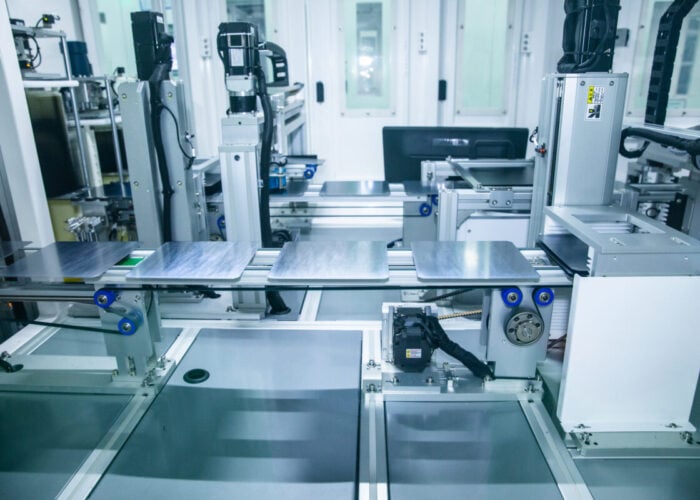
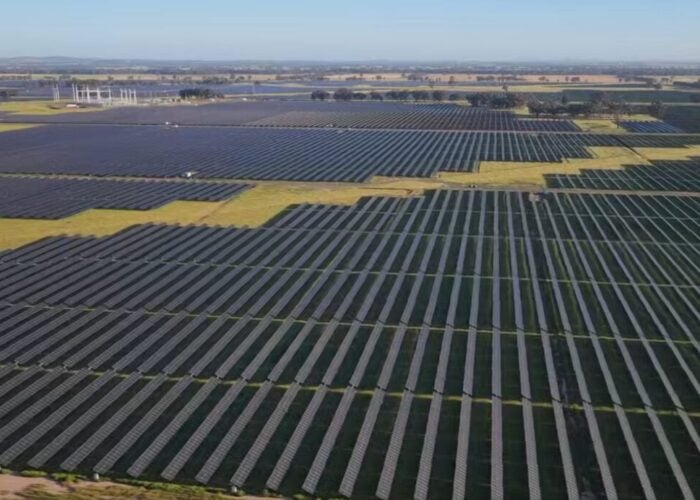
The project’s 27MW solar PV power plant will use Trinasolar’s 510W and 515W Vertex S+ modules, which incorporate the company’s n-type i-TOPCon cell technology and a heat-strengthened dual-glass design. Construction is now underway.
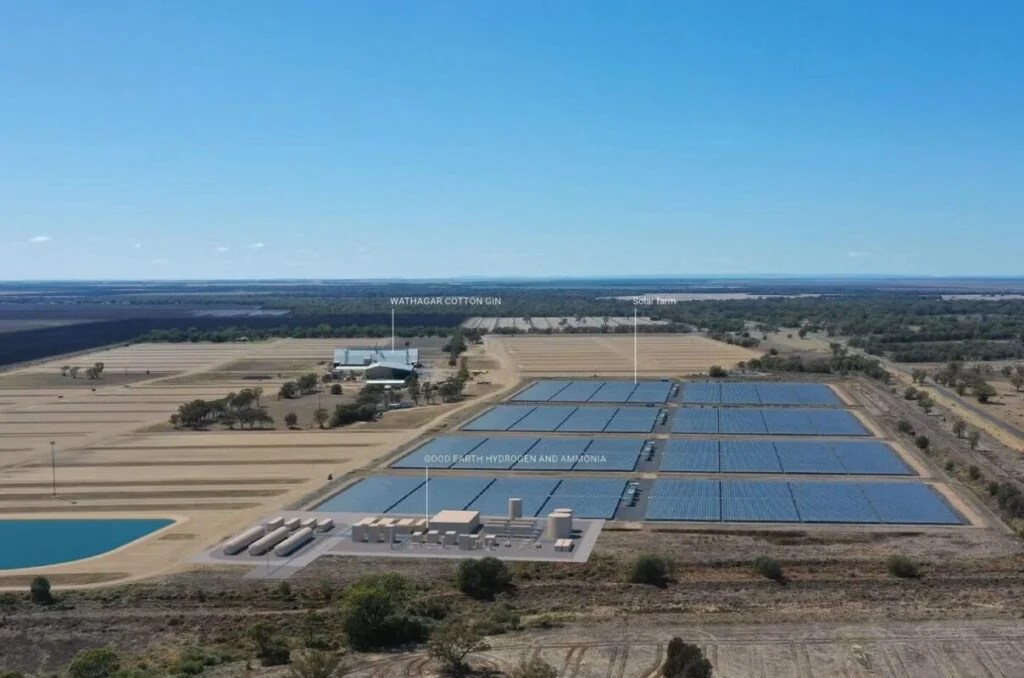
The project combines an existing 8.65MW solar PV plant with a new 27MW solar array being supplied by Trinasolar and a 30MWh battery energy storage system (BESS) to ensure a consistent power supply for the 15MW alkaline electrolysis system.
On completion, the facility is expected to produce up to 200 tonnes of green hydrogen per year and up to 4,500 tonnes of low-carbon ammonia annually.
The project is designed to replace imported fossil fuel-based fertilisers and reduce emissions from agricultural inputs in the surrounding region, with Hiringa Energy positioning it as a commercial pilot for decentralised hydrogen and fertiliser production that could be replicated across regional Australia.
Hiringa Energy, a privately owned hydrogen company founded in New Zealand with operations in Australia, has been developing low-carbon hydrogen production projects since 2016, targeting hard-to-abate sectors including industry, agriculture and transport.
Joe Cumming, senior project manager at Hiringa Energy, said the project’s long-term nature was central to the module selection.
“GEGHA is designed as a commercial pilot for decentralised hydrogen and fertiliser production that could be replicated across regional Australia. For a project intended to demonstrate a long-term regional model, reliable solar generation is critical. Trinasolar’s n-type dual-glass technology and experience in the Australian market were important considerations in selecting modules for the project’s solar farm,” he said.
Meanwhile, Edison Zhou, head of Australia and New Zealand at Trinasolar, said the project demonstrated the role solar plays in enabling emerging industries.
“Projects like GEGHA demonstrate the important role solar plays in enabling emerging industries such as green hydrogen and low-carbon fertiliser production,” he said.
“By supplying high-performance Vertex S+ modules for the project’s solar farm, Trinasolar is helping provide the renewable energy foundation for green hydrogen and low-carbon ammonia production.”
The project received state development approval in March 2026 and reached financial close in July 2025, with operations expected to begin in early 2027.
Green hydrogen activity building in New South Wales
The Good Earth Green Hydrogen and Ammonia project adds to a small but developing pipeline of solar-powered hydrogen projects in New South Wales.
As previously reported by PV Tech, construction began in May 2026 on the Good Earth Green Hydrogen and Ammonia project and will primarily supply Sundown Pastoral Company’s Keytah Farm, a 65,000-acre cotton and cropping operation in the Gwydir Region.
Earlier, the New South Wales government approved the 15MW Wathagar green hydrogen project, a solar-powered facility in the state’s Central Tablelands region that will produce hydrogen for transport fuel and local industry.
That project, developed by ENGV, received planning approval in early 2025 following an assessment that included the Wathagar solar PV plant as the primary generation source.
The Good Earth Green Hydrogen and Ammonia project near Moree distinguishes itself from other developments by its agricultural focus, specifically the production of ammonia-based fertiliser as a direct substitute for imported fossil-fuel-derived products.
Green ammonia production using renewable energy and green hydrogen is considered one of the more commercially viable near-term applications for electrolytic hydrogen, given that ammonia is already a globally traded commodity with established distribution infrastructure.
Trinasolar will supply its 510W and 515W Vertex S+ modules. This range sits within the same product family as the 515W module the company recently launched for the Australian rooftop market, which received Clean Energy Council certification in July 2026 and began mass production for residential, commercial and industrial installers.
The utility-scale modules set to be deployed at the Good Earth Green Hydrogen and Ammonia project use the same underlying n-type i-TOPCon technology, with the dual-glass format selected for long-term durability in the project’s regional New South Wales conditions.