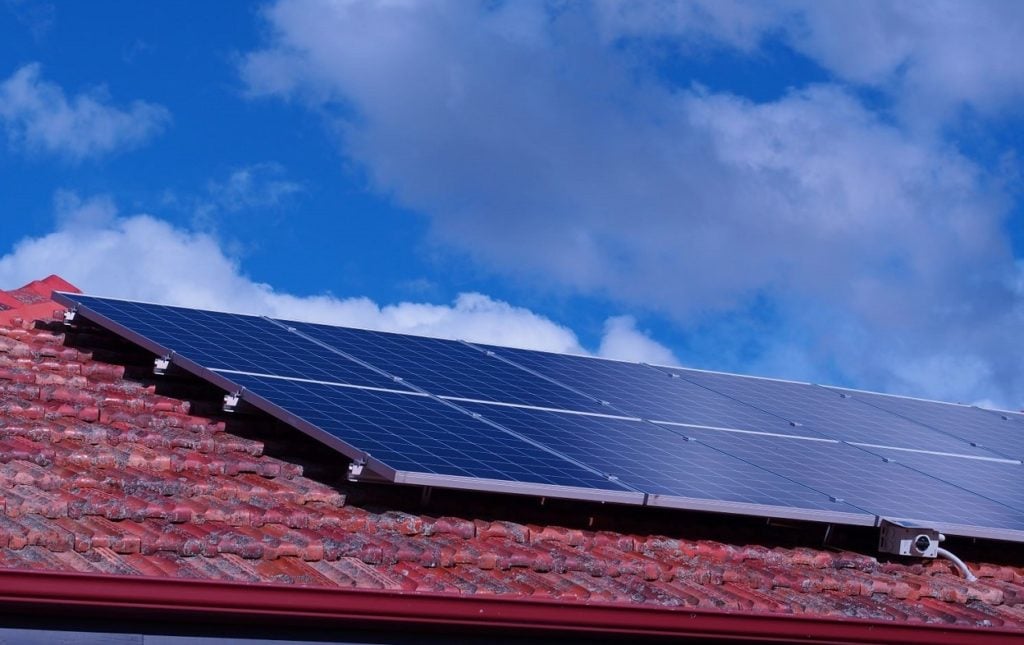
Millions of Australian households fitted with rooftop PV could be charged for exporting electricity to the grid under new proposals that critics have warned could curb the uptake of solar systems and slow the country’s energy transition.
A draft determination released today (25 March) by the Australian Energy Market Commission (AEMC) includes plans to let networks offer two-way pricing to address the issue of ‘traffic jams’ on the network. This would give networks pricing options that they don’t currently have, such as rewarding solar and battery system owners for sending power to the grid when it is needed and charging them for sending power when it is too busy.
Try Premium for just $1
- Full premium access for the first month at only $1
- Converts to an annual rate after 30 days unless cancelled
- Cancel anytime during the trial period
Premium Benefits
- Expert industry analysis and interviews
- Digital access to PV Tech Power journal
- Exclusive event discounts
Or get the full Premium subscription right away
Or continue reading this article for free
With half of Australian energy users expected to be using home energy solutions such as PV within ten years, AEMC chief executive Benn Barr said the proposals help could reduce the need for expensive grid infrastructure additions.
“Letting networks give customer incentives to use the system better means supply and demand on the grid can be smoothed out over the course of the day. It helps address large amounts of solar being exported in the middle of the day when it benefits the system least,” he said.
It is hoped new incentives will give customers more reason to buy batteries or consume the power they generate at busy times on the grid.
AEMC stressed that the proposals do not mandate default charges for exporting power. If a network business wanted to introduce export charging, they would need to consult extensively with customers and have a transition plan detailing how this would be done approved by the regulators.
Barr said pricing proposals “may include options” where consumers don’t pay for exports to the grid, with modelling from the commission finding that 80% of customers “would see their bills drop because they would no longer pay for solar export services they weren’t using”.
For households with solar installations, there could be a range of export charge impacts, depending on system size. A 4−6kW system would still earn on average AU$900 (US$685) – about AU$70 less than current levels. However, this impact would be reduced if they consumed more of their own power.
AEMC said doing nothing is “not an option”, as blocking households’ power exports will cost them more in the future. While export charges on a 4−6kW system might lead to a marginal drop in solar earnings, the commission said owners will face that same drop if they are constrained from exporting energy just 10% of the time.
While the proposals are pitched as a move to make more room on the grid for PV and batteries, critics have raised concerns that the measures would negatively impact homeowners that have already invested in rooftop installations to reduce their energy bills.
Campaign group Solar Citizens said charging households to export power is “yet another handbrake” for Australia’s transition that may discourage further investment in rooftop solar.
“As we transition our energy system and clean up our power supply, we need to be encouraging more rooftop solar – not penalising people for putting panels on their roof,” said Solar Citizens national director Ellen Roberts. “Big coal and gas generators aren’t charged for exporting their power to the grid, so why should we be slugging Aussie families with panels on their roofs?”
The AEMC has previously put forward plans to introduce a solar export tax. However, resistance from groups such as Solar Citizens meant proposals in 2017 were scrapped. Since then, rooftop PV uptake in the country has soared, with 2.6GW of rooftop installations added in 2020 representing an 18% year-on-year increase.
Australian renewables association the Clean Energy Council said “more questions than answers have been raised” by the AEMC’s draft determination. It has called for clarification on areas such as whether export charges will be applied to all existing customers or only to new connections and whether distribution networks will be allowed to continue imposing zero export limits for solar and battery systems.
The AEMC has asked for feedback on its proposals, with submissions due by 13 May 2021.