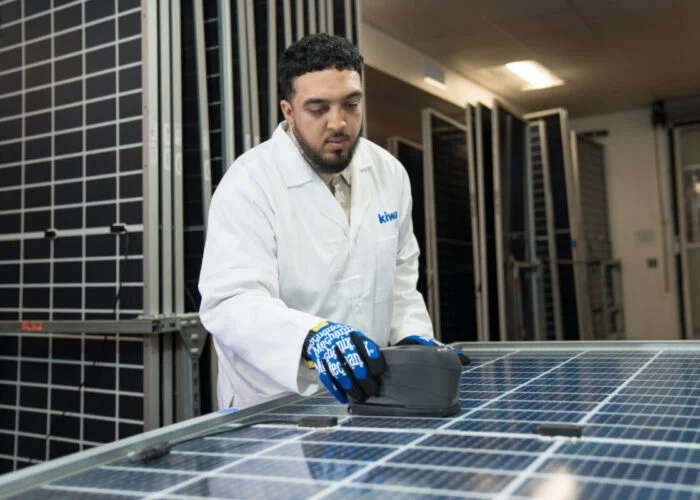
Australia has opened its first dedicated research facility for solar module recycling at UNSW Sydney, as the country prepares for an estimated 100,000 tonnes of solar PV waste annually by 2030.
The ‘Australian Research Council (ARC) Hub for Photovoltaic Solar Panel Recycling and Sustainability’ was officially launched on 21 April with AU$5 million (US$3.6 million) in funding from the ARC Industrial Transformation Research programme.
Try Premium for just $1
- Full premium access for the first month at only $1
- Converts to an annual rate after 30 days unless cancelled
- Cancel anytime during the trial period
Premium Benefits
- Expert industry analysis and interviews
- Digital access to PV Tech Power journal
- Exclusive event discounts
Or get the full Premium subscription right away
Or continue reading this article for free
The facility will focus on developing technologies to recover valuable materials from end-of-life solar modules and on establishing a circular economy for solar components, as many of Australia’s 3.5 million solar installations approach retirement.
Hub director Professor Yansong Shen, from UNSW’s School of Chemical Engineering, said the timing reflects an urgent need for domestic recycling capacity.
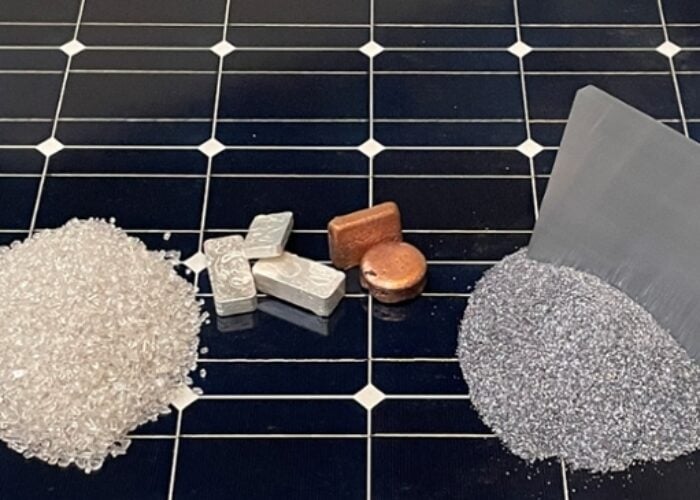
“End-of-life solar modules contain many valuable materials like glass, silicon, silver and copper. Our goal is to move these modules away from landfill and towards recycling in a circular economy where materials are recovered and reused,” he said.
The research agenda includes improving material recovery processes, developing more efficient separation and sorting technologies for module components, and working with manufacturers on design-for-recycling approaches.
The hub will also engage with policymakers to strengthen the regulatory framework for solar waste management and to create, as Shen described, “a network of researchers who will improve the entire value chain of solar module production.”
UNSW deputy vice-chancellor, research and enterprise professor Bronwyn Fox said the hub addresses a gap in Australia’s clean energy transition.
“As we accelerate towards a net-zero future, we must ensure the technologies enabling that transition are themselves sustainable,” she said.
The university has been at the centre of recent research into module durability and degradation patterns, including work published earlier this year warning that next-generation solar modules could degrade faster than expected under certain conditions. Separate UNSW research has identified unexpected vulnerability patterns in TOPCon cells under UV exposure, prompting calls for enhanced testing protocols.
Australian module manufacturer Tindo Solar’s CEO, Richard Petterson, exclusively told PV Tech Premium that if Australia installed around 1TW of solar modules over 25 years to keep the assets running, the nation would need to recycle around 40GW of modules each year.
Assistant minister for immigration and the assistant minister for foreign affairs and trade Matt Thistlethwaite, who officially opened the facility, said the initiative could create new domestic supply chains and employment opportunities.
“If we get this right, there will be less landfill, new domestic supply chains for current materials, a more resilient energy sector, and perhaps most importantly, for students and early career researchers, new industries and new jobs that probably don’t exist yet,” he said.
Australia’s solar recycling sector remains underdeveloped compared to Europe, where the EU’s Waste Electrical and Electronic Equipment Directive has driven investment in collection and processing infrastructure.
International Renewable Energy Agency (IRENA) estimates global solar module waste could reach 78 million tonnes by 2050, with valuable materials worth over US$15 billion potentially recoverable if effective recycling systems are established.
Shen said the hub’s success would be measured by a shift in how the industry views end-of-life modules.
“We will know we’ve achieved our objectives when solar module waste is no longer seen as a problem, but as part of a sustainable system,” he said.
The facility will also support early-stage researchers and industry partners working on commercialisation pathways for recycling technologies.
The opening follows growing attention to module longevity and performance issues in Australia’s solar fleet, with researchers increasingly focused on understanding degradation mechanisms that could affect the timing and volume of waste entering the recycling stream.
The hub’s work on material recovery and circular design principles is expected to inform both domestic policy development and international standards for solar waste management.
The hub comes as the Australian House of Representatives Standing Committee on Climate Change, Energy, Environment and Water recently launched a formal inquiry into solar module reuse and recycling.
In addition to this, earlier this year, the Albanese government announced a AU$24.7 million national solar module recycling pilot programme, which PV Tech reported will establish up to 100 collection sites across the country over three years.