China-based PV module manufacturer and PV project developer and operator, CECEP Solar Energy Co has started an initial phase of construction of an advanced solar cell facility as part of a new strategy to enter and become a major merchant cell producer with a total capacity of 50GW.
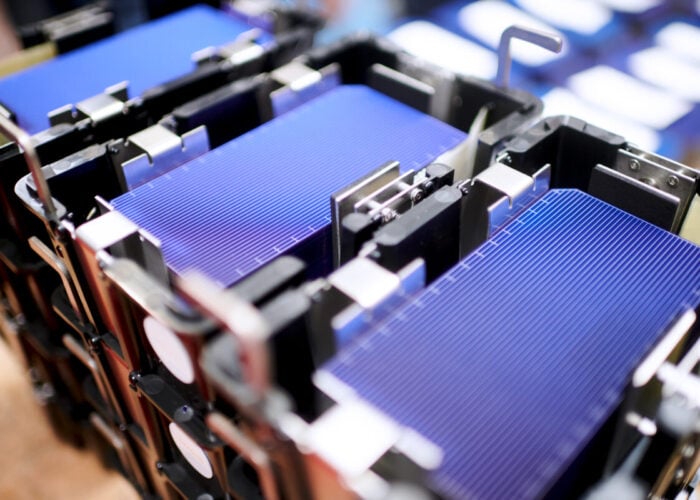
The initial project includes 20GW of advanced PERC (Passivated Emitter Rear Cell) solar cell as well as 4.5GW of highly automated module assembly capacity at a total cost of RMB 2,963 million (US$453 million).
Try Premium for just $1
- Full premium access for the first month at only $1
- Converts to an annual rate after 30 days unless cancelled
- Cancel anytime during the trial period
Premium Benefits
- Expert industry analysis and interviews
- Digital access to PV Tech Power journal
- Exclusive event discounts
Or get the full Premium subscription right away
Or continue reading this article for free
Located in the Jiangsu Gaoyou Economic Development Zone, Jiangsu province, Phase 1 of the project is designed to establish a 6.5GW highly automated (Intelligent Manufacturing) solar cell plant using advanced PERC technology for large-area cells based on 180(x) variants through to the largest size of 210mm x 210mm.
Phase 1 of the project is expected to be operational by the end of 2021.
CECEP Solar is also building a 1.5GW advanced module assembly plant for the large-area, high-efficiency cells, believed to be primarily used in its downstream projects. The plant will be located in the Jiangsu Zhenjiang New District New Energy Industrial Park, which already houses around 1GW of module assembly capacity, according to PV Tech’s analysis.
CECEP Solar had revenue of approximately US$747 million in 2019 and module production output of 809MW.

Revenue reported for the first nine months of 2020 was approximately US$576.5 million. The company had approximately 4.97GW of PV power plants under management in 2019 and a 12GW pipeline.
In 2019, CECEP Solar sold 4.712 billion kWh of electricity with power generation sales revenue totalling RMB 3.721 billion (US$567 million), accounting for 74.26% of the total revenue.

In recent years two merchant cell producers (Tongwei and Aiko Solar) have emerged and dominated the sector as major SMSL’s (Solar Module Super League) members such as JinkoSolar, Canadian Solar and Trina Solar have pursued asset-lite manufacturing strategies, focusing on lower capex cost module assembly expansions over solar cells.
Aiko Solar is aiming to have around 45GW of solar cell capacity in operation by the end of 2022 and Tongwei had planned to reach 40GW of cell capacity by the end of 2020, then increasing to 60GW of capacity in 2021.