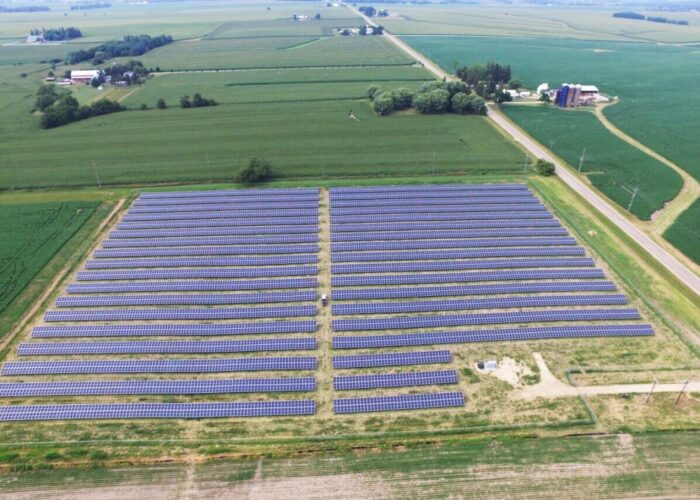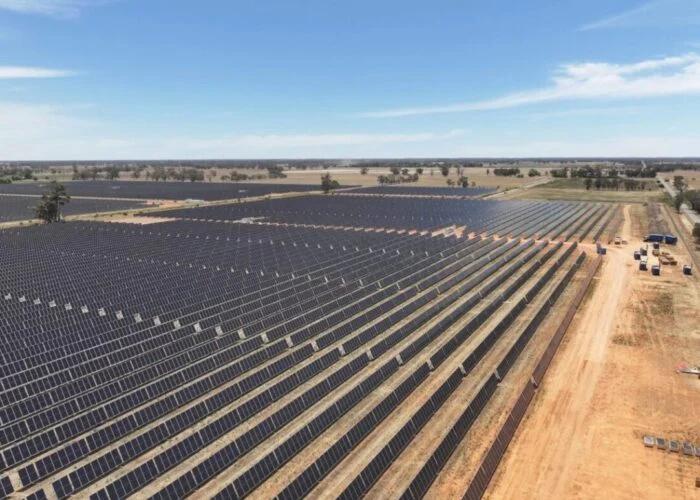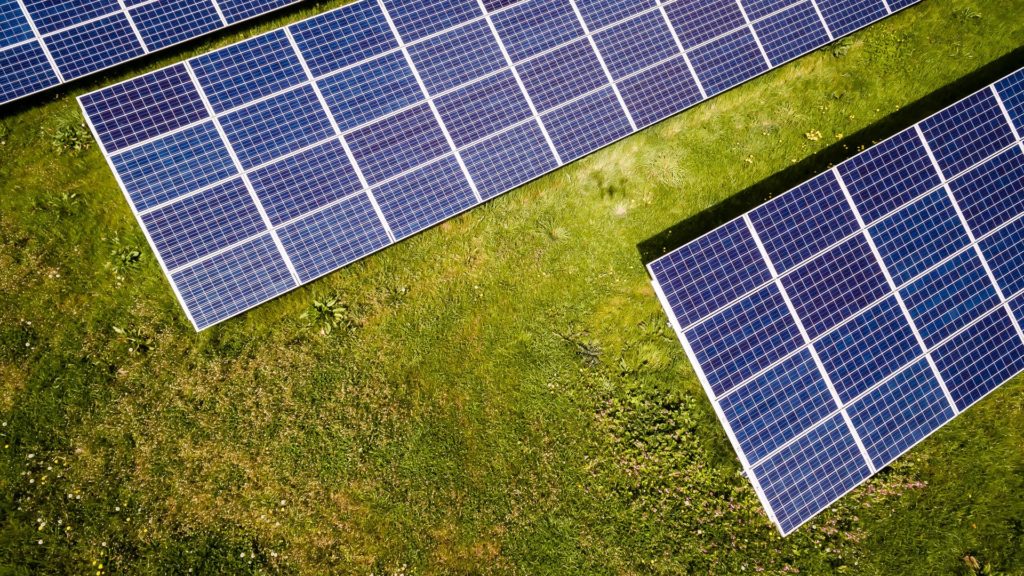
Community solar projects in Wisconsin could generate up to 1.75GW of renewable power, according to the Wisconsin Community Solar Economic Alliance.
The study estimated that by constructing and operating 350 community solar installations, each with the capacity to provide 5MW of electricity, the cumulative installed generation capacity would reach 1.75GW in total, increasing solar PV’s total share in Wisconsin’s electricity generation by all solar facilities, such as utility-scale, community, commercial, and other independent producers, to 13.7%, up from 3.1% currently.
Try Premium for just $1
- Full premium access for the first month at only $1
- Converts to an annual rate after 30 days unless cancelled
- Cancel anytime during the trial period
Premium Benefits
- Expert industry analysis and interviews
- Digital access to PV Tech Power journal
- Exclusive event discounts
Or get the full Premium subscription right away
Or continue reading this article for free
“Community solar has tremendous potential to benefit local communities across Wisconsin, as this study demonstrates. Once Wisconsin opens up for community solar, it will introduce competition and innovation into the marketplace, all while creating thousands of Wisconsin jobs and economic stimulus,” said Elizabeth Van Holt, director of new markets at Coalition for Community Solar Access (CCSA).
The study also examined the economic contribution to Wisconsin’s economy. The construction of community solar projects was assumed to take place over seven years, with operation and maintenance for each facility lasting 25 years.
Based on data from the CCSA and the US Department of Energy’s National Renewable Energy Laboratory, the study stated that the economic benefits will mainly be generated in the construction phase. A total of US$1.57 billion, or 63% of the total, will occur.
Construction of each 5MW facility will cost an estimated US$9.8 million. Of that, US$3.8 million (35.2%) will be spent in Wisconsin.
After the construction phase, the projects will shift to operations, and therefore the total spending and economic contribution will significantly decrease. During this phase, the total economic benefits of the installed solar facilities are expected to be US$856.9 million, accounting for 34% of the total economic contribution to Wisconsin’s economy.
According to the study, operations and maintenance are much less intensive than construction, and the total number of jobs created and supported through this spending will significantly be less than what occurs during the construction phase.
After the 25-year operation phase, the first batch of solar panels will retire, further lowering community solar projects’ economic contribution. In this phase, the community solar projects will only generate US$67.3 million, accounting for only 3% of the total economic contribution to the state’s economy. However, the study did not consider the impacts of decommissioning, recycling, disposal, replacing and refurbishing the panels.
“This study shows the lasting and wide-reaching economic impact that a build-out of community solar could bring to Wisconsin. Not only will community solar provide local tax revenue and jobs, but steady income and more economic certainty for Wisconsin farmers,” said Dale Knapp, director of research and analytics for Forward Analytics and the Wisconsin Counties Association.
Apart from Wisconsin, the cumulative community solar capacity in the US will reach 14GW by 2028, according to Wood Mackenzie and the Coalition for Community Solar Access.