Researchers have called for enhanced international standards to detect ultraviolet-induced degradation (UVID) in PV modules after identifying “severe” levels of the problem in operational n-type panels.
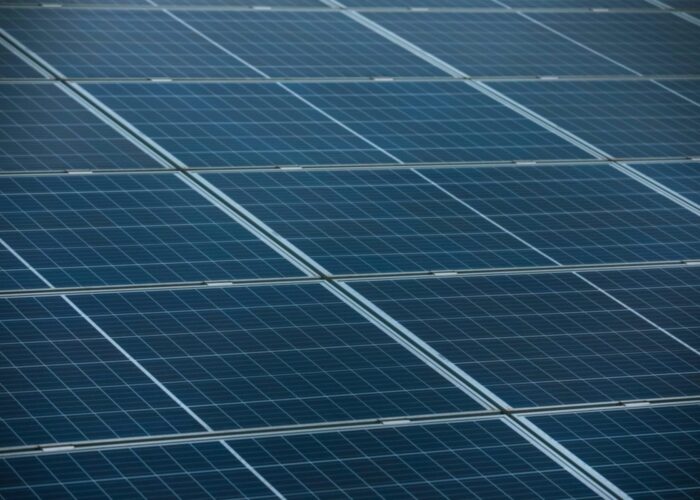
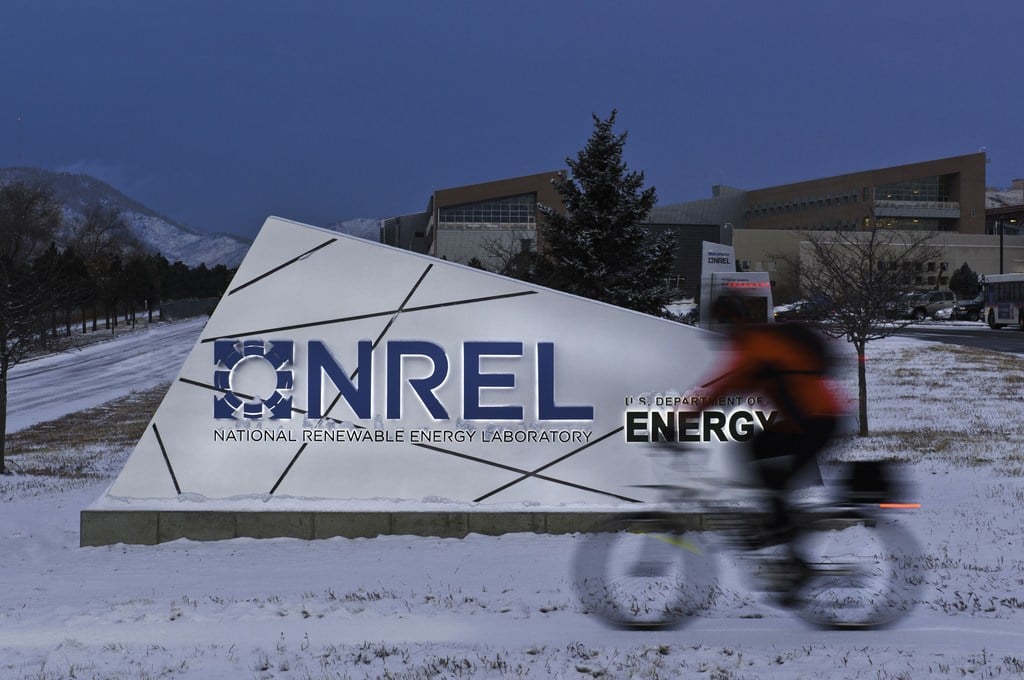
Scientists from the National Renewable Energy Laboratory (NREL) in the US studied passivated emitter rear totally diffused (n-PERT) modules in a 3MW commercial PV system that the owner had identified as underperforming.
Try Premium for just $1
- Full premium access for the first month at only $1
- Converts to an annual rate after 30 days unless cancelled
- Cancel anytime during the trial period
Premium Benefits
- Expert industry analysis and interviews
- Digital access to PV Tech Power journal
- Exclusive event discounts
Or get the full Premium subscription right away
Or continue reading this article for free
They found that the system’s field current-voltage (IV) curves had degraded by approximately 2.4% per year compared to nameplate capacity.
The scientists studied four fielded and two spare, unfielded modules, performing a range of electrical and physical tests on the modules to understand the root causes of the degradation. These included module and cell IV scans, electroluminescence and photoluminescence imaging, external quantum efficiency measurements, dark lock-in thermography and scanning electron microscopy.
The characterisations revealed that the modules suffered from power loss caused by two degradation modes: cell surface recombination losses caused by UVID, and high series resistance losses in cells with susceptible metallisation paste composition, likely caused by encapsulant degradation.
Further severe degradation was observed in the surface resistance of the UV-exposed cells following subsequent damp-heat stress testing.
The researchers said the results of the study did not indicate that n-PERT cells were inherently more susceptible to UVID than other cell types, but rather that specific design decisions around factors such as passivation layer properties or screen-printed silver paste composition are the key factors.
They emphasised that although the test focused on n-PERT cells, the major market shift towards other n-type technologies, such as TOPCon and heterojunction, which are also susceptible to UVID, raised questions about long-term PV reliability.
The researchers said the findings of the study highlighted the need for the development of new standards relating to UV degradation, with current IEC standards designed to screen for early module failures requiring only minimal UV exposure.
“This … indicates the need for more rigorous UVID qualification standards as cell and module design continues to evolve, as well as the need for a more fundamental understanding of UVID degradation modes and their compounding stress factors,” they said.
“Our work provides data relating observed field degradation back to UVID + damp heat accelerated test results to help in the development of new UVID stress test qualification standards.”
‘UV + damp heat induced power losses in fielded utility n-type Si PV modules’ was published in the journal Progress in Photovoltaics.