SNEC 2017: The next big solar module trend on display

April 19, 2017
Facebook
Twitter
LinkedIn
Reddit
Email
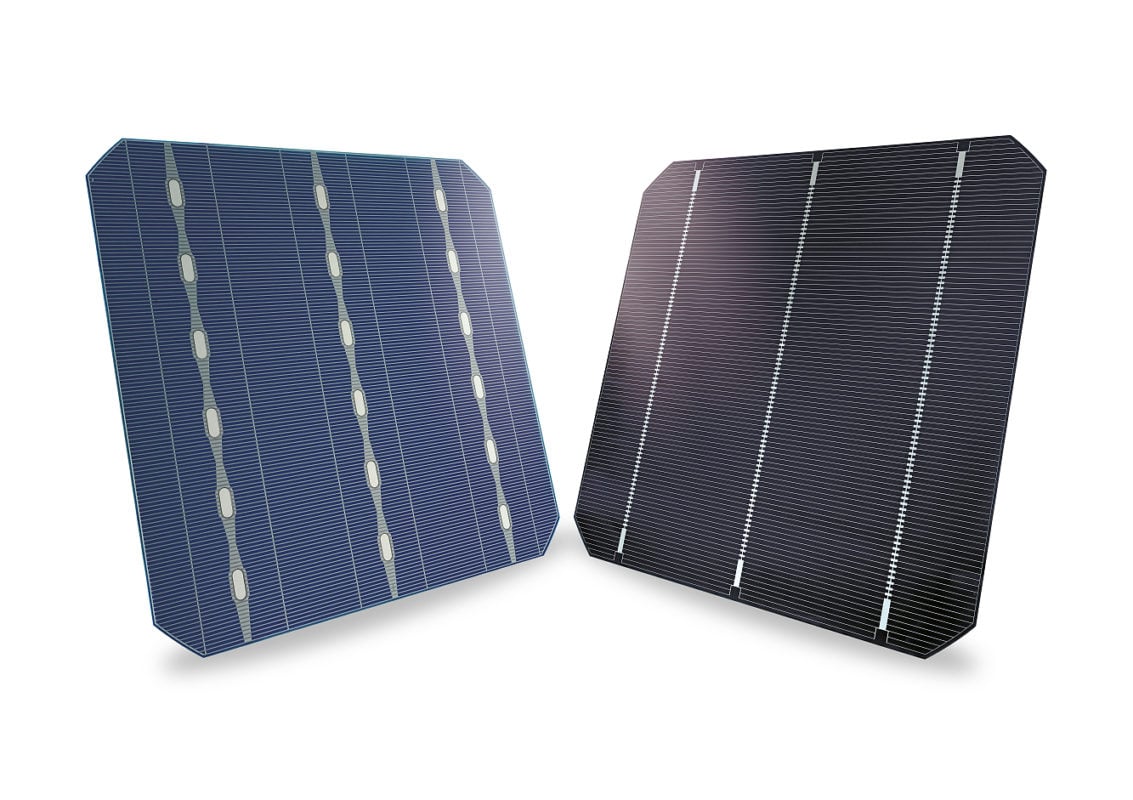
SolarWorld's Bisun cells used in bifacial modules. Image: SolarWorld.

SNEC 11th (2017) International Photovoltaic Power Generation Conference & Exhibition (SNEC 2017) in Shanghai, China maybe the largest annual exhibition in the solar industry but its sheer size and number of attendee’s can often mask emerging trends that are better highlighted at other events such as Solar Power International (SPI) in the US. 

Some good examples would be the introduction of 1,500V solar modules or 72-cell modules, both driven by the PV utility-scale market in the US and primarily showcased for several years at SPI in Las Vegas. Such modules have since become mainstream product offerings and are being adopted in other markets around the world.

This article requires Premium SubscriptionBasic (FREE) Subscription

Try Premium for just $1

  • Full premium access for the first month at only $1
  • Converts to an annual rate after 30 days unless cancelled
  • Cancel anytime during the trial period

Premium Benefits

  • Expert industry analysis and interviews
  • Digital access to PV Tech Power journal
  • Exclusive event discounts

Or get the full Premium subscription right away

Or continue reading this article for free

However, SNEC 2017 should not be remembered for its massive booth screens or deafening promotional videos fighting for attention but a technology that is born out of another technology that is setting its own major trend and industry transition. 

Shanghai shows its bifaciality

PV Tech alluded to this next big trend in modules at the beginning of the week when we reported that the world’s first full-size IBC bifacial module would be displayed at SNEC this year. 

Bifacial modules in general, notably from the migration to PERC but of course applies to PERT, HJ and IBC cells, provides solar cell producers with the option to fabricate cells on both sides of the wafer, boosting efficiency. 

Actual production volumes of bifacial modules in 2017, is very small but that is about to change, especially considering the number of companies showcasing bifacial modules at SNEC. 

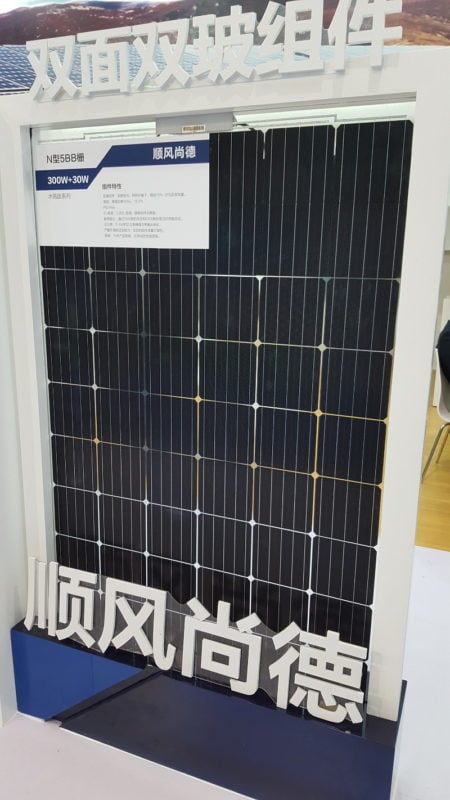
Though time does not allow product reviews at this time, we thought a partial pictorial selection of some of the bifacial modules being displayed on booths at SNEC, should adequately demonstrate that a recent niche product could be set for the mainstream, very shortly.
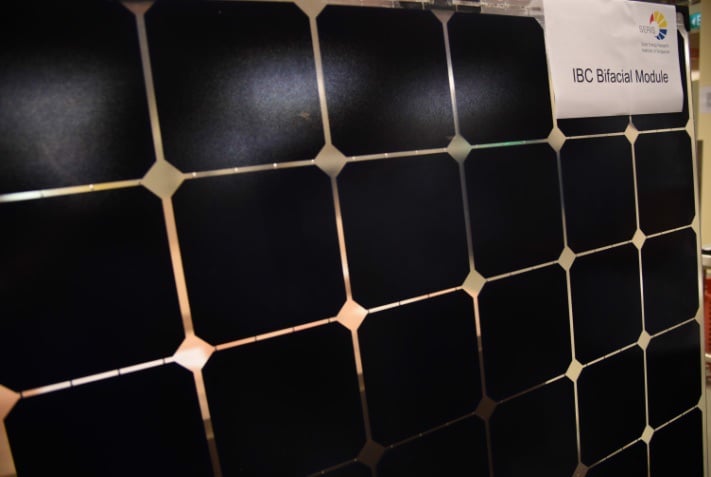
The Solar Energy Research Institute of Singapore (SERIS) at the National University of Singapore (NUS) has developed the world’s first full-sized Interdigitated Back Contact (IBC) bifacial solar module using International Solar Energy Research Center (ISC) Konstanz, ‘ZEBRA’ solar cells.
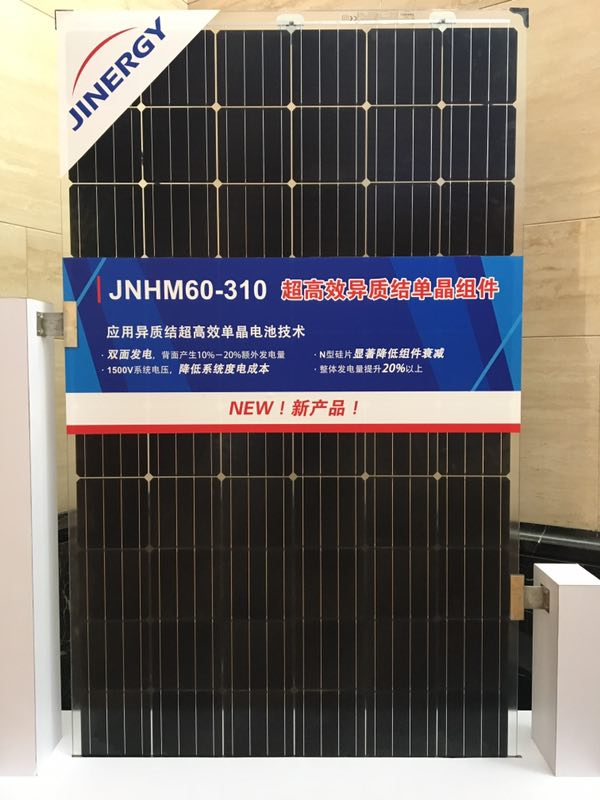
Jinneng Clean Energy Technology (Jinergy) said it would be starting mass production of its N-type monocrystalline bifacial heterojunction (HJ) modules in 2017.
Yingli Green Energy's PANDA cell design now comes in bifacial form and in production.
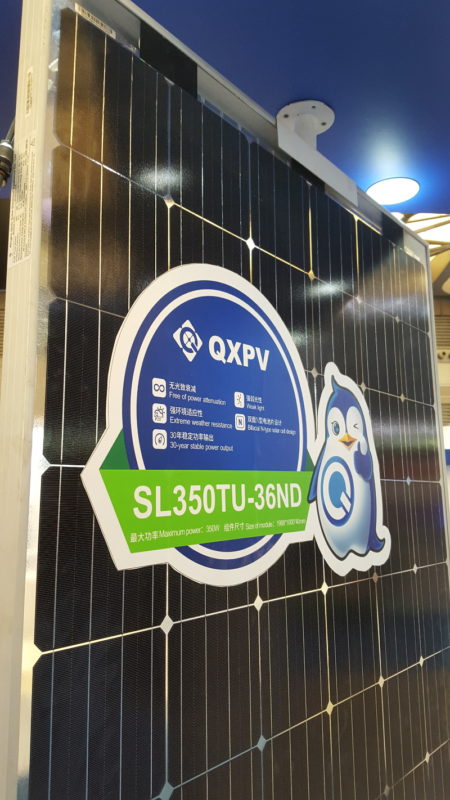
QXPV (NINGBO QIXIN SOLAR ELECTRICAL APPLIANCE CO., LTD has a selection of bifacial modules.
16 June 2026
Napa, USA
PV Tech has been running PV ModuleTech Conferences since 2017. PV ModuleTech USA, on 16-17 June 2026, will be our fifth PV ModulelTech conference dedicated to the U.S. utility scale solar sector. The event will gather the key stakeholders from solar developers, solar asset owners and investors, PV manufacturing, policy-making and and all interested downstream channels and third-party entities. The goal is simple: to map out the PV module supply channels to the U.S. out to 2028 and beyond.
13 October 2026
San Francisco Bay Area, USA
PV Tech has been running an annual PV CellTech Conference since 2016. PV CellTech USA, on 13-14 October 2026 is our third PV CellTech conference dedicated to the U.S. manufacturing sector. The events in 2023, 2024 and 2025 were a sell out success and 2026 will once again gather the key stakeholders from PV manufacturing, equipment/materials, policy-making and strategy, capital equipment investment and all interested downstream channels and third-party entities. The goal is simple: to map out PV manufacturing in the U.S. out to 2030 and beyond.

Read Next

March 27, 2026
Two module production facilities in China have been awarded the first Supply Traceability Standard certifications by Europe’s Solar Stewardship Initiative (SSI).
March 27, 2026
Australia's DCCEEW has launched an approach-to-market seeking an administrator to deliver the National Solar Panel Recycling Pilot.
March 26, 2026
More than 70% of global solar manufacturing facilities exhibited “major” or “critical” defects in 2025, according to a new report from Intertek CEA.
March 25, 2026
The global annual capital expenditure on PV manufacturing equipment is expected to more than double to US$43.8 billion over the next decade, according to a report from VDMA.
March 25, 2026
TCL Zhonghuan has reported a 2025 loss alongside a raft of executive changes as its operating revenue rose slightly year-on-year.
March 25, 2026
Drawing on multiple field inspections, James Whittmore of Enertis Applus+ discusses some of the common problems emerging in the run-up to the US’s July project safe harbour deadline.

Upcoming Events

Solar Media Events
April 15, 2026
Milan, Italy
Solar Media Events
June 16, 2026
Napa, USA
Solar Media Events
October 13, 2026
San Francisco Bay Area, USA
Solar Media Events
November 3, 2026
Málaga, Spain
Solar Media Events
November 24, 2026
Warsaw, Poland