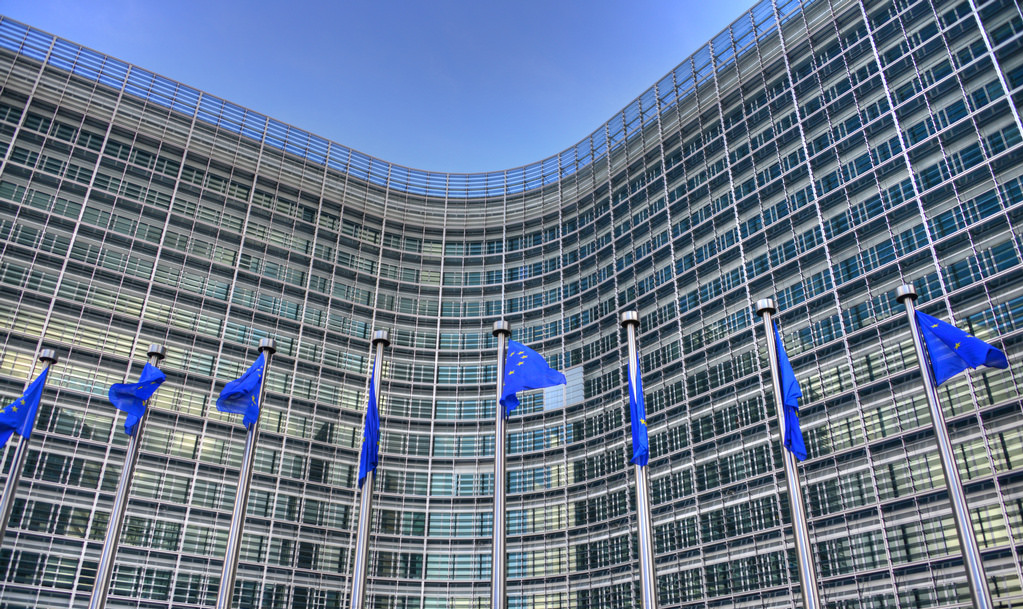
The European Commission has approved a €3 billion (US$3.55 billion) clean energy manufacturing aid scheme submitted by the German government.
The scheme is aimed at supporting strategic investments in solar panels, batteries, electrolysers and other technologies covered in the EU’s Net Zero Industry Act. It also aligns with the objectives of the Clean Industrial Deal, launched a year ago, which aims to deliver €100 billion to bolster clean energy manufacturing in Europe.
Try Premium for just $1
- Full premium access for the first month at only $1
- Converts to an annual rate after 30 days unless cancelled
- Cancel anytime during the trial period
Premium Benefits
- Expert industry analysis and interviews
- Digital access to PV Tech Power journal
- Exclusive event discounts
Or get the full Premium subscription right away
Or continue reading this article for free
The scheme aims to grand aid for investments that add manufacturing capacity across the entire solar supply chain – from polysilicon to modules, including solar glass – and also PV inverters and trackers.
In its decision to approve the manufacturing scheme, the EU Commission said that “the aid will incentivise the production of clean technologies, as well as their main specific components and related critical raw materials.”
The aid will take the form of grants and tax advantages, interest subsidies for new loans or guarantees for new loans. Companies across the entire country can apply for the aid scheme, which will be open until the end of 2030.
Teresa Ribera, executive vice-president for Clean, Just and Competitive Transition at the EU Commission, said: “This scheme will ensure additional clean technology manufacturing capacity in Germany. The German state can provide €3 billion in support for key investments in the sector.
“This will contribute to reaching the goals of the Clean Industrial Deal, while ensuring that potential competition distortions are kept to a minimum.”
This positive news comes a few months after the Netherlands cancelled a manufacturing programme, SolarNL, after a government-run investment programme suggested it was no longer “realistic” to build large-scale production in the country.
Germany is the latest country to see an aid scheme for clean tech manufacturing approved by the EU Commission, after ones from Portugal in October 2024 (with €1 billion aid scheme), Poland in September 2024 (€1.2 billion), France in January 2024 (€2.9 billion) and Hungary in August 2023 (€2.4 billion). The EU Commission launched a €3.4 billion call for the support of net zero technology manufacturing in late 2024.
Although all these developments are nearly two years old and launched before the implementation of the Clean Industrial Deal, Spain held its first funding programme for renewable energy manufacturing last year, called RENOVAL programme, which awarded €210 million to seven solar PV projects. A second edition of that programme was launched earlier this year, with a total subsidy of €355 million, and is still open for applications until Wednesday 25 February 2026.