European electricity trade association Eurelectric has published its latest figures into the European energy mix, and reports that, in the first half of the year, renewable energy accounted for more than half of the continent’s power supply.
In total, renewable power generated 692TWh of electricity, 50.39% of Europe’s total electricity supply, and close to double the 359TWh of electricity generated by fossil fuels. Onshore wind and hydropower were the largest contributors to this figure, with 228.8TWh and 220.7TWh of generation, respectively, while solar accounted for 137TWh.
Try Premium for just $1
- Full premium access for the first month at only $1
- Converts to an annual rate after 30 days unless cancelled
- Cancel anytime during the trial period
Premium Benefits
- Expert industry analysis and interviews
- Digital access to PV Tech Power journal
- Exclusive event discounts
Or get the full Premium subscription right away
Or continue reading this article for free
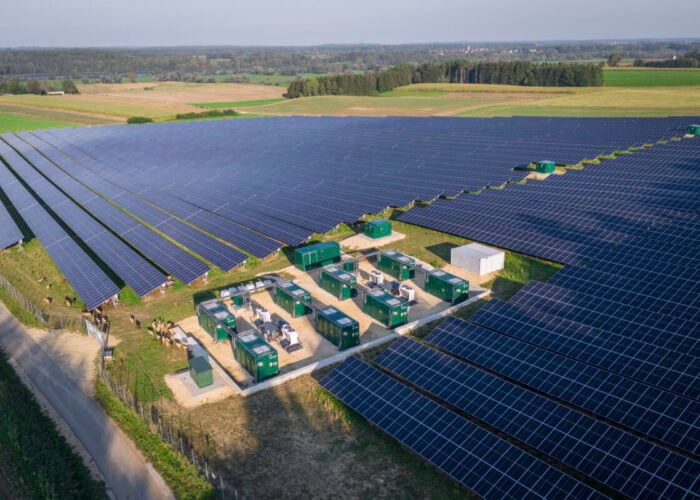
Although solar’s contribution is smaller than some of the other forms of renewable power generation, the solar sector is on pace for a record-breaking year; should the rate of electricity generation continue for H2 2024, solar will generate 274TWh of electricity by the end of the year, more than coal-fired power plants for the first time.
The graph below demonstrates how the contribution of various power sources to the EU energy mix in recent years, and the forecast rate of electricity generation for the remainder of the year, if each power source maintains its rate of electricity generation in H2 2024.
The graph demonstrates how renewable power has become an increasingly integral part of the EU’s energy mix in the last five years, with wind and hydropower on pace to exceed the electricity generation of natural gas by the end of 2024. Wind, hydro and solar have all seen their contribution to the EU’s energy mix increase from 2020 to 2023, and this trend is expected to continue in 2024, while the contributions of fossil fuels and nuclear power have declined over this period.
Eurelectric also notes that “low-carbon energy sources,” that is to say renewable power plus nuclear, accounted for 74% of the EU’s electricity supply in H1 2024, an increase from 68% in 2023.
“The pace of change is impressive,” said Eurelectric secretary general Kristian Ruby. “These figures document that the decarbonisation efforts of electricity companies are years ahead of any other sector.”
Much of this growth in solar power generation has been driven by new capacity additions in some of Europe’s largest PV markets. In the first four months of the year, Germany added more than 5GW of new solar capacity, while Italy’s utility-scale sector grew by 373% in Q1 2024. The strong performance of the European solar sector is a microcosm of growth in global solar deployments, with the world’s installed solar capacity growing 87% in 2023.
However, questions remain for the European PV sector, most notably the financial viability of locating upstream manufacturing capacity on the continent. This was a common topic of conversation at last month’s Intersolar event, held in Germany, and expanding European manufacturing is a priority for the long-term health of the European solar sector.
Ruby also noted that Europe’s electricity demand has been falling in recent years, a phenomenon that could create an imbalance between renewable energy demand and supply on the continent that could threaten the long-term financial viability of renewable power generation in Europe. According to Eurelectric’s figures, European power demand in H1 2024 was 2.6% lower than in H1 2022, while power demand in H1 2023 was 3.4% lower than the same period in the previous year.
“Years of stagnation in electricity demand have now turned into a regular decline,” said Ruby. “Policymakers must urgently support the uptake of electricity to provide the necessary investment signals for clean generation.”
Policymakers have already taken a number of steps to improve other aspects of the European renewable power sector, most notably the implementation of the Net Zero Industry Act (NZIA) over the weekend and the launch of the European Solar Academy at Intersolar Europe last month.