The European Council (EC) has adopted the EU’s Net-Zero Industry Act (NZIA) after just over a year of discussion, as the EU looks to bolster its clean energy manufacturing industries.
This week’s vote by the EC is the final step in the legislative process for the NZIA, which looks to encourage investment in clean energy manufacturing by setting a target for European manufacturers to meet at least 40% of the EU’s annual renewable energy deployment needs by 2030. The act will enter into force one day after its publication in an EC journal, which is expected towards the end of June.
Try Premium for just $1
- Full premium access for the first month at only $1
- Converts to an annual rate after 30 days unless cancelled
- Cancel anytime during the trial period
Premium Benefits
- Expert industry analysis and interviews
- Digital access to PV Tech Power journal
- Exclusive event discounts
Or get the full Premium subscription right away
Or continue reading this article for free
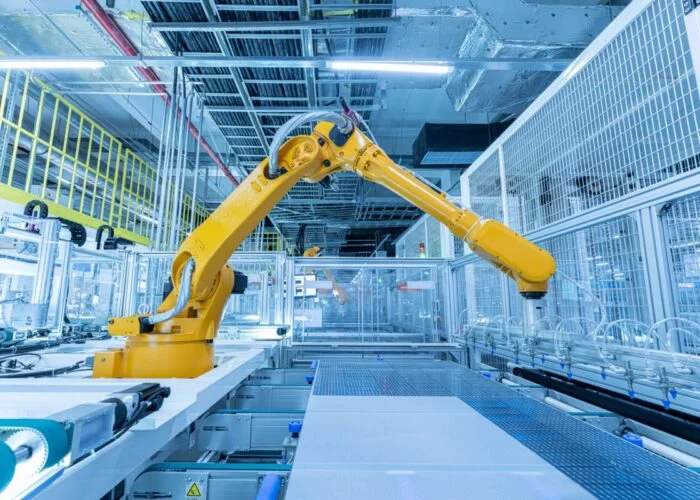
Other policies under the NZIA include the establishment of ‘Net-Zero Industry Academies’ to train 100,000 workers for the renewables manufacturing sector within three years and the establishment of what the European Commission called “regulatory sandboxes”, aimed at encouraging more investment in European manufacturing through flexible regulatory frameworks favourable to developing and testing new technologies.
“The act creates the best conditions for those sectors that are crucial for us to reach net-zero by 2050,” said European Commission president Ursula von der Leyen. “Demand is growing in Europe and globally, and we are now equipped to meet more of this demand with European supply.”
The act was first proposed by von der Leyen in February 2023, and the EU Parliament approved the regulations last month. The new programme aims to address an increasingly dramatic imbalance in the European renewables manufacturing sector, which has had a significant impact on the solar industry in particular.
Figures from EUPD research suggest that Europe imported 87GW worth of PV modules from China in 2023, with EU member states purchasing 8.3 million items, at a cost of US$612.4 million, in December rendered European manufacturing all but financially unviable, with Swiss company Meyer Burger announcing plans to close a module manufacturing plant in Germany due to unfavourable economics for locating upstream production on the continent.

This is to say nothing of growing tensions between China and the US with regard to the import of solar products, which has left Europe literally and figuratively caught between the two leaders of the solar manufacturing sector.
Industry reaction
Earlier this year, Johan Lindahl, secretary general of the European Solar Manufacturing Council (ESMC) warned PV Tech Premium that “we’re about to lose the whole European PV manufacturing industry,” and those in the European solar manufacturing sector have welcomed the EC’s vote as a means to address this decline in the industry.
“ESMC and our member companies anticipate swift action, as the EU PV manufacturing industry urgently needs the first procurements and auctions with NZIA non-price and pre-qualification criteria in place,” said the ESMC in a statement, referring to a requirement, agreed by the European Parliament and EU Council, that 30% of the capacity of clean energy auctioned in the EU each year will include qualification criteria beyond availability of financial capital.
“The subsequent Implementation Act of the NZIA must ensure that these new ‘non-price criteria’ are applied consistently and sensibly across the EU,” added Anett Ludwig, head of supply chains at trade body SolarPower Europe.
“That means they must be technology-specific, phased in gradually and applied as award criteria instead of pre-qualifications. This is important to avoid delayed or undersubscribed public auctions negatively impacting the EU’s energy transition.”
The ESMC and SolarPower Europe have already collaborated on measures to improve the European solar sector, including the signing of the European Solar Charter in April. Members from 23 EU states signed the charter, which includes a recommendation from the ESMC to set quantitative targets for new solar deployments, and note the percentage of new solar projects that will be facilitated by products made in Europe, to help ensure “a sustainable supply of high-quality solar PV products in Europe”.
Despite these efforts, Ludwig noted that the EU solar sector is still in need of “emergency support” and a “structural EU fund” for scaling European solar manufacturing in the short-term.
“Some manufacturers have weeks left of survival, this emergency requires urgent action from EU and national authorities,” said Ludwig. “SolarPower Europe requests to set up an additional EU financing tool like a Solar Manufacturing Facility under the Innovation Fund.”