US cadmium telluride (CdTe) thin-film module manufacturer First Solar has completed a deal to sell US$391 million in tax credits, bringing the total value of its tax credits sold this year to just over US$1.5 billion.
The latest deal – which follows similar sales completed in June and February – will see the tax credits sold to another “leading financial institution”; this is the third time the credits have been sold to an unnamed party. The buyer acquired the credits for US$372.8 million, generating a selling ratio of US$0.953 per US$1 of tax credits, in line with the ratio of US$0.949 per US$1 of tax credits secured in the June deal.
Try Premium for just $1
- Full premium access for the first month at only $1
- Converts to an annual rate after 30 days unless cancelled
- Cancel anytime during the trial period
Premium Benefits
- Expert industry analysis and interviews
- Digital access to PV Tech Power journal
- Exclusive event discounts
Or get the full Premium subscription right away
Or continue reading this article for free
The deal will be completed in three instalments, the first paid on or around 28 July, the date of the deal’s signing, and the second and third paid in the fourth quarter of this year.
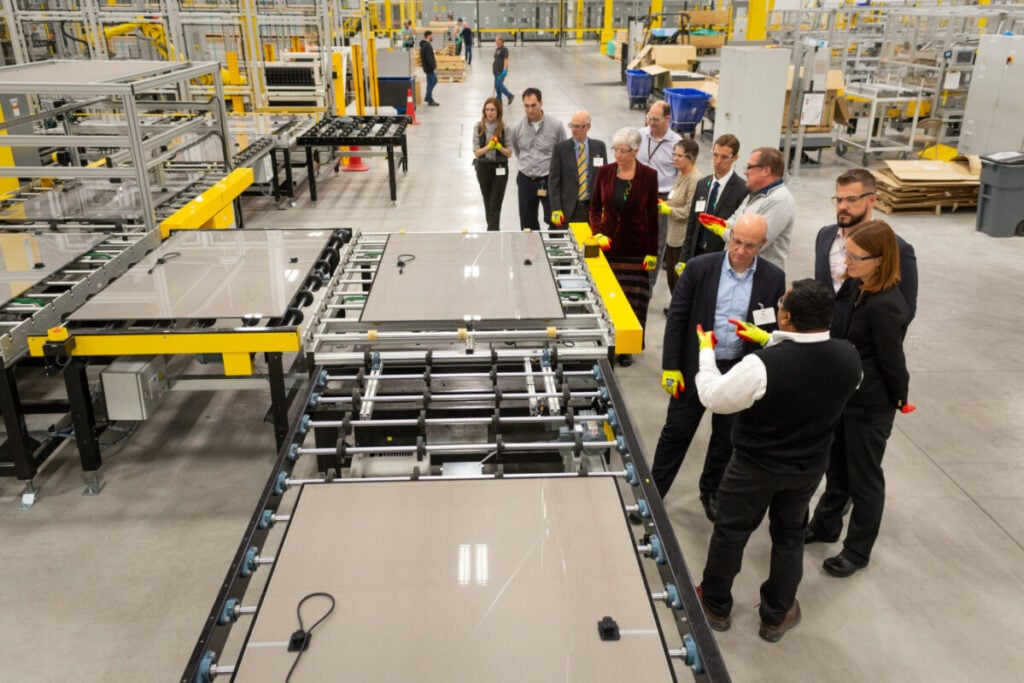
As was the case in the June deal, the specific tax credits sold are 45X advanced manufacturing credits, which First Solar generated through the production of “certain module components in the United States”. The company has sought to refocus much of its manufacturing efforts on the US – reducing solar module production in Malaysia and Vietnam this year, after starting work at a module manufacturing plant in Alabama last year – to take advantage of Inflation Reduction Act (IRA) policies incentivising domestic production of clean energy components and materials.
However, many of these supportive policies will be phased out much faster than initially expected, following the passage of the One, Big Beautiful Bill Act earlier this month.
Many industry experts have predicted a flurry of activity in the coming months, both in terms of project development and tax credit sales, as actors in the US solar sector look to take advantage of these supportive policies while they are still in effect; figures from Wood Mackenzie suggest that the withdrawal of these policies will harm the business case for new renewable power projects, ultimately making the US’ operating wind and solar portfolio 100GW smaller than initially expected by 2030.
The government has also sought to reduce reliance on overseas imports of materials and components integral to the solar industry, but the imposition of so-called “reciprocal” tariffs has been met with opposition by many in the sector, as the US lacks a significant domestic supply chain for key materials, such as polysilicon.
US microinverter manufacturer Enphase suggested that the imposition of these tariffs was behind a decline in the company’s gross margins for its second quarter results. The situation is unlikely to improve, as this week, president Donald Trump imposed a fresh 25% tariff on Indian goods, at a time where some in the industry suggested India could help fill the supply cap left by Chinese companies that have been the recipients of the majority of Trump’s tariffs.