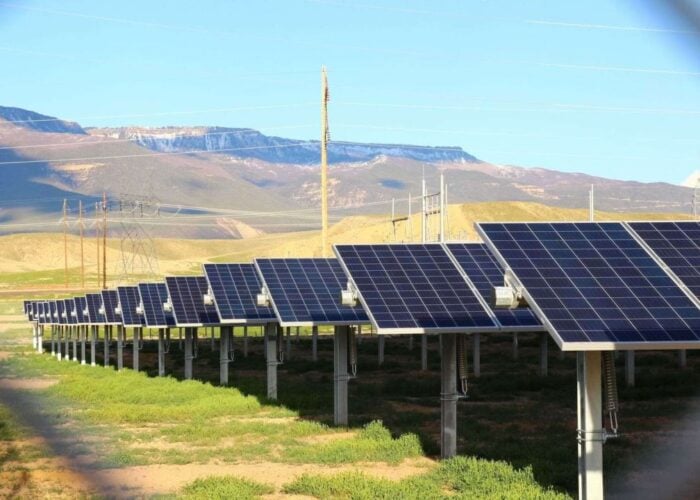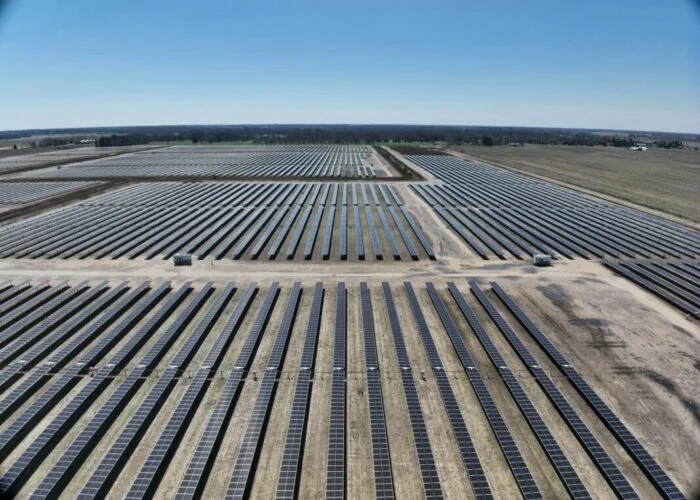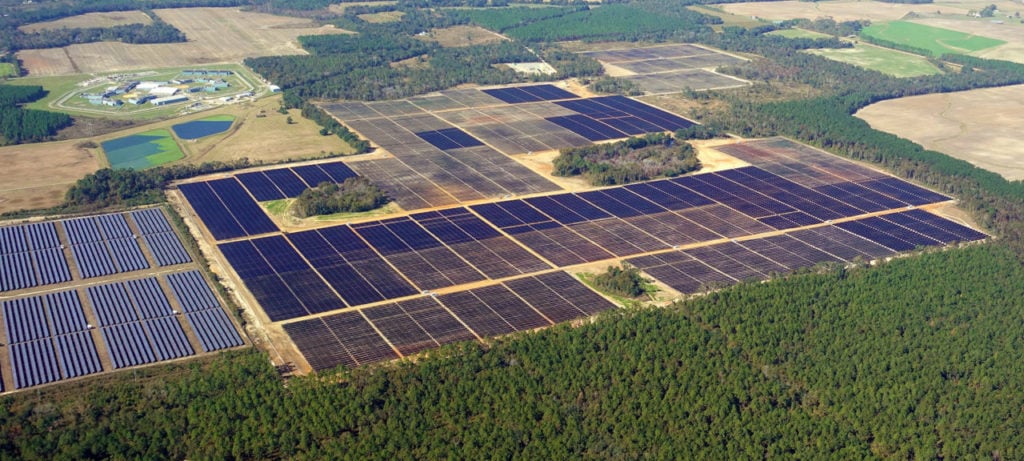
Georgia Power has certified five new solar power purchase agreements (PPAs) within its borders, for a combined capacity of just over 1GW.
The utility received approval from the Georgia Public Service Commission (PSC) to certify the projects last Friday, as part of its Clean and Renewable Energy Subscription (CARES) programme.
Try Premium for just $1
- Full premium access for the first month at only $1
- Converts to an annual rate after 30 days unless cancelled
- Cancel anytime during the trial period
Premium Benefits
- Expert industry analysis and interviews
- Digital access to PV Tech Power journal
- Exclusive event discounts
Or get the full Premium subscription right away
Or continue reading this article for free
The CARES programme allows commercial and industrial (C&I) customers to purchase a subscription for a share of a project’s renewable electricity generation, and the five projects approved under this programme will be built and maintained by third-party companies that made bids in 2023.
Across the five projects, the utility has signed off on PPAs lasting for at least 20 years: a 200MW project in Jefferson County and a 225MW project in Laurens county received 20-year offtake agreements; a 260MW project in Mitchell County signed a 25-year PPA; and a 200MW project in Coffee County signed a 30-year offtake deal. The fifth project is a 183MW solar project in Wilkinson County, to be paired with a 91.5MW battery energy storage system (BESS), which signed a 20-year offtake agreement.
The utility also closed bids in August for the 2025 edition of the CARES programme, making a request for proposals for up to 2GW of utility-scale solar, as Georgia Power looks to grow the proportion of solar in its energy mix. In July, the PSC approved the utility’s latest integrated resource plan (IRP), which will see the utility aim to add 4GW of new renewable power capacity by 2035.
Fossil fuels and renewables in Georgia
However, some of the IRP includes provisions for an expansion of a nuclear power plant and upgrades to a natural gas plant, as the utility looks to meet what it expects to be a growth in electricity demand of 8.5GW by the end of the decade.
PV Tech reached out to energy analyst RMI about the role of fossil fuel projects in various US states’ IRPs earlier this year, and asked whether continued interest in fossil fuel developments reflects a lower levelised cost of electricity (LCOE) for fossil fuel projects versus renewable alternatives. An RMI spokesperson told PV Tech that fossil fuel LCOE has grown over time, and that “the price of a gas turbine when contracts are signed may be significantly higher than the price estimated during planning.”
The spokesperson went on to use the example of the Cayuga combined-cycle plant in Indiana, where procurement costs for the project were 36% higher than were estimated in previous IRPs, raising questions about the long-term financial security of fossil fuel investments in state IRPs.
Meanwhile, figures from Lazard show that the LCOE for utility-scale solar in the US fell 4% between 2024 and 2025, the third consecutive year that the LCOE of US solar has fallen.
“Our planning models project that these resources will deliver benefits to customers long-term,” said Wilson Mallard, director of renewable development for Georgia Power, of the five solar projects signed under the CARES programme. “The five projects we selected are economical and we expect they will provide energy and capacity benefits to the system and the most value for all Georgia Power customers.”