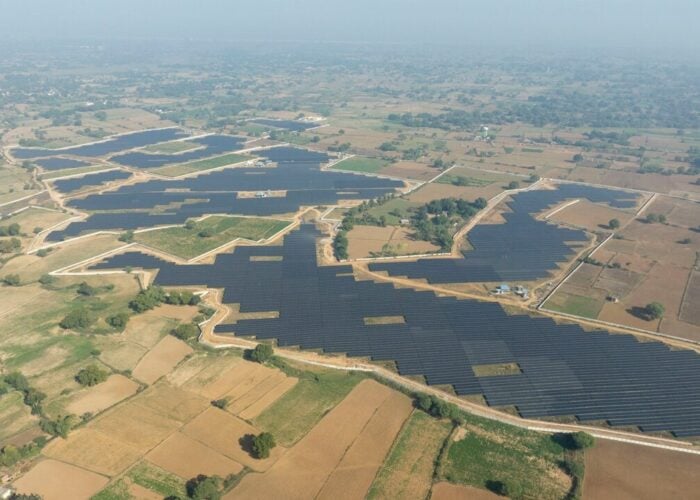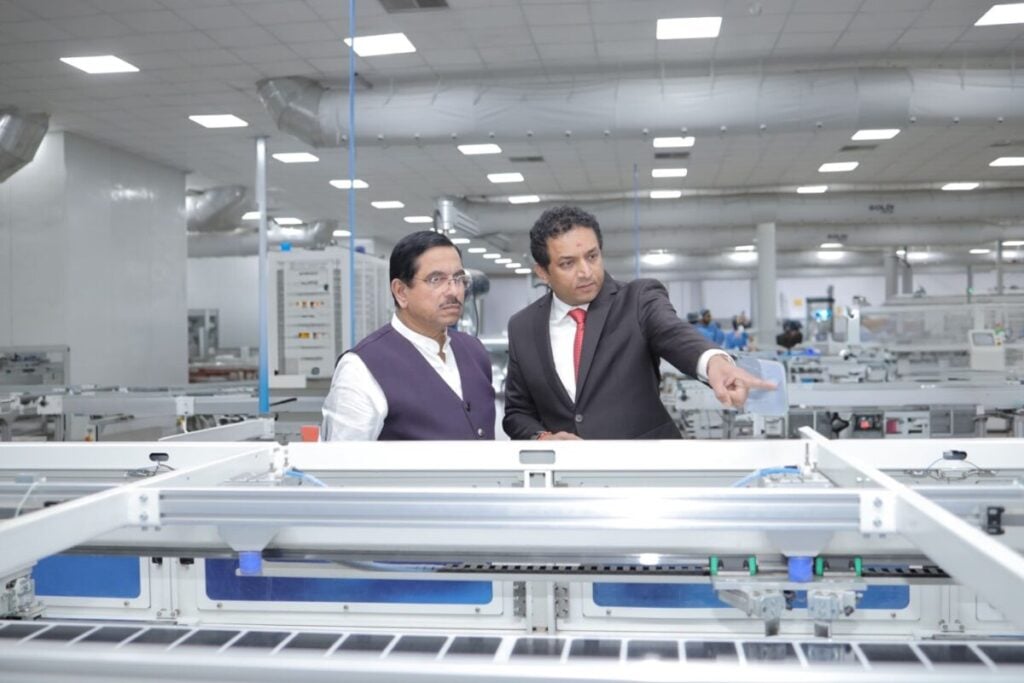
Indian PV manufacturer Goldi Solar has launched India’s first AI-powered solar manufacturing line in Surat, Gujarat with an enormous 14GW of planned production capacity.
The facility boasts a long list of innovations and optimisations made possible through the use of AI, with solar cell production planned to start soon.
Try Premium for just $1
- Full premium access for the first month at only $1
- Converts to an annual rate after 30 days unless cancelled
- Cancel anytime during the trial period
Premium Benefits
- Expert industry analysis and interviews
- Digital access to PV Tech Power journal
- Exclusive event discounts
Or get the full Premium subscription right away
Or continue reading this article for free
The pioneering technology includes automated high-speed stringers that can achieve a production capacity of 10,000 cells per hour, whilst also ensuring optimal precision and reducing material wastage, claims Goldi Solar.
AI-powered AOI (Automated Optical Inspection) systems are used for real-time quality control that aim to detect and eliminate defects at a microscopic level.
Within a fully integrated pre-lamination section, an auto EVA laying robot is used to place encapsulation layers. By reducing human intervention, this decreases inconsistencies brought about by traditional manual processes.
AI-powered 3-Display EL and visual two-sided inspection systems also enhance reliability and durability to maximise the number of high quality, market-ready modules.
Furthermore, a three-stage auto laminator with double-side heating, which is both electric and oil-based, can improve panel strength and longevity. Meanwhile, an auto ICB elevate-lifting system with Teflon removal can optimise efficiency, and an inline double-layer HI POT tester is used to ensure superior insulation and electrical safety.
Finally, an intelligent eight-bin auto sorting system can classify modules with real-time adjustments, and a state-of-the-art MES system is used to live track and monitor modules.
‘Indian companies leading the charge’
Pralhad Joshi, union minister of new and renewable energy, who launched the facility in Kosamba. said: “I toured the plant and inspected their AI-powered quality control, high-speed stringers, and robots. [I am] happy to see Indian companies leading the charge in the global clean energy landscape.”
The 14GW facility will support India’s efforts to cater for its enormous domestic content programme, where the push for Indian-made PV product has had to deal with the reality that demand far outstrips India’s current manufacturing capacity.
A report by thinktank Ember Climate recently found that inadequate local supply chains, transportation challenges and lengthy permission processes risked pushing up the cost of capital up, which is a major expense to PV projects.
However, Ishver Dholakiya, founder and MD of Goldi Solar, hinted that some of the product could be for export, noting: “With the rise of AI, ‘Made in India’ and ‘Make in India’ are poised to thrive as exports grow and production quality improves.”
Goldi Solar already has two other module assembly plants in Gujarat, based at Pipodara and Navsari, with a combined nameplate capacity of 3GW.
AI is increasingly being used across the PV industry from O&M and transmission to improving module performance.