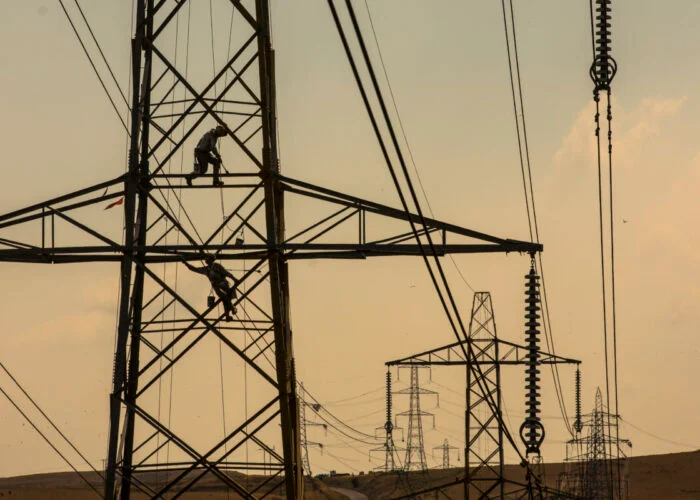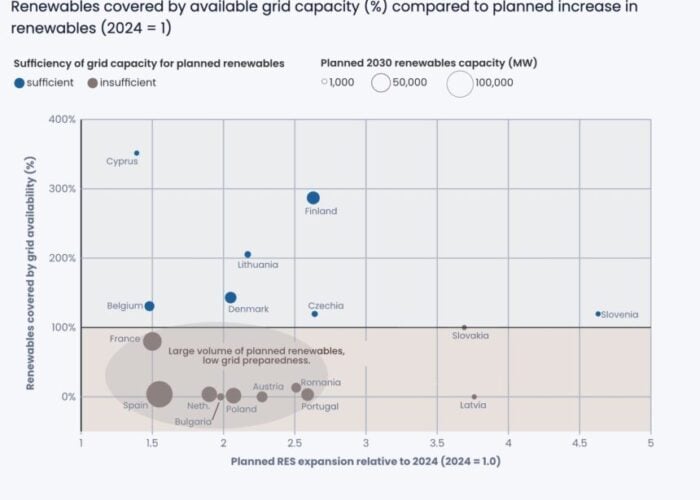
Grid connectivity has long been a major problem in the renewable industry around the globe, which unfortunately will always be a persistent issue, but better legislation, new equipment and more human resources could help alleviate the issues across Europe.
Panellists during last month’s Large Scale Solar Europe event, hosted by PV Tech publisher Solar Media in Lisbon, Portugal, discussed the issue of grid modernisation in Europe and how it affects the growth of solar PV across several European Union Member States.
Try Premium for just $1
- Full premium access for the first month at only $1
- Converts to an annual rate after 30 days unless cancelled
- Cancel anytime during the trial period
Premium Benefits
- Expert industry analysis and interviews
- Digital access to PV Tech Power journal
- Exclusive event discounts
Or get the full Premium subscription right away
Or continue reading this article for free
“One important thing for everyone to realise is that there will always be delays,” said Vladimir Tabutov, CEO of developer and EPC company HEC Solar and Bulgarian parliament member, adding that also opens an opportunity for the grid both in terms of hardware and software.
The hardware is what is the existing actual capacity out there, while the software aspect is centred on the regulation and the legislation – of which a lack thereof in Europe is one of the main barriers for the modernisation of the grid – that is put in place in order to navigate the interest of the investors, said Tabutov.
“There are ways through legislation where we can practically guide the investor interest into simple steps that will make this huge demand to be solved in a better and more regulated way and at the same time, give us the opportunity to build solar faster.”
With a grid capacity of 11GW and a peak capacity use in the winter of 6.5GW, Bulgaria has had nearly treble the applications, from solar alone, to connect to the grid with 30GW, up from 12GW in 2019, said Tabutov.
Despite the high demand for solar PV projects to get grid connection, the country has only added 700MW of solar capacity since 2019, according to Tabutov.
“Of course there are delays and there are problems on the grid. One of the main problems could be what is the expected usage of the grid in the future,” said Berto Martins, director of electricity markets at utility EDP, adding that most of the problem comes from the amount of money that is adequate to spend within the development of the grid.
In terms of grid reinforcements, there are not many ways to look at the solution, added Manuel Costeira da Rocha, technology strategy director at renewables investor Smartenergy. “Either the consumers of the electricity pay the bill or anyone else needs to pay.”
The second option would revolve either around private investors or the government through the taxpayers, which regulators are not keen on doing and thus creating a bottleneck.
“At the end of the day, we have to be very pragmatic, understand the real problem, and how we should move forward. This is something that has to be done with the European authorities, with the national authorities and the regulators,” added Costeira da Rocha.
Europe should focus on having a common vision for the major topics and then each country have local specifications, as the grid between countries can vary as well as its technicalities, even in the case of Spain and Portugal despite sharing the same grid, said Costeira da Rocha.
Implementation of better equipment
As most of the talks revolve around modernising the grid to allow for more renewable capacity to be added, using better equipment could be beneficial alleviating grid issues.
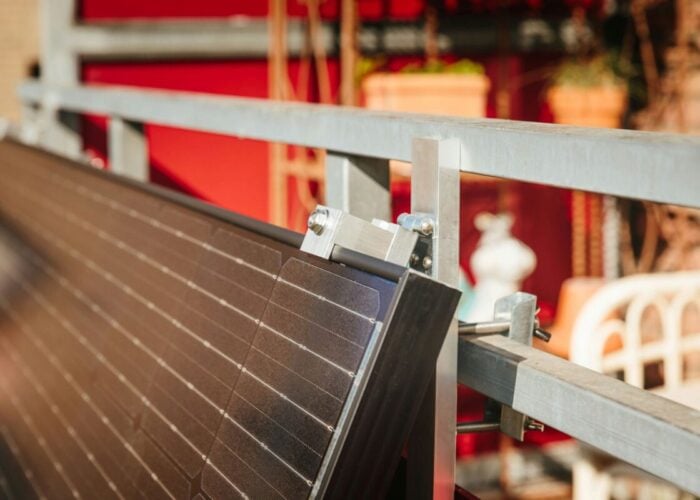
Helping reduce grid congestion and connectivity can also be implemented with smaller projects, and more specifically in the residential market with improvements in terms of inverters to alleviate grid issues.
Such is the case with grid inverters that can offer new functionalities, added Carlos Alvarez, grid connection director at PV and inverter manufacturer Goodwe. A better implementation of inverters in the residential solar market in Spain and Portugal, could reduce the connectivity issues between Spain and France for instance, added Alvarez.
“Right now what we are doing about that in Spain is to think about increasing the requirement for residential inverters in order to provide a safer and reliable grid, thinking about the near future,” added Alvarez.
Moreover, transmission system operators in Portugal are also facing a lack of human resources, said Martins, which does not help in the work required by European countries to reinforce its grid and make sure it reaches its target of adding 740GW of solar capacity by 2030, as stated in the REPowerEU strategy.
Looking for new staff, and younger workers to be introduced in the industry could be beneficial in order to help in terms of innovation, added Michele Lauritano, senior consultant at renewables consultancy Everoze.
“We need to refresh the way the operation has been managed, creating new rules and a new regulation on the way to operate a grid.”