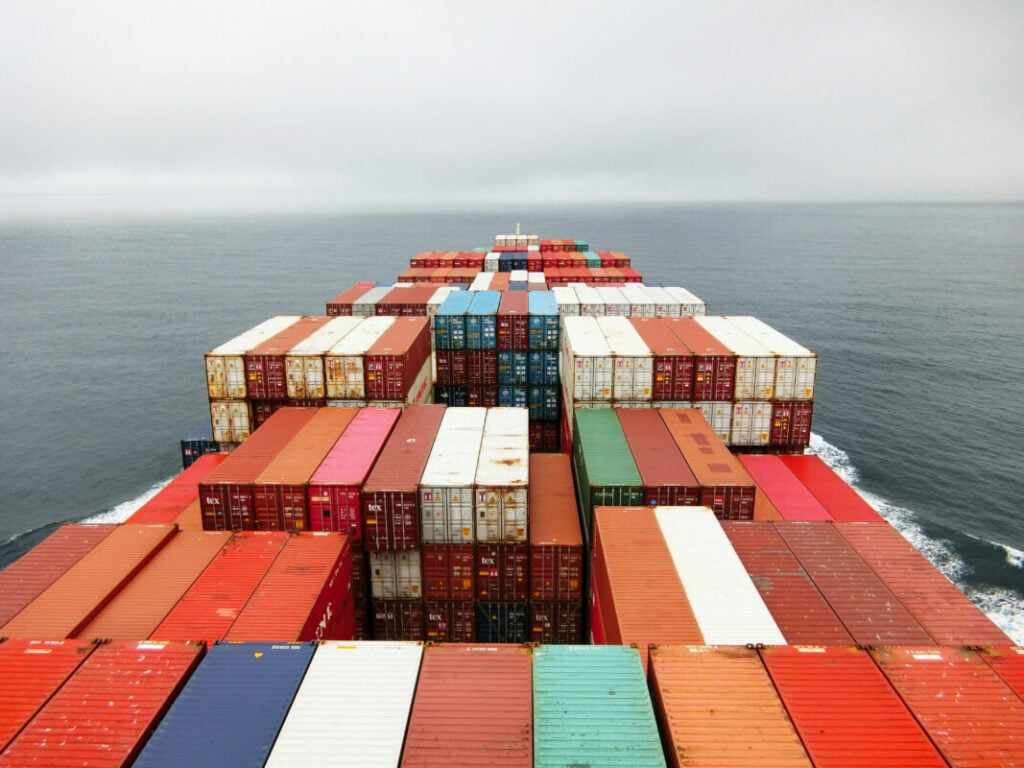
Two months have now passed since the beginning of the conflict in the Middle East, which led to the closure of the Strait of Hormuz. With a safe reopening for ships to transit across the strait still unclear, the ripple effects continue to intensify across the energy industry.
Though the closure will have the most significant impact on the oil and gas sector, which could prompt a global resurgence in solar PV installations, the supply chain for a solar PV system is also feeling the impact.
Try Premium for just $1
- Full premium access for the first month at only $1
- Converts to an annual rate after 30 days unless cancelled
- Cancel anytime during the trial period
Premium Benefits
- Expert industry analysis and interviews
- Digital access to PV Tech Power journal
- Exclusive event discounts
Or get the full Premium subscription right away
Or continue reading this article for free
The supply of some solar components, such as polysilicon or wafers, might be minimally impacted by the conflict in the Middle East, due to China accounting for the majority of the global capacity. Yet this is different for other components, such as module frames made using aluminium or PV glass that relies on methanol, for which Iran is the second-largest producer in the world and China’s largest supplier, according to market intelligence service Mysteel.
“Shortages are arising, right?” asks John Mitchell, president and CEO of trade body Global Electronics Association. “We have copper shortages, aluminium shortages [and] you’re seeing just all kinds of raw materials that are struggling.
“And spinning up new mines is costly and it takes time. It’s not like we can just say ‘Oh, we have a shortage. Now turn on the mine over here in country X’. It doesn’t happen fast enough.”
While the Middle East is not the main source of aluminium—it accounts for roughly 9% of global production according to Dutch financing bank ING—the impacts of disruption to the aluminium supply chain can still be felt as a ripple effect on market availability and pricing. This could drive up the cost of module frames, which primarily use aluminium.
However, alternatives do exist, and if the blockade intensifies and continues to put pressure on aluminium availability and price, companies might have to not only find a new source but also explore alternative solutions, such as using steel for module frames.
“The longer it goes, the more they start looking at new sources as well as strengthening those other channels,” explains Mitchell, adding that the longer it takes for the Strait of Hormuz to open and clear up, the higher the chances that companies will end up sourcing materials from a different region.
Increased solar interest could lead to shortages
If a procurement shortage of raw materials and price increases weren’t already enough of a constraint, there’s also the ripple effect from oil and gas prices going up, which has driven up interest in solar panels.
In the UK, solar installation enquiries increased by 27% in late February-March, according to UK-based energy supplier Octopus Energy, while the UK government has focused on solar generation for its push for energy security, including accelerating the approval of plug-in solar—also known as balcony solar—to be sold in the UK.
According to Mitchell, this increased interest in solar panels will further drive shortages.
“With these kinds of increasing demands, you’re going to have raw material constraints,” says Mitchell. He adds that these constraints won’t affect only the solar industry but also others seeking the same raw materials. This is especially true given the ongoing AI boom.
“Because of that, [for] other electronics developments their costs are going up because AI is willing to pay more for, say, memory, and so all of these dynamics are happening across the ecosystem that are making it quite challenging right now. Solar is getting impacted by AI, which is getting impacted by energy shortage. It’s all interrelated.
“Electronics are in everything that we do. And when we have these disruptions, the ecosystem or the supply chain of the electronics industry is possibly the most complex, or at least one of the most complex, supply chains in the world, because no one country can build electronics without the help of other areas.
“Every single one of these ripples in the pond disrupts that very fragile and nimble supply chain,” explains Mitchell.
‘Strategic interdependence’ to withstand supply chain disruptions
He adds that one of the key areas in which the association works is the promotion of supply chain resilience, which they call “strategic interdependence”. When disruptions of that scale occur, such as the pandemic in 2020 or the Ukraine war in 2022, companies need to be prepared and have various options to withstand them.
“You need to have various options,” says Mitchell. “Too many is inefficient, too few is too risky. And so you have some local suppliers, some neighbouring suppliers, some low-cost suppliers, and you need to keep those things flowing. And if you have a solid strategic interdependence, then you’re able to weather these more efficiently, if you will.”
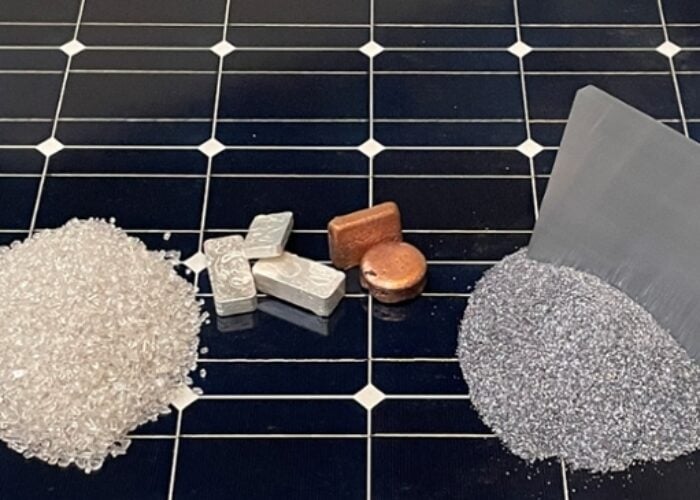
Another solution that he mentioned, and has been covered on PV Tech extensively, is the potential for the development of a circular economy through more effective material recycling, for which the trade body has been advocating for decades, says Mitchell. Although probably seen as a longer-term solution, the solar industry has been working towards building this circularity that Mitchell highlights, with many recycling companies developing ways to recover as much as possible of the components that make up a solar panel.
Mitchell highlights the importance of recycling key components, such as aluminium, and how this can also reduce energy consumption compared to mining and producing it from scratch.