India’s ability to reach 500GW of non-fossil capacity by 2030 is being increasingly constrained by grid limitations and growing tender complexity, according to Abhinav Jindal, deputy general manager at Power Management Institute (PMI).
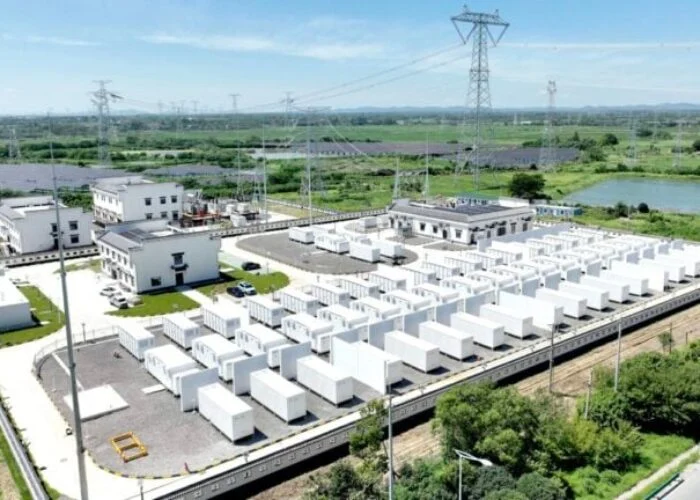
Speaking to PV Tech, Jindal suggested that transmission readiness has become one of the most significant risks to India’s clean-energy trajectory. Solar and wind projects are now being delivered far faster than the grid is able to absorb them, he said, compared with coal’s traditional four-to-five-year development cycle that allows transmission to grow in tandem – a synchronisation that no longer exists.
Try Premium for just $1
- Full premium access for the first month at only $1
- Converts to an annual rate after 30 days unless cancelled
- Cancel anytime during the trial period
Premium Benefits
- Expert industry analysis and interviews
- Digital access to PV Tech Power journal
- Exclusive event discounts
Or get the full Premium subscription right away
Or continue reading this article for free
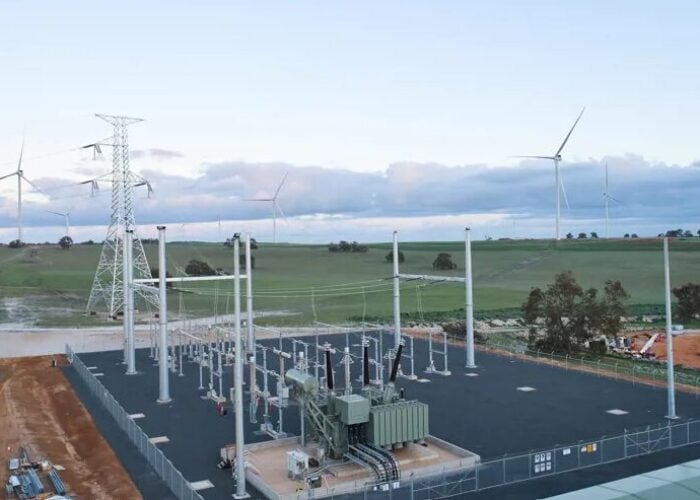
“Very often the panels are in place, the system is commissioned, but you can’t evacuate power because the transmission network has not been bolstered,” he said, noting that several states are already facing stranded renewable assets. Legacy PPAs are also limiting utilities’ ability to absorb new capacity, while ultra-low tariffs from previous auctions have made some states reluctant to honour older contracts.
These challenges mirror broader national data. A joint report by IEEFA South Asia and JMK Research, published in September 2025, showed more than 50GW of renewable capacity stranded as of June 2025 due to transmission constraints. The analysis pointed to a 42% gap between planned and commissioned transmission lines and noted that ISTS additions have fallen to their lowest level in a decade.
Despite mounting pressure, Jindal highlighted the national grid’s resilience, pointing to over a decade without major blackouts. Under the One Nation, One Grid (ONOG) framework and coordinated Central Electricity Authority (CEA) planning, “we continue to maintain this robustness even as renewables penetrate the grid,” he said. However, the intermittency of renewables still demands additional system capacity and more sophisticated management tools.
Tender undersubscription is another growing concern. Jindal linked the trend to increasingly complex auction structures – including FDRE, RTC and storage-linked tenders – as well as unrealistic baseline cost assumptions. “Some of the estimates at a fundamental level are so low that we don’t find broad participation,” he said. The government is now reassessing L1 benchmarks to ease downward tariff pressure and encourage healthier bidding.
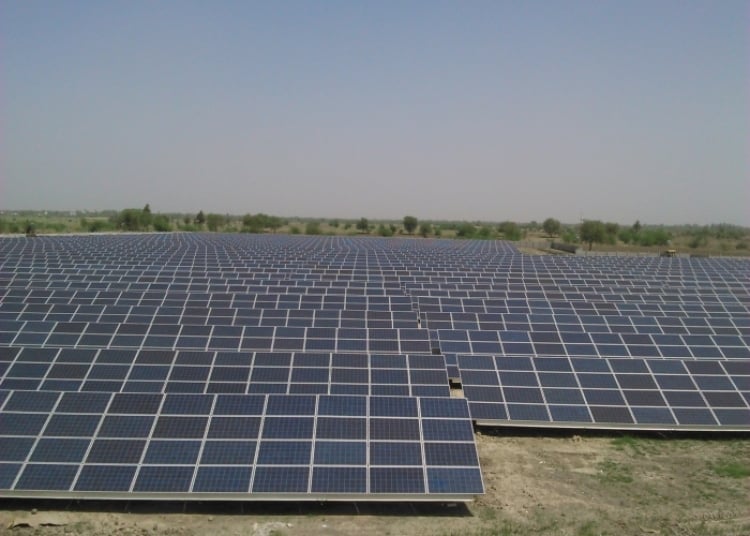
Even so, deployment remains strong. India added nearly 30GW in FY2024-25 and is on track for another 20GW-25GW this year. At around 40GW annually, the country remains broadly aligned with its 2030 ambition – provided grid expansion and tender reform accelerate.
Read our full interview with Abhinav Jindal here (subscription required).
This story was edited on 24 November 2025 at the interviewee’s request to update the organisation they belong to.