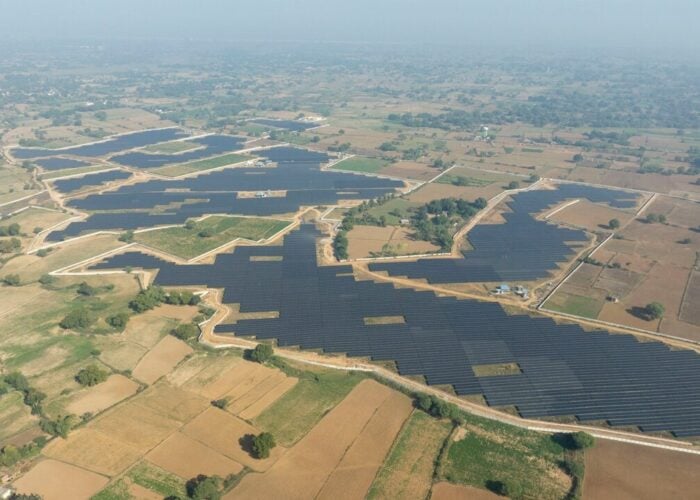
The Rewa 750MW solar tender in Madhya Pradesh, India, saw tariffs plunge to a record low of INR 2.97/kWh (US$0.044) after a lengthy online auction. Acme Solar, Mahindra Renewables and Solenergi Power won 250MW each. The tariff has an escalation of INR 0.05/kWh (US$0.0007) for 15 years, resulting in a levelized tariff of INR 3.29/kWh (US$0.049) for 25 years, 24% below the previous low of INR 4.34/kWh (US$0.065) as seen in NTPC’s Rajasthan tender in January 2016. But adjusted for lower cost of equipment and changes in other parameters, the fall is only about 2%.
The record low tariff can be attributed to large project size and improved risk profile for the Rewa projects with unconditional state government offtake guarantee and deemed generation compensation for grid unavailability.
Try Premium for just $1
- Full premium access for the first month at only $1
- Converts to an annual rate after 30 days unless cancelled
- Cancel anytime during the trial period
Premium Benefits
- Expert industry analysis and interviews
- Digital access to PV Tech Power journal
- Exclusive event discounts
Or get the full Premium subscription right away
Or continue reading this article for free
We believe that reduction in solar tariffs below INR3 level will act as an inflection point for the solar sector and have long term consequences on India’s future power generation mix. India has a low per capita power consumption of 1,075kWh per year and still needs to build most of its power generation capacity to catch up with peer developing countries such as Brazil, Thailand and South Africa, which have 2-4x the per capita power consumption of India.
It is time to add the fourth dimension of storage in India’s power sector regulations
This auction makes solar PV a firm favourite for powering India’s future economic growth. States looking to procure power and IPPs will take notice and adapt their strategies accordingly. Successful bids for new thermal power plants in India in the past two years have been between INR 3.93-4.98/kWh (US$0.059-0.074). For wind power, most states are still offering FITs of about INR 4-6/kWh (US$0.06-0.09) although upcoming auctions may bring that to about INR 4/kWh (US$0.066). Gas power is simply not viable in India due to high cost (INR 5/kWh) and short supply of natural gas. This clearly makes solar power a key contender for future power capacity addition in the country.
The key arguments against a full scale up for solar PV are its intermittent nature, India’s evening peak power demand profile and the grid’s ability to balance a surge in renewables. Solution to these issues lies in cost effective energy storage and pricing for energy storage is moving in the right direction.
India has already taken the first small step for adopting energy storage. Recent tenders announced by Solar Energy Corporation of India (SECI) aim to use storage to smoothen the supply curve for solar power plants. The next step would be to use storage with solar projects to carry out peak shifting and match solar power’s generation profile with the country’s evening peak demand profile. Realistically, this may still take a few years to become cost competitive with thermal power but it looks like we are heading there. India’s power sector regulations are defined for generation, transmission and distribution and most regulations had to undergo changes over the past few years to accommodate utility-scale and distributed renewable generation. It is time to take out the editing pens again to add the fourth dimension of storage in India’s power sector regulations.