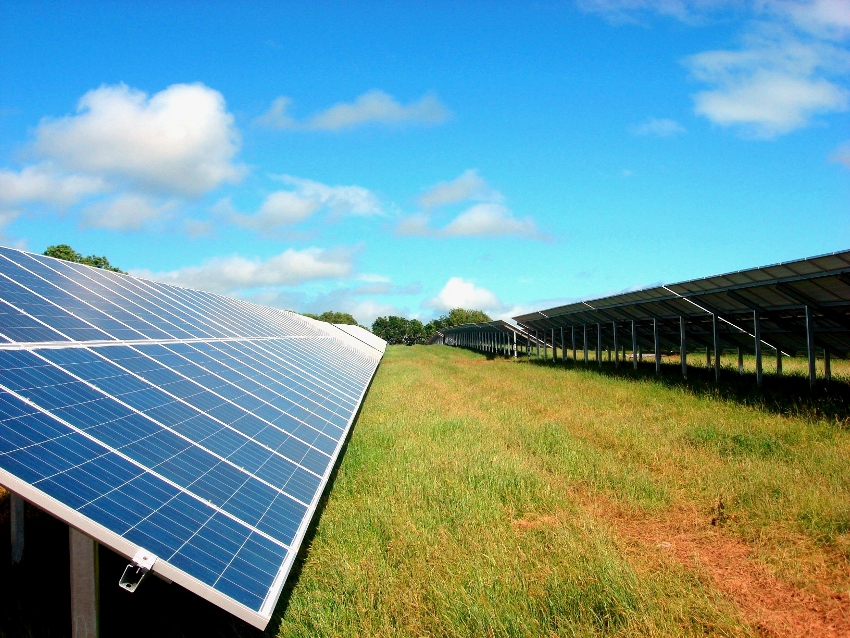
The International Energy Agency (IEA) has released a 10-point plan to reduce the European Union’s reliance on Russian natural gas that includes the accelerated deployment of renewable power as the war in Ukraine destabilises the continent’s energy security.
Released yesterday, the plan calls for European countries to accelerate the deployment of new solar and wind projects.
Try Premium for just $1
- Full premium access for the first month at only $1
- Converts to an annual rate after 30 days unless cancelled
- Cancel anytime during the trial period
Premium Benefits
- Expert industry analysis and interviews
- Digital access to PV Tech Power journal
- Exclusive event discounts
Or get the full Premium subscription right away
Or continue reading this article for free
A “concerted policy effort to fast-track further renewable capacity additions” could deliver an extra 20TWh of power over the next year, said the IEA, which already expects record additions of solar PV and wind power capacity to be added in 2022.
“Most of this would be utility-scale wind and solar PV projects for which completion dates could be brought forward by tackling delays with permitting,” said the plan.
“This includes clarifying and simplifying responsibilities among various permitting bodies, building up administrative capacity, setting clear deadlines for the permitting process, and digitalising applications.”
The IEA also called for faster deployment of rooftop solar PV systems in order to reduce consumers’ bills.
“A short-term grant programme covering 20% of installation costs could double the pace of investment (compared with the IEA’s base case forecast) at a cost of around €3 billion (US$3.3 billion). This would increase annual output from rooftop solar PV systems by up to 15TWh,” said the agency.
For countries like Germany that already have a substantial rooftop solar market, such proposals could have a huge impact, although the IEA report made no mention of the supply of solar modules and the inflationary pressure greater demand could have on prices.
Werner Trabesinger, head of quantitative products at renewables advisory firm Pexapark, said “renewables will certainly be a part of addressing the European energy problem, albeit with a less immediate impact.”
“The case for increased renewables deployment is helped by the overall higher energy price and the fact that near-term fuel switching will make Europe fall short of its carbon reduction ambitions,” said Trabesinger.
“On the other hand, merchant-market adoption of renewables will be hampered by high volatilities, as utilities struggle to manage PPA volumes via traded markets.”
PV Tech Premium has reported how the war in Ukraine looks set to transform Europe’s energy apparatus as the continent looks to reduce its dependence on Russian imports.