Solar PV installations in India have surged in 2025 with a record 34.98GW of new additions in the first 11 months of the year, according to the Indian Ministry of New and Renewable Energy.
The figure is for deployments up until the end of November 2025, and is more than a 67% increase from the same period in 2024, when India witnessed 20.85GW of new solar PV installed. Figures are slightly higher than those recently published by analyst JMK Research, which has 33.9GW of installed solar PV in India as of the end of November 2025.
Try Premium for just $1
- Full premium access for the first month at only $1
- Converts to an annual rate after 30 days unless cancelled
- Cancel anytime during the trial period
Premium Benefits
- Expert industry analysis and interviews
- Digital access to PV Tech Power journal
- Exclusive event discounts
Or get the full Premium subscription right away
Or continue reading this article for free
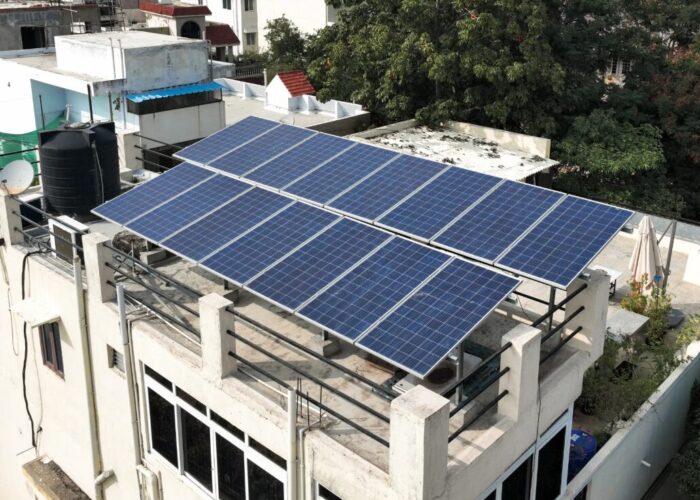
According to JMK Research, nearly 3GW of solar PV were added in November 2025. The leading states for new utility-scale solar PV additions that month were Maharashtra (with 802MW), Rajasthan (526MW) and Gujarat (509MW). Both Maharashtra (with 193.4MW) and Gujarat (130MW) were also the leading states for rooftop solar PV additions.
Solar PV represented the bulk of new renewable energy capacity in 2025, which reached a record 44.5GW.
Cumulatively, solar PV installs currently sit at 132.85GW at the end of November 2025, a 41% increase from the 94.17GW registered in November 2024, as the country passed the 100GW milestone (Premium access article) at the beginning of 2025. Solar PV currently represents more than half of all cumulative renewable energy – including hydro – capacity installed (253GW) in the country, surpassing the halfway mark of India’s target to reach 500GW of installed non-fossil energy capacity by 2030.
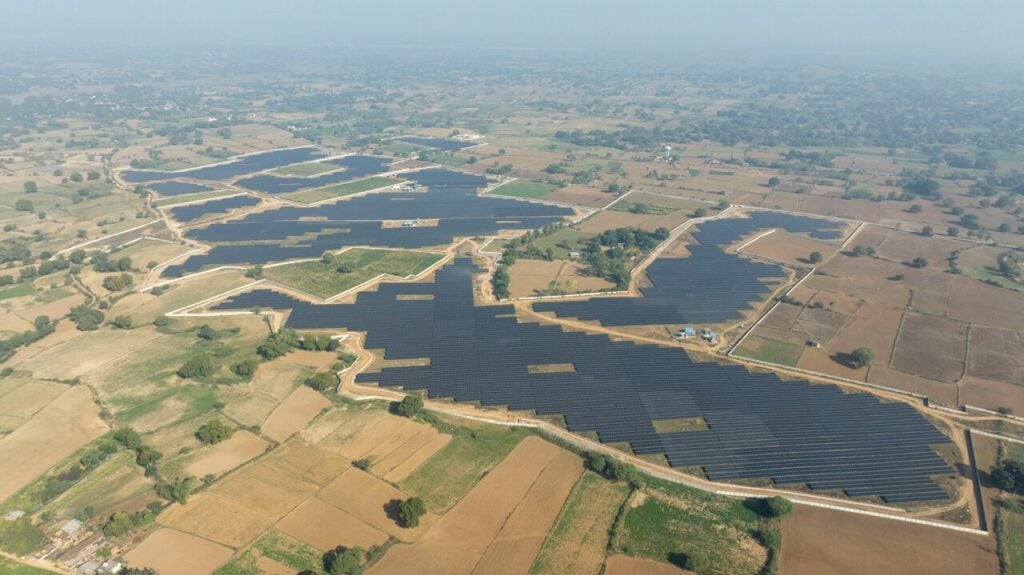
Moreover, a further 105GW is in the pipeline as of the end of November 2025, according to the MNRE, of which 35GW is capacity that has been tendered. Solar PV’s growth continues strongly in India, with Indian state-owned renewable energy developer SJVN recently commissioning a 1GW solar PV plant in the Indian state of Rajasthan.
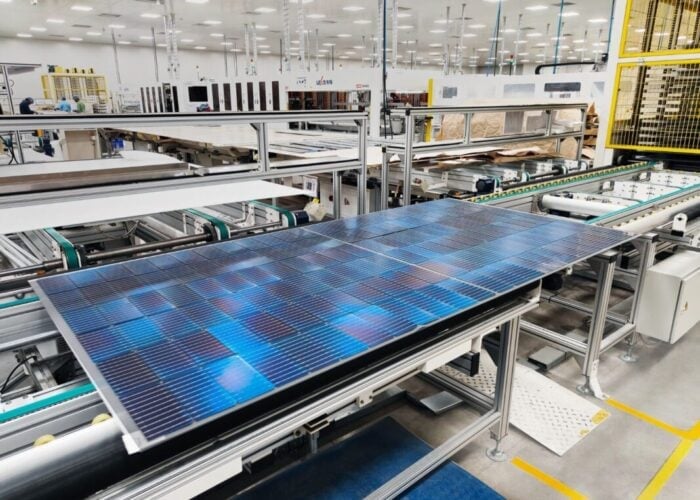
The accelerated growth of solar PV in India last year was not exclusive to the downstream industry, with manufacturing capacity also increasing drastically in the past few months. During the Summer, the country surpassed 100GW of module nameplate capacity operational in the Approved List of Models and Manufacturers (ALMM), while the solar cell list ALMM List-II was launched later in the year and already has around 24GW of operational solar cell capacity enlisted under the ALMM List-II.
According to MNRE, the annual nameplate capacity for modules reached 144GW at the end of November 2025, of which 81GW alone were added in 2025. This nearly doubled the annual nameplate capacity added in 2024 for modules.
“The PLI Scheme for High-Efficiency Solar PV Modules is helping in developing and enhancing solar manufacturing across various stages. Beneficiaries under PLI Scheme installed around 11 GW of solar PV module manufacturing and around 5 GW of solar PV cell manufacturing capacities during 2025 under the scheme,” said the MNRE.
Despite India’s Production Linked Incentive (PLI) giving a significant boost to the domestic solar PV manufacturing landscape since 2022, some hurdles still remain to build a complete domestic supply chain, according to a recent report from the Institute for Energy Economics and Financial Analysis (IEEFA). Both polysilicon and wafer production capacities lag behind those of modules and solar cells, with only 3.3GW of operational polysilicon production capacity and a 5.3GW annual nameplate capacity for wafers.
More recently, the Indian government plans to increase the efficiency of solar PV modules on the ALMM starting from 2027. For utility-scale solar projects, the threshold would be moved up from 20% to 21% for crystalline silicon (C-SI) and 19% to 20% for cadmium telluride (CdTe) based modules starting from 1 January 2027, before increasing by a further half percentage point for both C-Si and CdTe.