Labour shortages and “restrictive” work practices caused by the ongoing COVID-19 pandemic have caused solar deployment to fall by nearly two-thirds (64%) sequentially, with just 351MW having been installed in Q2 2020.
That is according to consultancy Bridge to India, whose prediction of 500MW of new PV in Q2 proved too optimistic given the extended lockdown and consequent effect on movement of people and goods.
Try Premium for just $1
- Full premium access for the first month at only $1
- Converts to an annual rate after 30 days unless cancelled
- Cancel anytime during the trial period
Premium Benefits
- Expert industry analysis and interviews
- Digital access to PV Tech Power journal
- Exclusive event discounts
Or get the full Premium subscription right away
Or continue reading this article for free
Bridge to India's figure of 351MW is the most optimistic projection issued so far, with other recent evaluations of India’s Q2 performance having reinforced how modest new installations were in the three months to the end of June. JMK Research & Analytics noted the country deployed 304MW, while Mercom India Research suggested it was just 205MW – a figure the consultancy said was the lowest quarterly deployment total since 2014.
Utility-scale PV made up 211MW of capacity addition while new rooftop solar, which is struggling with a dip in demand and payment delays, added only 140MW. For H2 2020, Bridge to India is estimating 600MW of new rooftop capacity additions, a 23% decrease on the same period last year.
Some 5,053MW of solar tenders were issued in India during Q2 – consisting of ten utility-scale solar parks, three floating solar installations and one solar-wind hybrid project – which was down 65% sequentially.
Bridge of India is forecasting that activity will gather pace in the coming quarters, with an estimated 4,720MW to be commissioned in H2 2020, bringing total commissioned capacity for 2020 to 5,620MW. Still, that figure would represent the lowest capacity addition in three years.
Lower equipment prices and lifting of lockdown-related restrictions “should help developers bounce back with higher capacity addition in 2021”, noted the consultancy.
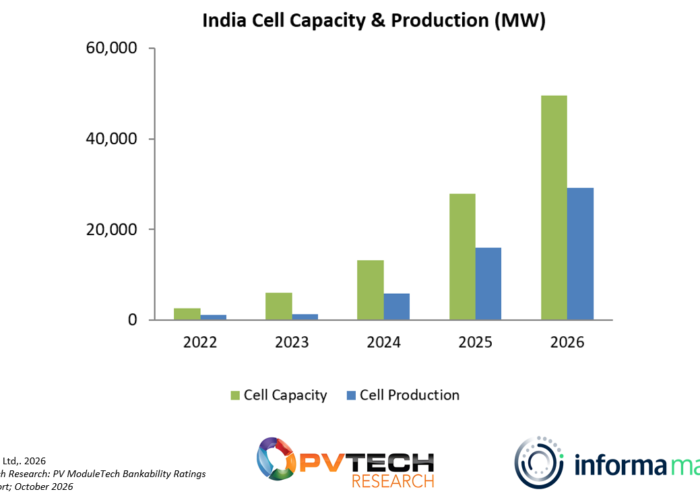
On the policy front, India’s government has looked to protect the country’s solar equipment manufacturing sector through the extension of safeguard duty for another year. It is estimated India imports 80% of the components used in solar developments from China.
Trade body All India Solar Industries Association warned the government needs to go further and that the safeguard duty is not enough on its own to safeguard the future of local manufacturers, with chairman Hitesh Doshi calling on policymakers to immediately put in place a basic customs duty of 50% on solar equipment.