Aiming to make its local solar manufacturers competitive on the global stage, the Indian government has proposed direct financial support of INR110 billion (US$1.7 billion) and a 12GW allocation of public sector tenders mandated to include locally sourced PV equipment.
When JinkoSolar released its third quarter results last week – and guided full year 2017 module shipment figures – the company remained on track to overachieve on final quarter shipments, thereby becoming the first ever PV supplier to ship more than 10 GW of modules in a calendar year. Finlay Colville explores how Jinko has managed to double its market share in the space of four years and where the company might be headed to next.
An oral hearing for India’s anti-dumping investigation was held on Tuesday, giving a chance for domestic and foreign manufacturers as well as module importers to air their cases.
As part of an initiative by the Australian government, the Australian Renewable Energy Agency (ARENA) awarded a total of AU$29.2 million for 20 research projects to propel the development of PV technology.
Chinese clean energy firm Linyang Energy has signed an MoU with Singapore-based solar developer Sunseap to work on distributed solar, floating solar, module supply and energy efficiency projects locally in Singapore.
Plans are in place for a 160MW solar, wind and storage project in the Indian state of Andhra Pradesh, while a smaller scale demonstration project experimenting with multiple technologies is being developed for Kerala.
Meyer Burger Technology has announced that 100 staff will definitely be let go from its facility in Thun after a consultation procedure was completed on 28 November. However the security of another 60 positions will be dependant on whether strategic alternatives are found.
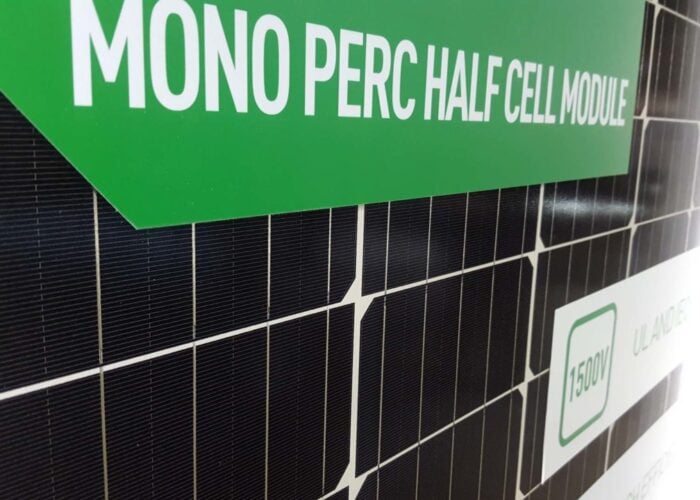
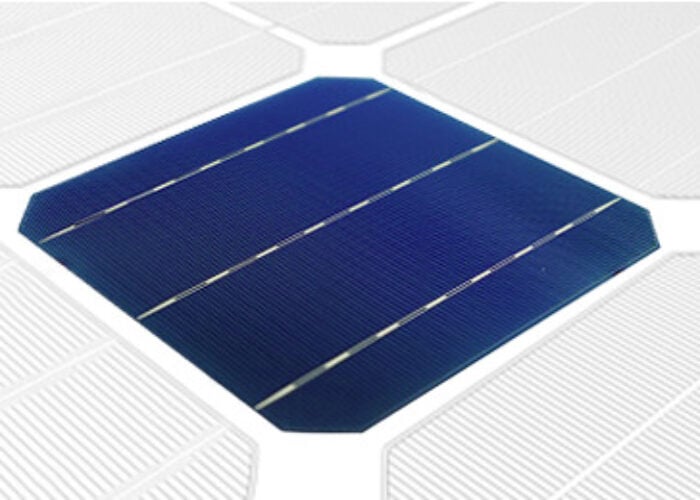
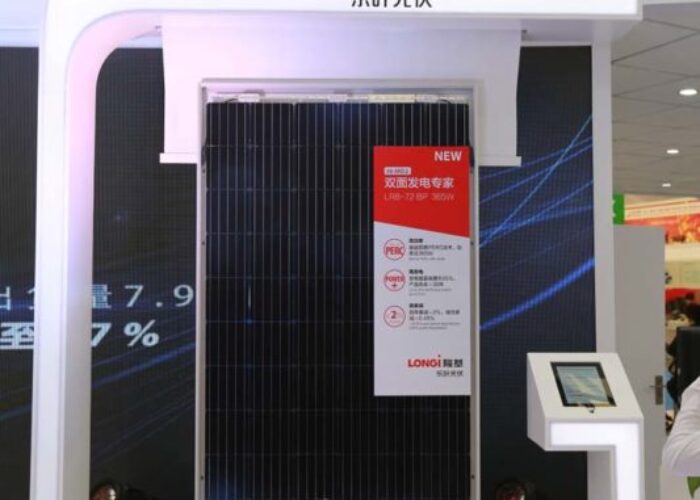
‘Silicon Module Super League’ (SMSL) member LONGi Solar, a subsidiary of LONGI Green Energy Technology, the largest monocrystalline wafer producer in the world has reported a record bifaciality reading of 82.15% for its ‘Hi-MO2’ mono PERC (Passivated Emitter Rear Cell) bifacial module.