The German Federal Network Agency, Bundesnetzagentur, has awarded 482MW of solar-plus-storage in its latest innovation tender.
Contracts were awarded to 27 bids, in an auction that ended oversubscribed with 46 bids for a combined 749MW.
Try Premium for just $1
- Full premium access for the first month at only $1
- Converts to an annual rate after 30 days unless cancelled
- Cancel anytime during the trial period
Premium Benefits
- Expert industry analysis and interviews
- Digital access to PV Tech Power journal
- Exclusive event discounts
Or get the full Premium subscription right away
Or continue reading this article for free
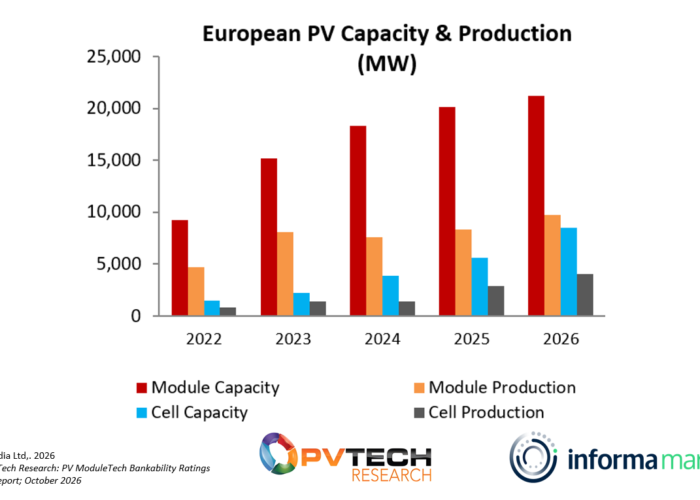
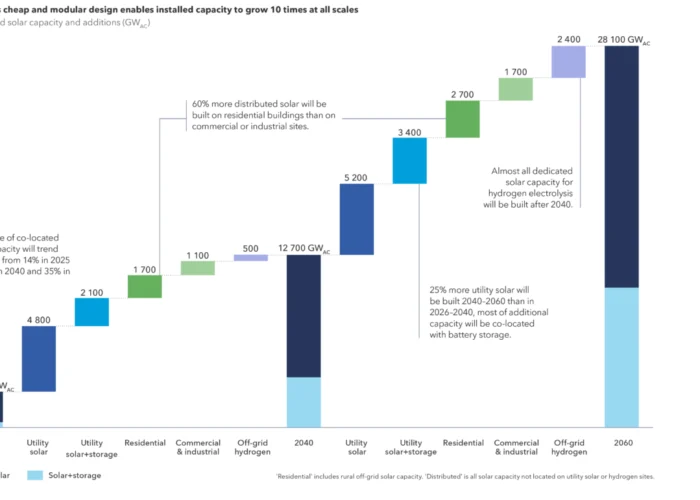
However, this represents a significant drop from the three previous innovation tenders, which had each received at least 1.5 GW of capacity bids, as shown in the chart below.
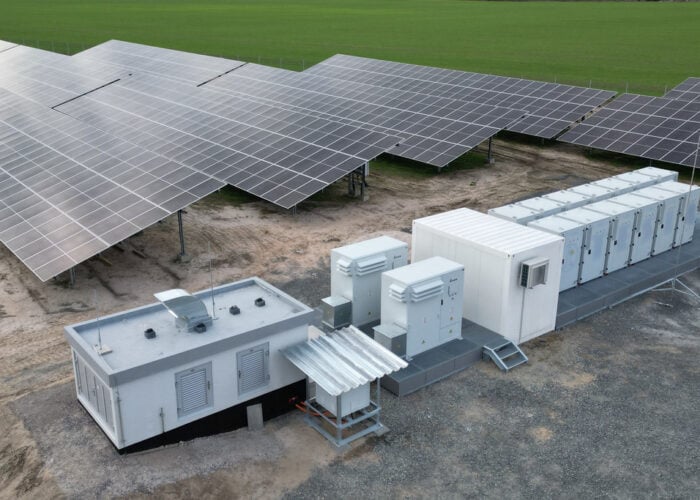
All the bids in the innovation tender, which seeks to co-locate energy storage with renewables, have been for solar PV paired with energy storage.
Price for winning bids ranged from €0.0475/kWh (US$0.0542/kWh) to €0.0561/kWh, with an average volume-weighted winning bid of €0.0534/kWh. This is on par with the previous tender, when the average volume-weighted price reached €0.0531/kWh and much lower than the ceiling price of €0.0713/kWh set for this year.
Across the regions, Bavaria was awarded the most volume with 287MW across 15 projects, followed by Schleswig-Holstein and Brandenburg with 53MW and 51MW, respectively, each for two projects.
The next innovation tender will be held on 1 September 2026.
Germany was ranked the most attractive European market for co-location investment in a recent report by analyst Aurora Energy Research. It ranked first overall due to the scale of its renewables market and the potential for internal rate of return (IRR) upside from co-locating projects compared with standalone ones.
Moreover, PV Tech Premium recently spoke with Polish independent power producer R.Power about Germany’s auctions and how the country has been the European leader in government auctions for renewables, including co-located energy storage.
However, the role of energy storage in co-located projects is still somewhat limited to only charging from the generation project it is attached to.
“In the long run, it would be better, definitely, if the grid were opened for storage, to be able to fully participate in the market,” said Michał Swół, CIO at R.Power.
“In such a case, it would be much more attractive for offtakers to provide the offtake for co-location projects, which can do, in terms of storage, whatever you want.”