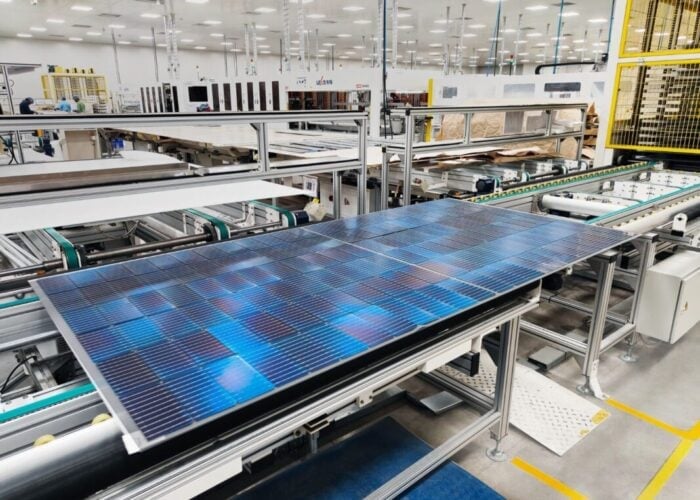
The International Solar Energy Research Center (ISC) Konstanz, a German research centre, has partnered with Indian renewable energy company Celloraa Energy to develop a 1.2GW tunnel oxide passivated contact (TOPCon) cell production facility in Gujarat, India.
Under the terms of the agreement, ISC Konstanz will serve as the “primary technology and qualification partner” for the Indian company as it looks to expand its domestic solar cell manufacturing capacity. This week, PV Tech reported on Celloraa’s signing of an equipment supply deal with German wet processing equipment manufacturer RENA Technologies to support the development of the facility’s planned 1.2GW annual production capacity, meaning the company has now secured equipment and industry expertise for its new manufacturing plant.
Try Premium for just $1
- Full premium access for the first month at only $1
- Converts to an annual rate after 30 days unless cancelled
- Cancel anytime during the trial period
Premium Benefits
- Expert industry analysis and interviews
- Digital access to PV Tech Power journal
- Exclusive event discounts
Or get the full Premium subscription right away
Or continue reading this article for free
“This collaboration with Celloraa Energy embodies our mission to bridge the gap between cutting-edge research and industrial scale,” explained Dr. Radovan Kopecek, co-founder and director of ISC Konstanz, who added that the deal would bring together ISC Konstanz’s “deep expertise” in n-type cell architecture and Celloraa’s “manufacturing capabilities”.
The companies also noted that their partnership is intended to last “beyond immediate TOPCon production goals”. Under the terms of the deal, ISC Konstanz will provide Celloraa with a “comprehensive training programme” and the companies will develop a “research and development roadmap aimed at next-generation device architectures”.
This is likely to take the form of back contact (BC) cells, as Celloraa plans to “transition seamlessly to tandem-ready BC structures”, although did not specify when it plans to shift its focus from TOPCon to BC technology.
Celloraa expects to begin producing cells at its Gujarat facility at the end of the 2026-27 financial year, and plans to double its total annual manufacturing capacity to 2.4GW in future. It also plans to integrate silicon ingot and wafer manufacturing into its portfolio, but has not provided further details, or a timeline, on these aspects of its plans.
This is not ISC Konstanz’s first involvement in cell production; last year, the research centre announced a collaboration with US cell manufacturer Suniva at its crystalline silicon solar cell production facility in Georgia.