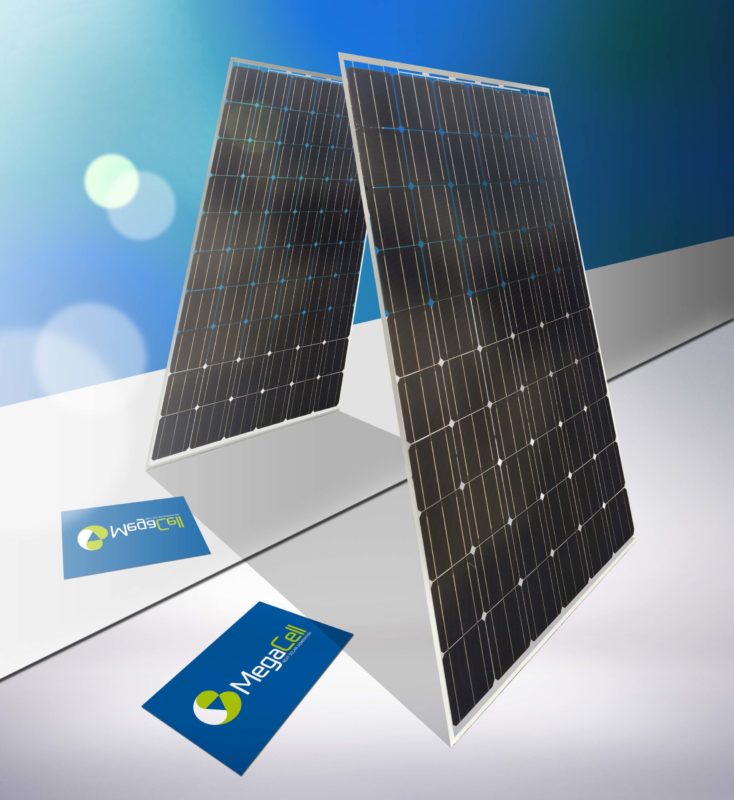
ISC Konstanz qualifies Aurora Solar’s technology for BiSoN bifacial wafers

September 19, 2017
Facebook
Twitter
LinkedIn
Reddit
Email
The International Solar Energy Research Center Konstanz e.V. (ISC Konstanz) has qualified Aurora Solar’s inline measurement and control technology for its BiSoN bifacial solar cell technology, which is licensed to PV manufacturers.

The International Solar Energy Research Center Konstanz e.V. (ISC Konstanz) has qualified Aurora Solar’s inline measurement and control technology for its BiSoN bifacial solar cell technology, which is licensed to PV manufacturers. 

Dr. Radovan Kopecek, Managing Director, Advanced Cell Concepts at ISC Konstanz said “Aurora’s Decima measurement system shows a unique capability for measuring the sheet resistance of both the front side and the back side of our BiSoN bifacial wafers. In particular, no other method can accurately isolate the back side sheet resistance from the sheet resistance of the wafer ‘bulk’. This capability is very helpful for monitoring and process control during the fabrication of this part of a bifacial cell. Additionally, the Decima performs all of its measurements with high accuracy and repeatability. In summary, we believe that the Decima is an essential element to achieve a high level of quality and consistency in the production of bifacial cells.”

This article requires Premium SubscriptionBasic (FREE) Subscription

Try Premium for just $1

  • Full premium access for the first month at only $1
  • Converts to an annual rate after 30 days unless cancelled
  • Cancel anytime during the trial period

Premium Benefits

  • Expert industry analysis and interviews
  • Digital access to PV Tech Power journal
  • Exclusive event discounts

Or get the full Premium subscription right away

Or continue reading this article for free

Bifacial modules are the hot technology topic in the solar industry, which have proven in a number of field tests to generate anywhere between 10 to 40% higher power output that conventional mono-facial cell/modules, without any significant production cost increase. 

Gordon Deans, Aurora’s Chief Operating Officer added, “This accomplishment provides our current and future customers confidence in the capabilities of our products and re-confirms our unique ability to accurately measure this advanced material structure for manufacturing quality control. We look forward to participating as an invited speaker in the 4th annual bifiPV workshop in Konstanz, Germany October 25-26, 2017.”

According to the ITRPV 2017, production of bifacial cells over the next 10 years is expected to increase by 30-40% by 2027.
13 October 2026
San Francisco Bay Area, USA
PV Tech has been running an annual PV CellTech Conference since 2016. PV CellTech USA, on 13-14 October 2026 is our third PV CellTech conference dedicated to the U.S. manufacturing sector. The events in 2023, 2024 and 2025 were a sell out success and 2026 will once again gather the key stakeholders from PV manufacturing, equipment/materials, policy-making and strategy, capital equipment investment and all interested downstream channels and third-party entities. The goal is simple: to map out PV manufacturing in the U.S. out to 2030 and beyond.
9 March 2027
Location To Be Confirmed
PV CellTech Global will gather the key stakeholders from PV manufacturing, equipment/materials, policy-making and strategy, capital equipment investment and all interested downstream channels and third-party entities. Join us in Q1 of 2027

Read Next

March 13, 2026
Current solar PV module price increases are largely dictated by five major components, according to data from Intertek CEA
March 12, 2026
PV Tech Research’s annual ranking of the top ten PV module manufacturers reveals some signs of recovery after a turbulent 2025, writes Moustafa Ramadan.
March 11, 2026
As TOPCon manufacturing expands globally, producers are facing different cost, safety and supply-chain realities – creating an opportunity to rethink technology platforms and prepare for next-generation tandem architectures.
March 9, 2026
The latest domestic solar-grade polysilicon transaction prices from the Silicon Industry Branch of the China Nonferrous Metals Industry Association show that all domestic n-type solar-grade polysilicon products have plunged, with steep declines across the board.
March 6, 2026
US solar manufacturer Silfab Solar has disputed some reports of chemical spillages at its manufacturing facility in Fort Mill, South Carolina.
March 6, 2026
Silfab solar has paused operations at its module manufacturing plant in South Carolina following chemical spills.

Upcoming Events

Solar Media Events
March 24, 2026
Dallas, Texas
Solar Media Events
April 15, 2026
Milan, Italy
Solar Media Events
June 16, 2026
Napa, USA
Solar Media Events
October 13, 2026
San Francisco Bay Area, USA
Solar Media Events
November 3, 2026
Málaga, Spain