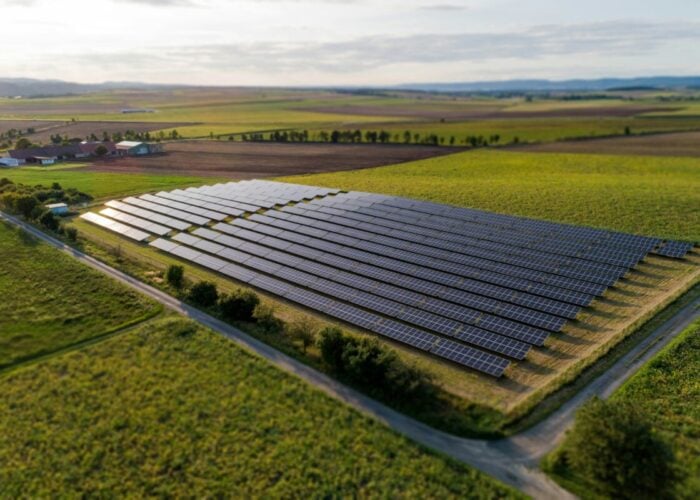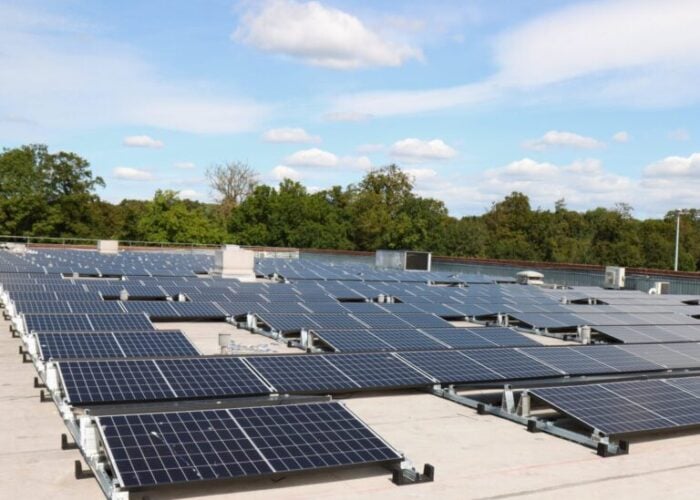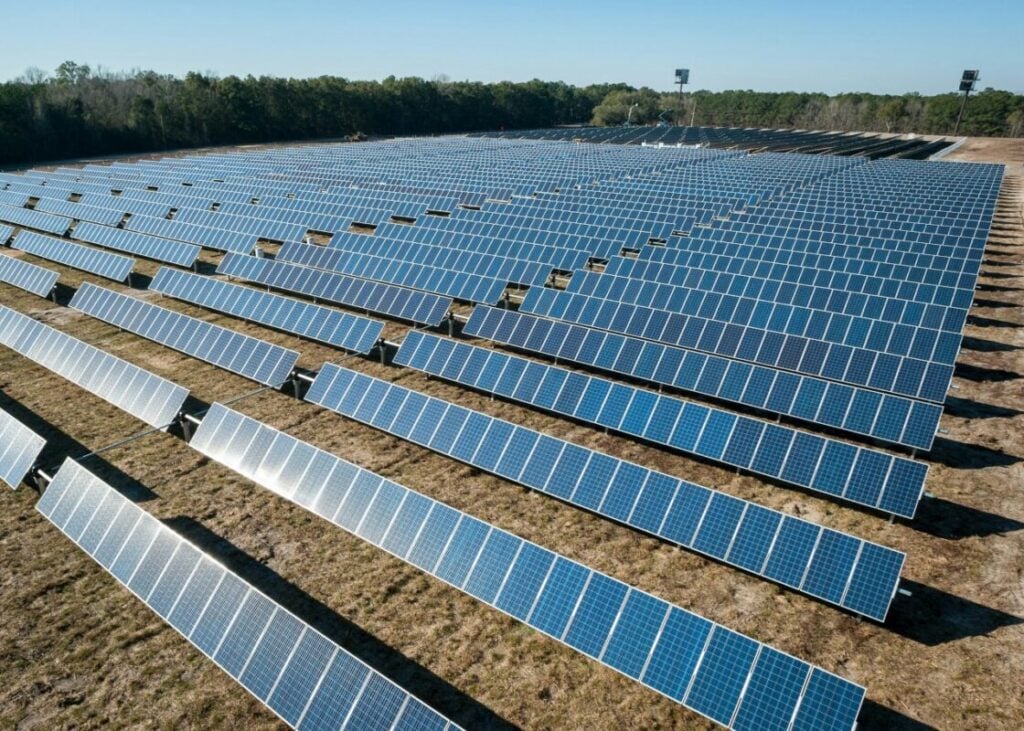
The Italian government’s decision to implement the Net-Zero Industry Act’s non-price criteria through its FER-X mechanism – its flagship renewable energy support scheme – marks a significant evolution in how solar energy is procured on the peninsula. For the first time, not all solar panels are welcome. Put simply, for PV projects exceeding 1MW, the latest FER-X tender excludes Chinese-made solar cells, modules and panels from eligibility, aligning with the European Commission’s NZIA framework to prioritise “non-coercive” supply chains.
Historically, Chinese manufacturers have dominated global photovoltaic supply, delivering unmatched scale and cost efficiency. But that cost advantage has come with strategic dependencies, and this auction signals a willingness to recalibrate.
Try Premium for just $1
- Full premium access for the first month at only $1
- Converts to an annual rate after 30 days unless cancelled
- Cancel anytime during the trial period
Premium Benefits
- Expert industry analysis and interviews
- Digital access to PV Tech Power journal
- Exclusive event discounts
Or get the full Premium subscription right away
Or continue reading this article for free
The rationale is clear enough: China currently accounts for nearly 80% of the global photovoltaic module supply, and Europe’s recent energy crises have underscored the danger of over-reliance on a single source, whether for gas or gigawatts.
But policy is one thing; market functionality is another. Solar developers, and the industry at large, can attest that there are very few non-Chinese modules available at the volumes required for utility-scale deployment, and those that tend to be more expensive, slower to deliver or still dependent on upstream Chinese components – another exclusion criterion under NZIA. The market simply cannot draw from what does not yet exist at scale.
This puts developers in a bind. Do we bid into FER-X with higher-cost, non-Chinese modules – risking uncompetitive tariffs and tight margins – or sit this round out, waiting for either supply chains to mature or policy to adjust? Both choices are a catch-22 and risk delaying Italy’s renewable deployment targets.
Notably, the tender does not mandate the use of Italian or European modules. Italy has no significant PV module manufacturing base outside of Enel-owned 3Sun, and any serious onshoring effort will take years to reach commercial scale. At least for now, the auction merely selects among the small pool of non-Chinese alternatives.
The Achilles heel will be whether this approach successfully attracts additional applications. Developers must weigh complex trade-offs – does a 20-year contract-for-difference outweigh the risks of insolvent guarantees, subpar manufacturing and worse replacement inventory?
If FER-X becomes synonymous with exclusion and delay, it will undermine its own objectives. Call it belabouring the obvious, but Italy has already struggled to meet its renewables deployment targets. Projects are routinely stalled by permitting bureaucracy, political turnover and regulatory ambiguity. Layering supply-chain constraints on top of that may be too much friction for the system to absorb.
For the government to restrict access to FER-X based on module origin, it must also publish clear guidance on eligible suppliers, verification mechanisms and contingency plans should qualified supplies run short. Developers need certainty—not just policy intent, but operational clarity.
Put into perspective, this FER-X auction is a microcosm of a larger debate unfolding across Europe. How do we reconcile the urgency of energy independence and climate action with the reality of globalised clean-tech supply chains? Europe can’t simply replace one dependency-gas from Russia-with another-solar panels from China.
The tender all but confirms another emerging trend in the sector: the energy transition is no longer just about cost curves and capacity growth: today, control, resilience and security are equally critical. Italy could lead on those terms, but only if ambition is backed by workable infrastructure, stable policy and supply chain predictability.
In the immediate term, it is unlikely that this tender will lead to a significant shift in the procurement landscape. FER-X is less a breakthrough than a litmus test for whether policy, markets and industrial capacity can align under the twin pressures of climate ambition and strategic autonomy. By limiting eligibility to non-Chinese modules, the auction exposes a hollowed-out industrial base and the beleaguered state of Europe’s alternative supply chains. Higher costs, delivery delays and upstream dependencies mean developers face real trade-offs, not just theoretical ones. Success will require more than policy intent: it depends on clear guidance, stable contracts and coordinated infrastructure investment. How well these pieces come together will determine whether the energy transition is a managed success or decline.
Patrizio Donati is the co-founder and managing director at independent power producer, Terrawatt.