JinkoSolar pushes bar on anti-PID testing

July 31, 2017
Facebook
Twitter
LinkedIn
Reddit
Email
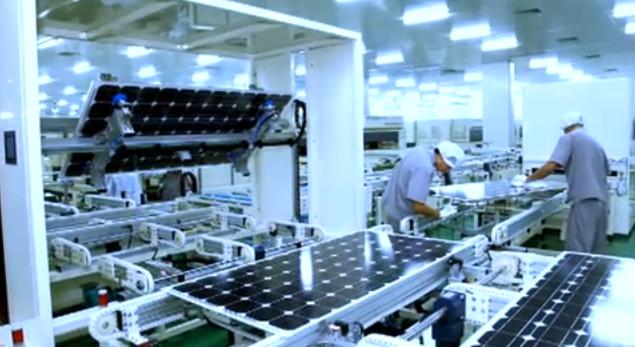
JinkoSolar also said that its 1,500V modules had also met the 96-hour PID resistance test. Image: JinkoSolar

Leading ‘Silicon Module Super League’ (SMSL) member JinkoSolar has raised its Potential Induced Degradation (PID) resistance test metrics for its standard 1,000V and its 1,500V solar modules, using an extended IEC62804 standard.

The IEC62804 test includes a 96-hour PID resistance test under the conditions of 85℃ degrees and 85% relative humidity (“double 85”) at +/-1,000V, with a degradation of less than 5%.

This article requires Premium SubscriptionBasic (FREE) Subscription

Try Premium for just $1

  • Full premium access for the first month at only $1
  • Converts to an annual rate after 30 days unless cancelled
  • Cancel anytime during the trial period

Premium Benefits

  • Expert industry analysis and interviews
  • Digital access to PV Tech Power journal
  • Exclusive event discounts

Or get the full Premium subscription right away

Or continue reading this article for free

JinkoSolar said that its standard 1,000V ‘mass produced’ modules had their guaranteed performance time improved to 192 hours under the IEC62804 double anti-PID standard. The company had said in November, 2016 that it had met the 96-hour PID conditions. 

JinkoSolar also said that its 1,500V modules had also met the 96-hour PID resistance test. 

“JinkoSolar's products deliver a stable performance over their entire service life. We have taken the extra-step that exceeds industry standards to guarantee the performance. We are the first module manufacturer to guarantee that all our Standard Mass Produced PV Modules meet the IEC double anti-PID resistance standards. I am confident this will create a better and more secure investment environment for our customers,” commented Kangping Chen, CEO of JinkoSolar.
13 October 2026
San Francisco Bay Area, USA
PV Tech has been running an annual PV CellTech Conference since 2016. PV CellTech USA, on 13-14 October 2026 is our third PV CellTech conference dedicated to the U.S. manufacturing sector. The events in 2023, 2024 and 2025 were a sell out success and 2026 will once again gather the key stakeholders from PV manufacturing, equipment/materials, policy-making and strategy, capital equipment investment and all interested downstream channels and third-party entities. The goal is simple: to map out PV manufacturing in the U.S. out to 2030 and beyond.
9 March 2027
Location To Be Confirmed
PV CellTech Global will gather the key stakeholders from PV manufacturing, equipment/materials, policy-making and strategy, capital equipment investment and all interested downstream channels and third-party entities. Join us in Q1 of 2027

Read Next

March 5, 2026
The EU’s “Industrial Accelerator Act” (IAA) for key domestic manufacturing sectors has been met with mixed reactions by the continent’s solar industry.
March 5, 2026
Policy shifts in China mean PV manufacturers will need operational discipline and clear technology roadmaps to compete, writes LONGi's Charles Jiang.
March 3, 2026
Average PV equipment costs for large-scale solar projects in India showed mixed trends in Q4 2025, said Mercom.
March 3, 2026
Solar racking producer Schletter Group has completed construction on a 96MWp solar PV project in northern Italy.
March 2, 2026
German wet processing equipment manufacturer RENA Technologies will supply its equipment to a planned 1.2GW TOPCon solar cell production facility in India.
February 27, 2026
Daqo New Energy cut its financial losses and its revenues in 2025 as China’s efforts to moderate its polysilicon industry began to take effect.

Upcoming Events

Solar Media Events
March 24, 2026
Dallas, Texas
Solar Media Events
April 15, 2026
Milan, Italy
Solar Media Events
June 16, 2026
Napa, USA
Solar Media Events
October 13, 2026
San Francisco Bay Area, USA
Solar Media Events
November 3, 2026
Málaga, Spain