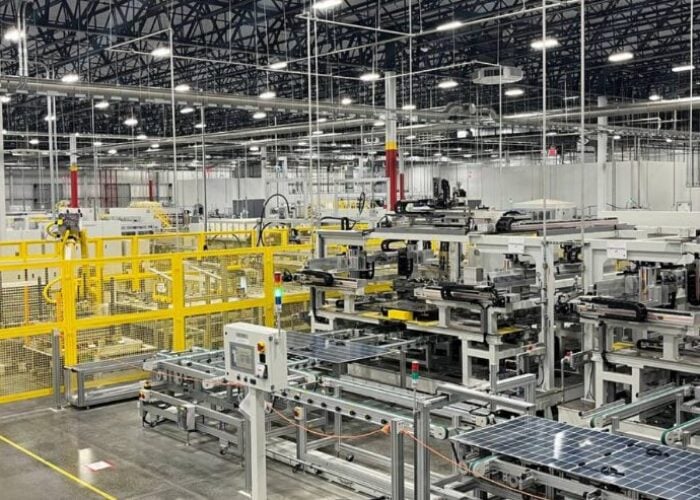
3D-Micromac supplies laser tools for PERC migration at Hanwha Q CELLS China cell plant

Facebook
Twitter
LinkedIn
Reddit
Email
3D-Micromac said that it had installed three of its microCELL OTF laser systems at the Qidong solar cell plant and had received a follow-on order for a fourth laser system. Image: 3D-Micromac

Laser micromachining specialist 3D-Micromac said it was supplying Hanwha Q CELLS solar cell plant in Qidong, Jiangsu-province, China with its microCELL OTF laser system for its recently announced transition from Al-BSF (Aluminium Back Surface Field) to PERC (Passivated Emitter Rear Cell) technology.

PV Tech first reported that the ‘Silicon Module Super League’ (SMSL) member had started to migrate to some of its cell capacity to PERC, which equated to 1.4GW, while retaining around 1.2GW of BSF production. The SMSL has kept capital expenditures very low in 2017 to support financial efforts to return to profitability. 

This article requires Premium SubscriptionBasic (FREE) Subscription

Try Premium for just $1

  • Full premium access for the first month at only $1
  • Converts to an annual rate after 30 days unless cancelled
  • Cancel anytime during the trial period

Premium Benefits

  • Expert industry analysis and interviews
  • Digital access to PV Tech Power journal
  • Exclusive event discounts

Or get the full Premium subscription right away

Or continue reading this article for free

3D-Micromac said that it had installed three of its microCELL OTF laser systems at the Qidong solar cell plant and had received a follow-on order for a fourth laser system.

Tino Petsch, CEO of 3D-Micromac said, “The Chinese market is a highly competitive one, with a strong focus on pricing. By providing high quality and yield as well as cost dilution through the highest throughput values in our laser systems, we succeeded in being the first choice for the technology conversion at Hanwha's Chinese solar cell manufacturing plant.”

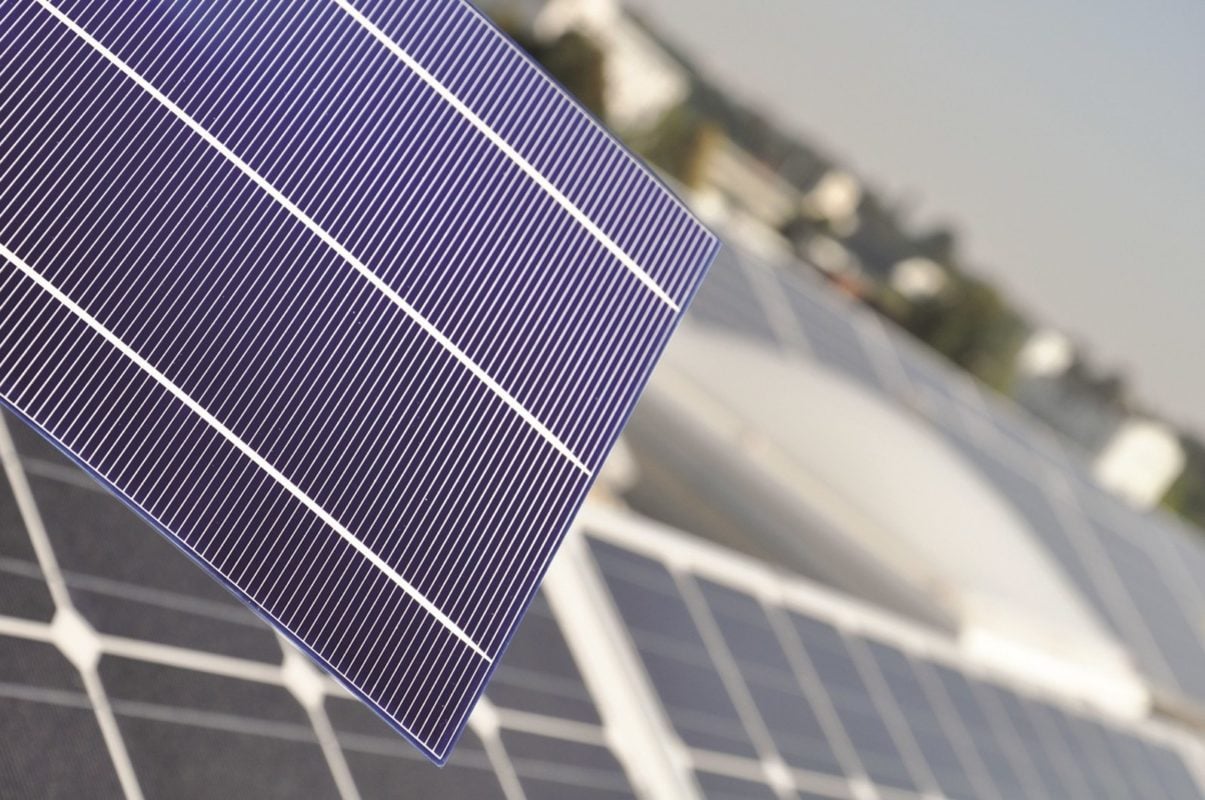
The microCELL OTF laser system is used for contact opening of the rear side passivation layer, which reduces electrical losses in the cell, boosting conversion efficiencies. 
13 October 2026
San Francisco Bay Area, USA
PV Tech has been running an annual PV CellTech Conference since 2016. PV CellTech USA, on 13-14 October 2026 is our fourth PV CellTech conference dedicated to solar manufacturing in the USA. From polysilicon, wafers, ingots, cells and modules, to critical component suppliers including glass and frames, the event connects every stage of the value chain under one roof. PV CellTech USA also brings together investors, innovators, manufacturers and industry stakeholders to collaborate and strengthen domestic solar manufacturing across the United States.
20 April 2027
Istanbul, Türkiye
PV Tech has been running PV CellTech Conferences since 2016. PV CellTech Global, on 20-21 April 2027, is the meeting place for everyone invested in the growth of PV manufacturing and advancement in cell technologies, which will drive us towards the installed capacity required to power the planet by 2050. This is a gathering of key stakeholders driving capital expenditure and technologies for new PV manufacturing plants across the globe to harness the opportunities the growth of PV represents out to 2050 and beyond. The conference takes place in one conference room, where all senior peers have the same shared experience of learning and unique insight, unmatched anywhere else in the solar industry events calendar.

Read Next

Premium
September 3, 2026
Heterojunction is emerging as the n-type technology of choice as US PV manufacturers seek to minimise IP-related risks.
September 2, 2026
In the third part of this week’s series exploring the US solar supply chain, we track how quickly announced manufacturing capacity is translating into real production.
September 1, 2026
US module production is at a near saturation point, but significant capacity gaps persist further up the supply chain, writes head of PV Tech Research, Moustafa Ramadan.
August 28, 2026
Importing solar modules to the US will “no longer make any economic sense” under new Section 232 tariffs for polysilicon-based products, according to Intertek CEA.
Premium
August 27, 2026
Domestically produced solar glass is a key gap in the US PV manufacturing ecosystem. Tom Kenning reports on efforts to kick-start local production of this vital material
August 24, 2026
Stronger downstream demand drove a surge in wafer prices last week, according to the latest figures from the Silicon Industry Branch of the China Nonferrous Metals Industry Association.

Upcoming Events

Solar Media Events
October 13, 2026
San Francisco Bay Area, USA
Solar Media Events
November 3, 2026
Málaga, Spain
Solar Media Events
November 24, 2026
Warsaw, Poland
Solar Media Events
February 2, 2027
London, UK